
Books for Reluctant Book Clubs That Get Talked About
The best books for reluctant book clubs do not feel like homework wearing a nice cover. They create a small emergency in the group chat: someone has a theory, someone is furious with a fictional man, and someone who "hasn't finished it yet" is suddenly 80 per cent through because they needed to know what happened.
That is the standard. Not worthy. Not prestigious. Not the novel that has been sitting on everyone’s bedside table since last autumn, gathering dust and quiet shame. A reluctant book club needs momentum, opinions and a story that gives even the least committed reader a reason to turn up with a thought.
Why Echo Chamber Fiction Feels So Unsettling
The creepiest moment in an echo chamber fiction story is rarely the masked villain, the exploding building or the ominous corporate logo. It is the moment a character realises everyone around them agrees a little too perfectly. Their friends, feeds, news channels and colleagues all have the same answer. They have been handed a reality that feels reassuringly tidy - which is exactly the problem.
Echo chamber fiction has become a particularly sharp way of telling stories about modern life. We know the feeling of seeing a strangely specific opinion repeated so often online that it starts to seem like common sense. We know how quickly an algorithm can turn mild curiosity into a tunnel. Fiction takes that uneasy recognition and pushes it somewhere thrilling: what if the system deciding what you see is not merely trying to sell you trainers or make you scroll through dinner?
Why Readers Want Gentle Romance Right Now
A kiss can be wildly romantic without requiring a fire extinguisher. That is the bit certain corners of the internet keep forgetting. Why readers want gentle romance is not because they are anti-chemistry, anti-desire or somehow allergic to a well-timed collarbone moment. They want the flutter, the banter and the full-body relief of two people finally choosing each other - just without every chapter becoming a temperature check.
Gentle romance is having a proper moment because it gives readers something increasingly precious: emotional safety with actual stakes. It is not romance with the interesting bits removed. It is romance where the interesting bit is often the way someone remembers how you take your tea, sends the text they were overthinking, or stays when staying is difficult.
Why British Sci-Fi Thrillers Feel So Unsettling
A fluorescent office. A polite government announcement. A new app that knows rather too much about your habits. British sci-fi thrillers rarely need a laser battle to get under your skin. Their speciality is taking a recognisable bit of everyday life and turning the dread dial one careful click at a time.
That is why the best British sci-fi thrillers linger. They are not only asking whether technology will become frightening. They are asking why we were so willing to let it into the building, give it a staff pass and offer it a biscuit.
Can Contemporary Romance Feel Realistic Today?
Someone has just texted “here” instead of coming to the door. Someone else has spent twelve minutes workshopping a reply with the group chat. A third person is pretending they are absolutely fine after being left on read by a man whose dating profile described himself as “fluent in sarcasm”. If that sounds more like your Tuesday than a sweeping declaration beneath a thunderstorm, you may be asking: can contemporary romance feel realistic?
Yes. But realism in romance is not the same as making readers watch two people compare energy tariffs, queue at the pharmacy, or spend 40 pages discussing whose turn it is to buy loo roll. A believable love story needs the texture of real life, then it needs to know when to cut to the good bit.
10 Books Featuring Unreliable Realities to Read
A locked door is unsettling. A locked door that may not have existed five minutes ago is a full-body reading experience. That is the particular joy of books featuring unreliable realities: they do not merely ask whether the protagonist can escape. They make you question whether escape, the protagonist, and possibly the floor beneath their feet are real at all.
For readers who like The Matrix, Inception and The Truman Show, the best reality-bending fiction has a nasty little aftertaste. You finish a chapter, look around your living room, and briefly suspect the kettle knows more than it is letting on. These stories can be philosophical, frightening, funny or deeply sad. The common thread is a world whose rules refuse to stay put.

Romantic Novels With Workplace Banter We Love
Romantic novels with workplace banter understand a tiny, delicious truth: there is nothing quite like being professionally irritated by someone who also happens to look unfairly good while correcting your spreadsheet. Give readers two capable people, one shared project and several opportunities to say, “That is not what I meant,” and suddenly we are cancelling plans.
The workplace romance has evolved well beyond the boss’s office, the borrowed stapler and a suspiciously empty meeting room. Modern readers want wit, competence and chemistry that develops because two people genuinely see how the other thinks. The best books make the setting feel like more than a handy reason to put the love interests in the same lift. Work raises the stakes. It gives them deadlines, clashing ambitions and a very public reason not to make a mess of things.
Speculative Fiction Trends Worth Watching Now
The most interesting speculative fiction trends are not asking whether technology might change our lives. They are asking who gets to press the button, who writes the terms and conditions, and why the supposedly perfect system feels faintly like a hostage situation. If you like The Matrix, Inception or The Truman Show, this is very much your reading era.
The genre is moving away from shiny gadget worship and towards something more intimate, unnerving and emotionally exact. The nightmare is no longer a distant robot uprising. It is an app that knows you better than your best friend, an employer that can edit your memories, or a corporation offering to solve your loneliness for one small, non-refundable sacrifice.
For readers who enjoy a thriller with a philosophical itch beneath it, that is excellent news. Here are the currents shaping speculative fiction right now - and why they are landing so hard.
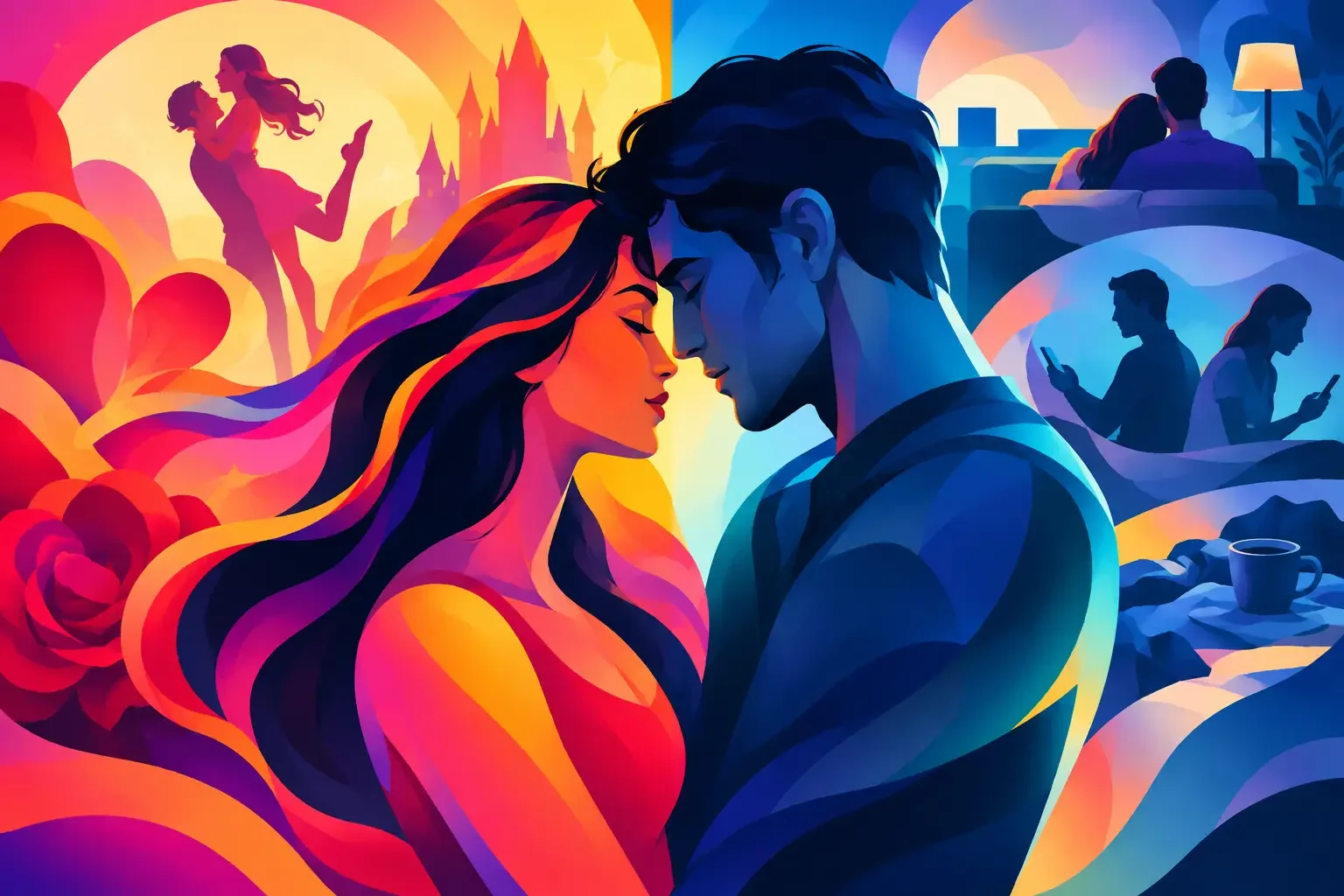
Romance Tropes Versus Reality in Modern Love
Someone turns up in the rain to declare their feelings. Someone else realises their nemesis is, inconveniently, extremely fit. A fake date becomes a real one, preferably beneath fairy lights. Romance tropes versus reality is less a cage match than a useful reminder: fiction gives us the emotional highlight reel. Real love includes the council tax, the unread messages, and asking whether they actually want you to come round after work.
That does not make tropes silly, immature or somehow less meaningful. Quite the opposite. The best romance tropes bottle a real emotional desire - to be chosen, understood, surprised, forgiven, wanted - then turn the volume up until our hearts make that little BookTok-approved squeaking noise. The trouble starts only when we mistake the fantasy's emotional truth for an instruction manual.

A Guide to Corporate Dystopias That Bite Back
The worst corporate dystopia does not begin with a skull-shaped logo or a CEO stroking a white cat. It begins with a useful app. A loyalty scheme. A workplace that says it is a family, then asks why you have not answered messages at 11.48 pm. This guide to corporate dystopias is for readers who enjoy the uncomfortable little shiver of recognising that the fictional nightmare is only two product updates away.
Corporate dystopian fiction turns capitalism's most polished promises into pressure points. Convenience becomes control. Personalisation becomes surveillance. Growth becomes a moral imperative so vast that actual people are reduced to a minor inconvenience in the quarterly report. It is the genre's particular party trick: making a glass-walled office, an attractive interface or a branded tote bag feel faintly menacing.
A Review of Modern Dating Novels Worth Your Time
A good dating novel knows the horror of seeing “seen 14:03” and deciding, against all dignity, to inspect it like a crime scene. A great one understands that dating apps, group chats and post-date voice notes are not just modern props. They are where hope, performance, rejection and the occasional spectacularly bad decision now happen. This review of modern dating novels is for readers who want more than a cute cover and the promise of banter. We want chemistry, yes, but also a reason to care when somebody sends the risky text.
Modern dating fiction has become one of the most reliably talkable corners of contemporary romance. It can be laugh-out-loud awkward, quietly bruising, gloriously escapist or all three before the third chapter. The best books do not pretend a meet-cute fixes everything. They let attraction be complicated by work, friendship, family baggage, timing, class, culture and that most chilling of phrases: “I’m just seeing what’s out there.”
What Is a Reality Thriller? The Genre That Gaslights You
You know that tiny, prickly moment when a character notices the same stranger on their commute three days running, or finds a door in their flat that definitely was not there yesterday? That is the good stuff. If you have ever asked, what is a reality thriller, the short answer is: it is fiction built around a terrifying possibility - that the world you trust is edited, engineered, simulated or quietly lying to you.
Reality thrillers turn certainty into a trap. The protagonist believes they understand their life, their memories and the rules of the place they inhabit. Then something fails the vibe check. A repeated phrase. A missing hour. A corporate slogan that feels a little too interested in their wellbeing. Before long, the question is not simply, “Who is after me?” It is, “What is real, and who benefits if I never find out?”
How to Identify Romantic Subplots in Any Novel
A stolen look across a crowded room is not automatically a romantic subplot. Sometimes it is just a look. Fiction loves a meaningful glance, and readers who have been burned by accidental shipbait know better than to start planning the wedding after chapter three.
Learning how to identify romantic subplots is less about spotting two attractive people standing near one another and more about noticing what the story keeps returning to. Does their connection create choices, complications and emotional consequences? Does it change how either character moves through the main plot? If yes, you may have a side romance quietly preparing to ruin your sleep schedule.
Speculative Fiction Trends Worth Watching Now
The most interesting speculative fiction trends are not asking whether technology might change our lives. They are asking who gets to press the button, who writes the terms and conditions, and why the supposedly perfect system feels faintly like a hostage situation. If you like The Matrix, Inception or The Truman Show, this is very much your reading era.
The genre is moving away from shiny gadget worship and towards something more intimate, unnerving and emotionally exact. The nightmare is no longer a distant robot uprising. It is an app that knows you better than your best friend, an employer that can edit your memories, or a corporation offering to solve your loneliness for one small, non-refundable sacrifice.
For readers who enjoy a thriller with a philosophical itch beneath it, that is excellent news. Here are the currents shaping speculative fiction right now - and why they are landing so hard.
How to Avoid Predictable Thrillers; Books That Feel Fresh
You know the feeling. You are 60 pages into a thriller, the charming new colleague is obviously not charming, the missing spouse is obviously not missing in the usual sense, and the big twist has already waved at you from chapter three. Learning how to avoid predictable thrillers is less about becoming impossible to surprise and more about choosing books that are playing a more interesting game.
A great thriller does not need to hide every clue in a locked drawer. In fact, the best ones often show you the danger early, then make you question what the danger actually means. If you like the reality-warping unease of The Matrix, Inception or The Truman Show, you are not necessarily looking for a bigger body count. You are looking for a story that makes the world feel fractionally wrong, then refuses to hand you the instruction manual.
A Guide to Romantic Tension That Actually Works
The best romance scene is not always the kiss. Sometimes it is two people standing far too close by the kettle, pretending their pulse is not doing parkour. This guide to romantic tension is for readers who live for the loaded glance, the accidental honesty and the devastating moment someone says, “You can’t mean that,” when they very much hope they do.
Romantic tension is the electricity between two characters before they can safely name what is happening. It is not simply attraction, although attraction helps. It is desire plus resistance: a reason they want each other, a reason they cannot quite act on it, and enough emotional truth that readers are willing to scream into a cushion over a hand brushing a sleeve.
For low-to-no spice readers, this is especially good news. You do not need explicit scenes for a romance to have heat. You need stakes, timing and two people with something to lose.
12 Best Sci-Fi Thriller Book Series to Binge
Some books ask, “What if technology went wrong?” The best sci-fi thriller book series ask a nastier question: “What if it is working exactly as intended?”
That is the sweet spot. You want the chase, the cliff-hanger, the slightly alarming corporation with a very clean logo. But you also want an idea big enough to follow you around while you make tea. The picks below are for readers who like The Matrix, Inception and The Truman Show because reality feels suspiciously well managed, and because somebody, somewhere, is definitely withholding the terms and conditions.
A Guide to Dating Chaos Fiction That Gets It
Some romance novels give you a candlelit dinner, a perfectly timed declaration and two emotionally available people who have clearly done the reading. Dating chaos fiction gives you the opposite: a terrible first date, an ill-advised text, a friend who says “send it” when they absolutely should not, and feelings that arrive wearing muddy boots. This guide to dating chaos fiction is for readers who like their love stories funny, current and just messy enough to feel painfully familiar.
The appeal is not watching people make objectively terrible choices for 300 pages. It is recognition. Modern dating can involve apps, situationships, group chats, mixed signals and the peculiar horror of seeing someone’s Instagram Story before they reply to your message. Dating chaos fiction turns that emotional admin into plot, banter and, ideally, a romantic payoff that makes the nonsense worthwhile.
12 Best Grounded Sci-Fi Novels That Feel Real
A spaceship is fun. A spaceship that feels like it could break down on the M25 of the solar system is better. The best grounded sci-fi novels take one recognisable part of modern life - work, climate anxiety, dating, surveillance, corporate power, grief - and nudge it just far enough for you to feel the chill.
This is sci-fi for readers who enjoy big ideas but do not require a glossary of made-up minerals before page 30. Think less laser-gun wallpaper, more: wait, could this actually happen? Some are scientifically meticulous; others are emotionally plausible rather than technically exact. All of them understand that the scariest future is usually the one that looks suspiciously like Tuesday.
11 Romance Novels with Awkward Dates to Adore
There is a particular kind of romantic chemistry that only appears after someone has said the wrong thing, knocked over a drink, or attempted an ice-breaker question with the energy of a hostage negotiator. The best romance novels with awkward dates understand this. They know that a flawless candlelit dinner is nice, but a date so excruciating that both characters need to fake a phone call? That is where the plot starts plotting.
Awkward dates are not just rom-com garnish. They reveal character at speed. Who gets kinder when embarrassed? Who doubles down? Who notices the other person is having a terrible time and quietly finds a way to rescue them? A dodgy first date can do more emotional heavy lifting than three chapters of people gazing meaningfully across a crowded room.
For readers who like their romance funny, emotionally switched on and a little bit chaotic, these are the books to reach for. Spice levels vary, because awkwardness is a universal language, but every one offers the delicious possibility that the worst date of someone’s life might lead somewhere rather good.