
10 Best Techno Thrillers That Glitch Reality

Best techno thrillers.
There is a special kind of dread reserved for stories in which the Wi-Fi is working perfectly, the company’s mission statement sounds lovely, and absolutely nobody will tell you what the algorithm is doing. The best techno thrillers understand that technology is rarely the monster on its own. The monster is the person who says it will make life better, then quietly removes the exit.
This is the genre for readers who enjoyed The Matrix, Inception and The Truman Show but wanted more footnotes, more corporate overreach and more moments of looking at their own phone with mild suspicion. A great techno thriller combines propulsive plotting with a properly chewy question: if a system can predict, improve or even replace human judgement, who gets to decide what “better” means?
What makes a techno thriller properly gripping?
Not every novel featuring a computer counts. The best ones make technology feel close enough to touch - or, more unnervingly, close enough that you are already carrying it in your pocket. They tend to build pressure around surveillance, artificial intelligence, biotech, social media, virtual reality or a corporation whose branding is much friendlier than its actual behaviour.
The trade-off is tone. Some readers want a full-throttle conspiracy with chapters that end in cliff-hangers. Others want an ideas-first novel that lets the plot breathe while it asks uncomfortable questions about consent, control and identity. The books below move across that spectrum, but all share one vital quality: they make progress look just a little bit like a trap.
10 best techno thrillers for clever paranoia
Daemon by Daniel Suarez
If you like your thrillers to begin with a seemingly impossible death and then snowball into a global systems nightmare, start here. When a reclusive games designer dies, a programme he has created begins issuing instructions from beyond the grave. What follows is part cyber-conspiracy, part near-future warning siren.
Daemon is built for readers who enjoy technical detail and big-scale consequences. Its vision of automated power is thrilling precisely because it does not rely on magic. It asks what happens when software does not merely serve human ambition, but starts organising it.
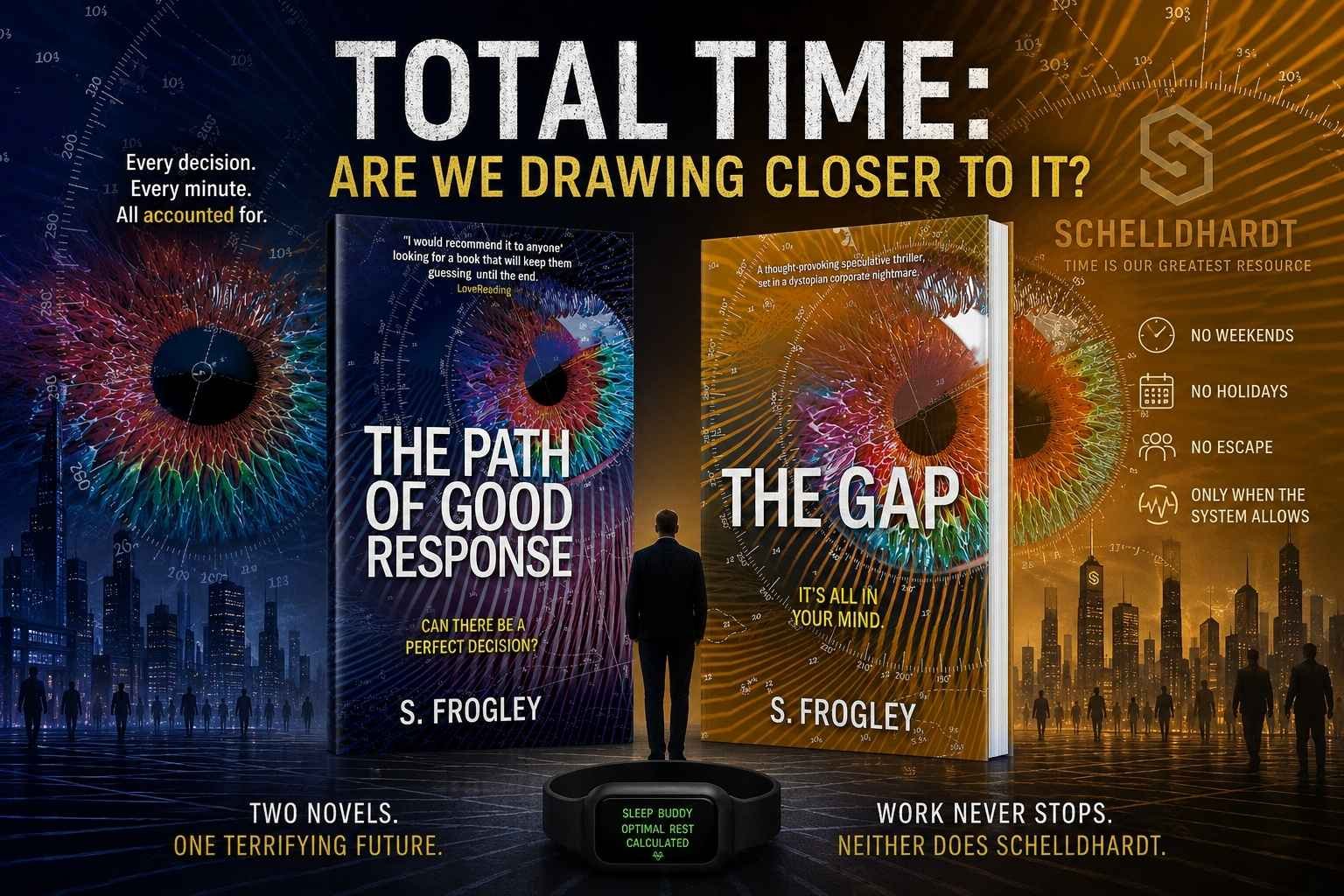
The Path of Good Response and The Gap by Steve Frogley
What if there were a way to make a perfect decision? If poor choices, even addictions, could be controlled from within the mind. That’s the delicious premise behind these books.
But what if this technology was abused by the world’s largest company for their own sinister purposes? This twisty series is well worth checking out. The technology feels worryingly close to reality, and the targeting of the global population in our own echo chambers is way too close to home.
The Fear Index by Robert Harris
Artificial intelligence and finance are already a fairly sweaty combination. Add a hedge fund, an algorithm trained to exploit fear, and a sequence of events that may or may not be a very sophisticated attack, and you have Robert Harris at his slickest.
This is a lean, high-pressure novel with the pace of a market panic. It is especially satisfying for readers who want their techno thriller grounded in recognisable institutions rather than distant spaceships. The central question is deliciously nasty: can a machine learn anxiety well enough to manufacture it?
The One by John Marrs
A DNA test promises to identify your genetically perfect romantic match. No swiping. No awkward first-date chat about your favourite podcast. No ambiguity. It sounds ideal, which is exactly why this book gets under the skin.
John Marrs uses multiple viewpoints to show how a supposedly perfect innovation detonates ordinary lives. Some matches are inconvenient. Some are catastrophic. The One is not a hard-science novel, and that is part of its appeal: it takes a very BookTok-friendly premise and gives it teeth. For anyone who has ever thought an app was taking dating slightly too seriously, this is your cautionary tale.
Recursion by Blake Crouch
People around the world begin suffering from false memories - except those memories feel entirely real. Then a detective and a neuroscientist are drawn into a mystery involving memory, time and a technology capable of changing far more than one person’s past.
Crouch writes with the confidence of someone who knows you had plans for the evening and is prepared to cancel them. Recursion is a blockbuster techno thriller, but it has real emotional weight beneath the velocity. It explores whether reliving a better version of your life would be a gift or the fastest route to losing yourself.
The Warehouse by Rob Hart
The company in this novel is called Cloud. It offers low prices, rapid delivery and, for employees, an entire place to live. No need to worry about the world outside when the workplace has thoughtfully become your whole world.
Rob Hart’s corporate dystopia is a sharp read for anyone who finds convenience both irresistible and faintly sinister. Told through the perspectives of a Cloud employee and an undercover investigator, it has the clean momentum of a thriller and the ugly plausibility of a future that feels uncomfortably close. Capitalism has entered the group chat, and it is monitoring it.
The Farm by Joanne Ramos
At Golden Oaks, women can earn life-changing money by becoming surrogates for wealthy clients. The setting is luxurious, the rules are exacting, and the residents are expected to be grateful. You can probably see where this is going. The women certainly do.
This is a biotech-adjacent thriller rather than a gadget-heavy one, but its interest in bodies as managed assets makes it a natural fit. Ramos is brilliant on the language of opportunity and wellness, and on the brutal gap between a company’s stated values and the lives it controls. Expect social commentary with a clenched jaw.
QualityLand by Marc-Uwe Kling
This one takes a more satirical route. In a near-future society governed by algorithms, products arrive before customers know they want them, jobs are assigned by systems, and everyone’s status is efficiently quantified. When Peter Jobless receives an item he definitely did not order, he makes the radical choice to try returning it.
The premise is funny until it really is not. QualityLand is ideal if you want the corporate absurdity of The Circle with more comic bite. It skewers the reassuring idea that an optimised life is necessarily a meaningful one.
The Warehouse by Rob Hart
Yes, it deserves a second thought - not because this is a clerical error, but because it sits so neatly at the centre of what many readers want from the genre: an addictive plot, a vast corporation and a future that requires only one or two grimly believable steps from the present. If it is already on your shelf, move it nearer the top of the pile.
For a different next read, though, try the final pick below.
The Mountain in the Sea by Ray Nayler
Ray Nayler’s novel is more contemplative than the others on this list, but it is packed with tension. On a remote island, a scientist studies an intelligent species of octopus while a powerful corporation circles the research. Elsewhere, a security officer confronts the human cost of technological exploitation.
This is the choice for readers who want their thriller to linger. It asks what intelligence is, who is allowed to possess it, and why human institutions so often meet the unknown with extraction plans. The action is there, but the ideas have claws.
Pick your techno-thriller mood
Choose Daemon or The Fear Index if you want systems spiralling beyond anyone’s control. Reach for The Gap, The Warehouse or QualityLand if corporate power is your preferred nightmare fuel. If you want technology tangled up with intimate choices, The Path of Good Response, Recursion and The Farm will do the job very nicely.
And if you prefer a novel that leaves room for philosophy alongside the pulse-raising bits, The Mountain in the Sea is the one to press into a friend’s hands with the words, “Just trust me.” The best techno thrillers do not insist that technology will ruin us. They ask whether we are paying enough attention while someone else decides what it is for.
