
A Guide to Romance Ending Types Readers Need

The different romance novel ending types
Some readers want to close a book with a grin, a happy little sigh and an immediate urge to text their group chat. Others are fully prepared to stare at the ceiling at 1am, emotionally wrecked but impressed. This guide to romance ending types is here to help you tell the difference before you accidentally pick up a crying-on-public-transport sort of read.
Because an ending is not just the final chapter. In romance, it is part of the promise. You can enjoy enemies-to-lovers, fake dating, slow burn, forced proximity and all the yearning your nervous system can handle, but the final emotional landing still matters. A lot.
A guide to romance ending types and what they mean
The most useful place to start is with a genre distinction that gets muddled online. A novel can have a major love story without technically being a romance novel. Romance as a genre has a central love story and an emotionally satisfying, optimistic ending for the couple. That usually means a happily-ever-after or happily-for-now.
A book marketed as contemporary fiction, women’s fiction, literary fiction or a coming-of-age story may feature a romance that does not last. This is not automatically bad writing, betrayal or a crime against readers. It simply creates a different reading experience. The trouble starts when the cover copy whispers rom-com but the ending arrives in a black coat carrying a devastating monologue.
Happily ever after: the HEA
The HEA is the gold-standard romance ending. The couple choose each other, resolve the central conflict and have a credible future together. Marriage, babies and a cottage with a suspiciously photogenic kitchen are optional. The key point is commitment and confidence: these two are in it for the long haul.
An HEA does not need to be neat in every other area of life. They can still have difficult families, chaotic jobs or a cat with strong opinions. But the relationship itself feels secure. The reader shuts the book knowing that whatever comes next, the pair will face it together.
This is the ending for anyone who reads romance as emotional restoration. You have survived the miscommunication, the third-act wobble and the moment one character nearly leaves for a job on the other side of the planet. You deserve the payoff.
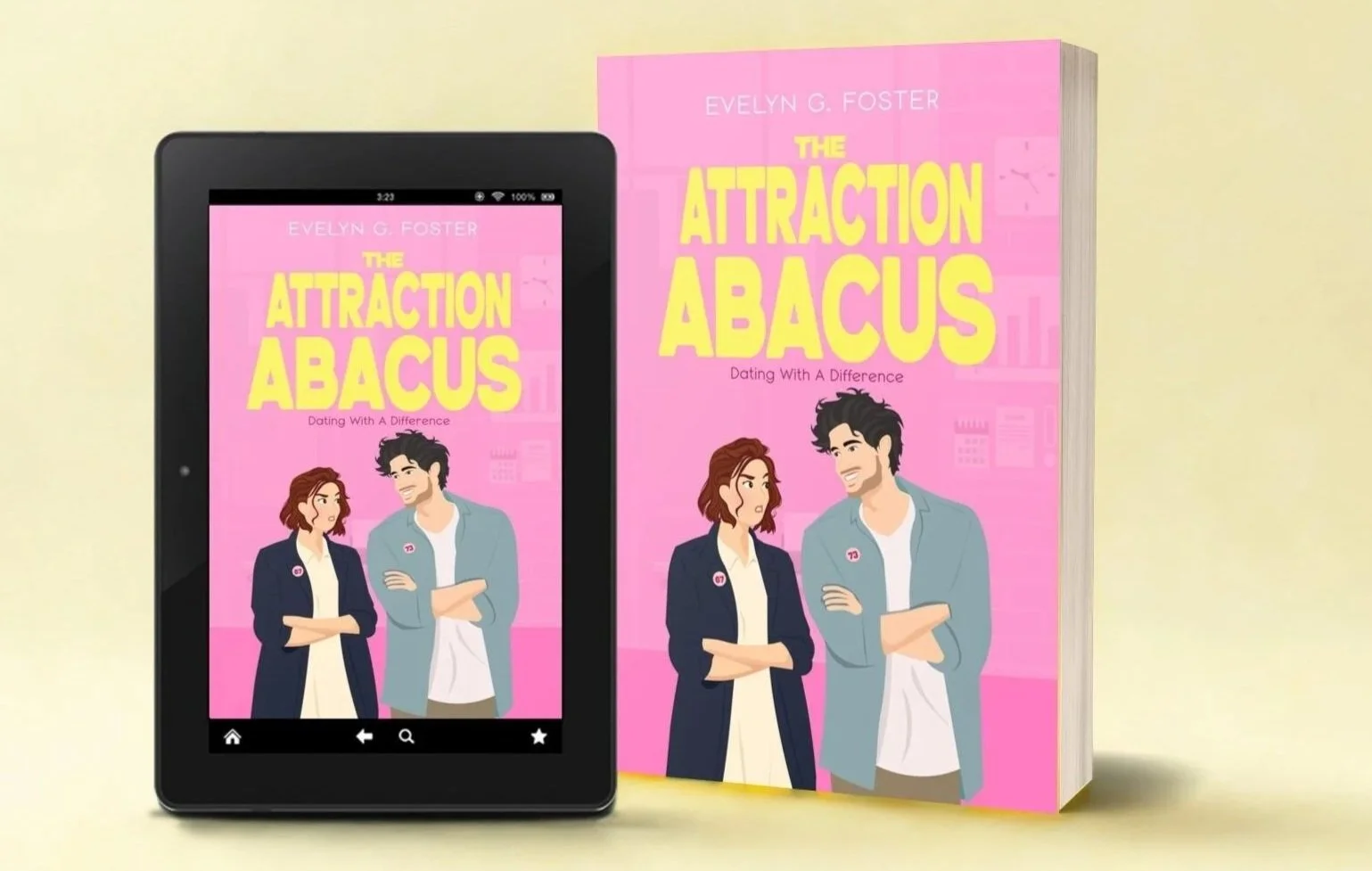
Ad: The Attraction Abacus. An unashamedly HEA ending!
Happily for now: the HFN
A happily-for-now ending is still a valid romance ending, and it can be especially satisfying in stories about younger characters, fresh starts or relationships built in unusual circumstances. The couple are together, the feelings are real and the immediate conflict has been resolved. What the future looks like in five years is simply not the book’s concern.
Think of it as less ‘we have booked the venue’ and more ‘we are finally going on an actual date without pretending this is only for the wedding we are fake-attending’. The commitment is present, but the horizon is closer.
HFN endings work beautifully when they suit the characters’ stage of life. A twenty-something protagonist who has just learnt how to state a boundary may not need a final page involving joint mortgages. Sometimes choosing each other today is the bravest, most believable thing they can do.
The reunion ending
This is a popular variation in second-chance romance. The couple have spent the book apart, estranged or making eye contact across a room with enough unresolved history to power a small town. By the end, they reconnect and choose to try again.
A reunion can read as HEA or HFN depending on how much evidence the story gives us. Have they addressed the reason they broke up? Has one of them actually changed, rather than merely appeared in the rain with a speech? Is the apology specific? If the answer is yes, readers tend to cheer. If not, the grand gesture can feel like a very expensive plaster over a very large crack.
The open-ended ending
An open ending leaves some questions deliberately unanswered. Perhaps the couple have admitted their feelings but have not yet defined the relationship. Perhaps they meet again years later, exchange a loaded look and the final page cuts away. Perhaps they are together, but their practical circumstances remain unresolved.
This can be delicious when the book has earned it. In a quieter, character-led story, an open ending may mirror the uncertainty of real life and invite the reader to imagine the next chapter. In a high-tension rom-com, however, it can feel like someone has switched off the lights just before the final scene.
If you need romantic certainty to enjoy a book, an open ending may not be your best match. That is taste, not a personality flaw. You are allowed to want the emotional receipt.
The bittersweet ending
Bittersweet endings give you love, but not necessarily the version of love you expected. The characters may part because being together would ask them to abandon something fundamental. They may love each other deeply but recognise that timing, grief, geography or incompatible hopes make a lasting relationship impossible.
Done well, this type of ending can be profoundly moving. It respects the idea that a relationship can matter even if it does not become forever. Done badly, it can feel like the book spent 350 pages selling you a bakery only to hand you a raisin.
The difference is emotional honesty. A strong bittersweet ending acknowledges the loss rather than pretending personal growth makes heartbreak painless. It gives the characters agency, and it gives the reader enough meaning to hold on to after the tears.
The break-up ending
Sometimes the ending is a break-up, and sometimes that break-up is exactly right. A relationship might be unhealthy, controlling, dishonest or simply based on the protagonists becoming smaller versions of themselves. Leaving is not a failure when staying would be worse.
These endings often appear in relationship-centred contemporary fiction rather than genre romance. The central arc may be about a character learning to choose themselves, rebuilding a life or recognising that chemistry is not the same thing as compatibility. It can be hugely cathartic, particularly for readers who are tired of fiction treating possessiveness as proof of devotion.
That said, marketing matters. If a book is sold as a romance, readers reasonably expect the main couple to end in a hopeful place together. If it is sold as a story about love, dating or self-discovery, a break-up may be part of the point. Labels are not boring admin. They help readers find the right emotional weather.
The tragic ending
A tragic ending involves an irreversible loss, often death, that prevents the romantic relationship from continuing. It can be beautiful, memorable and absolutely not the choice for a Tuesday when your emotional battery is already flashing red.
These books tend to focus on the transformative power of love, memory and grief rather than the comfort of a romantic resolution. They may be called romantic fiction in casual conversation, but they do not meet the usual genre-romance expectation of an HEA or HFN.
There is no shame in avoiding them. Equally, there is no prize for calling yourself a romance reader only if every book makes you sob. Your reading life can contain both cosy reassurance and devastating art. Just perhaps check the vibe before boarding the feelings train.
How to choose the ending you want
Start with your actual mood, not the mood you think a serious reader ought to have. If life is chaotic, an HEA can be less escapism than basic maintenance. If you are craving something sharper and more reflective, a bittersweet or open ending might hit exactly right.
Then look beyond the word ‘romance’ in a blurb. Phrases such as ‘a love story’, ‘a moving tale of loss’, ‘an unforgettable journey’ or ‘a novel about finding yourself’ can signal that the relationship is important without promising a couple-ending. Reader reviews can also be useful, especially when people use spoiler-light shorthand such as HEA, HFN, no HEA, or ‘check content notes’. A one-star review saying ‘they did not end up together’ may be less a warning about quality than a very helpful indicator of fit.
Heat level is separate from ending type, by the way. Low-spice and no-spice romance can deliver enormous emotional payoff, while a high-heat book can still end in heartbreak. The Attraction Abacus-style question is not only ‘how much spice?’ but also ‘what sort of after-feeling am I booking?’
When in doubt, ask yourself one simple question before you start: do I want hope, closure, catharsis or chaos? Then pick the ending built for that need. Your TBR is allowed to be emotionally well-organised, even if your actual bookshelves are not.
