
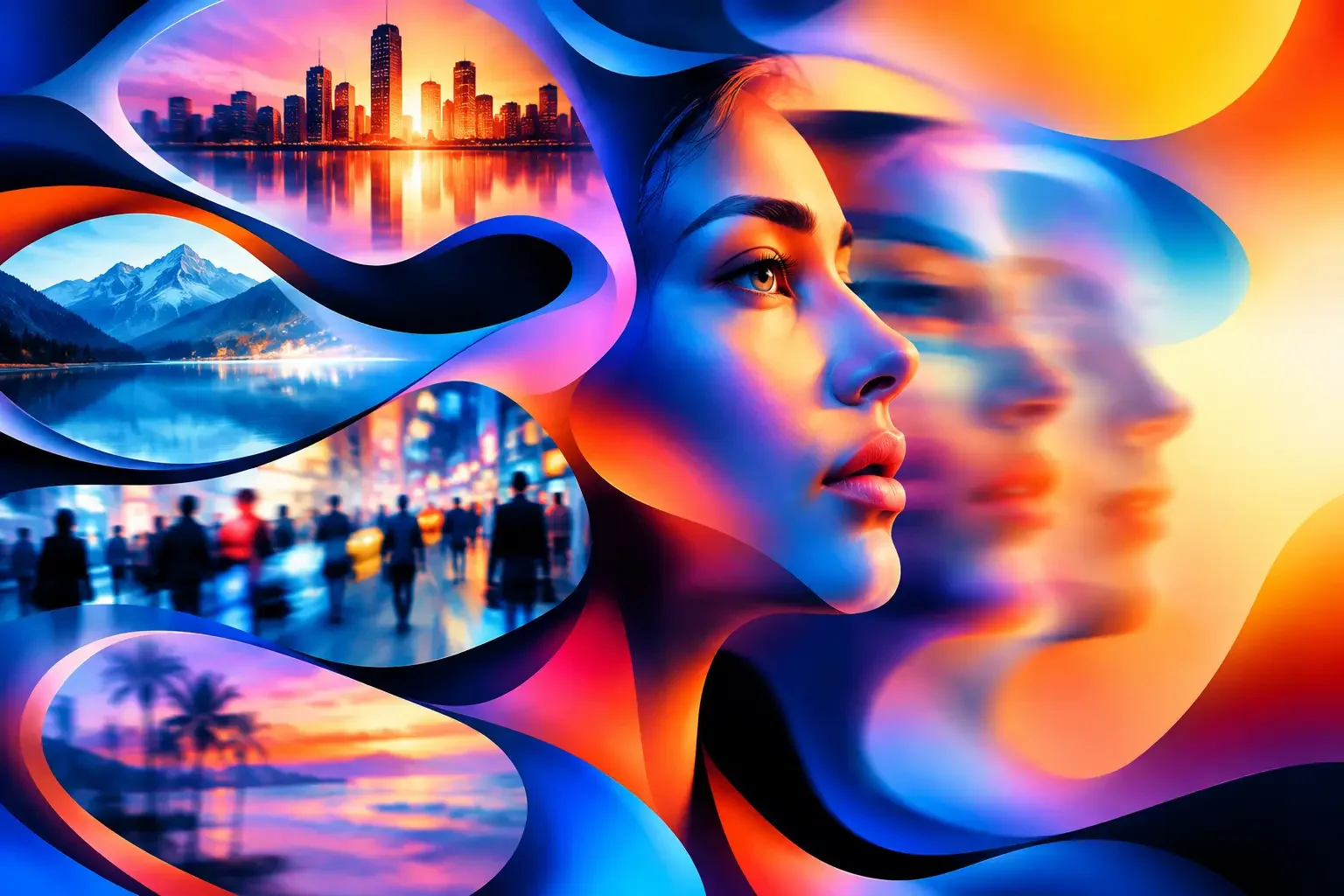
Blurred reality storytelling
The most unsettling thriller twist is not the masked stranger in the hallway. It is the moment a character realises the hallway may not exist, their memories have been edited, or every choice was nudged by someone with a corporate logo and a frighteningly polished mission statement. Blurred reality storytelling trends are thriving because they turn that small, modern suspicion - “hang on, who benefits if I believe this?” - into a full-scale narrative crisis.
This is the fiction of faulty memories, engineered happiness, simulations, altered timelines and systems that insist they know us better than we know ourselves. It has the brain-bending pull of Inception, the institutional chill of The Matrix, and the public-performance dread of The Truman Show. Readers do not come only for the big reveal. They come for the deliciously awful possibility that certainty was never as solid as it looked.
Why blurred reality storytelling trends feel so timely
Reality-bending stories have been around for centuries. The unreliable narrator did not arrive with a smartphone, and paranoia is hardly a new human hobby. What feels freshly charged is the context. We live among algorithmic feeds, synthetic images, personalised adverts and systems that quietly decide what appears next. Most of us have had the distinctly odd experience of discussing something, then seeing it advertised before the kettle has boiled.
That does not mean every targeted advert is proof of a vast conspiracy, obviously. But it does mean the mechanics of influence are no longer purely sci-fi furniture. A thriller about a company predicting behaviour, selling perfect decisions or smoothing away inconvenient emotions has a recognisable edge. It is exaggeration with a very good postcode.
The best books in this space understand that technology is not automatically the villain. The villain is often certainty without consent. A system may offer to remove grief, prevent violence, find the ideal partner or make society more efficient. Who would not be tempted? The trouble begins when “better” is defined by the people with the data, the money and the power to make opting out feel impossible.
That is why the corporate antagonist has returned with such force. Not the cartoonish baddie twirling a moustache in a boardroom, but the organisation with reassuring language, beautiful offices and a promise to improve humanity at scale. A global corporation can make the stakes feel enormous while keeping the terror intimate: your memories, your relationship, your idea of yourself.
The new thriller question is not “what happened?”
Classic thrillers often ask who committed the crime. Blurred-reality fiction adds a nastier question: can we trust the evidence, the witness or even the person asking? The mystery is not simply external. It gets under the protagonist’s skin.
A missing hour becomes more alarming when the character cannot tell whether they blacked out, were manipulated or chose to forget. A loving partner becomes suspicious when every conversation feels slightly rehearsed. A supposedly perfect city becomes horrifying not because it is visibly dystopian, but because nobody is allowed to name the cost of its perfection.
This creates a particularly addictive reading experience. Readers become active investigators, scanning dialogue for glitches and treating a throwaway detail on page 30 like it is a live wire. It is ideal book-club material because the argument continues after the final page: was that ending real? Was the protagonist free? Were they ever?
There is a trade-off, though. If a story keeps every answer slippery for too long, it can feel less like an intentional mind game and more like the author has misplaced the instruction manual. Readers will happily follow a book into the uncanny. They still want emotional logic. The rules can be strange, but they must feel like rules.
The reveal must change more than the plot
A twist lands hardest when it does not merely rearrange events. It changes the meaning of a character’s choices. Learning that the world is simulated is a useful shock. Learning that a protagonist willingly entered that simulation to escape a decision they could not bear? That is where the emotional bruising begins.
This is also why blurred-reality thrillers work best when they remain human beneath the cleverness. The premise may involve neural technology or a reality-shaping corporation, but the engine is usually grief, guilt, loneliness, ambition or love. Nobody stays up until 2am because a concept is technically impressive. They stay up because someone is about to discover that their life has been built around a lie, and it matters.
Perfect decisions are terrifying for a reason
One of the strongest threads in contemporary speculative thrillers is the fantasy of an optimised human being. Imagine a tool that tells you the correct thing to say, the safest route to take, the ideal career move, the person most likely to make you happy. For roughly five minutes, it sounds brilliant. Then the questions arrive.
What happens to instinct? To risk? To the gloriously irrational decision that looks ridiculous on paper but leads to a meaningful life? A perfect decision might minimise harm, but it may also minimise freedom. And if everyone follows the same optimisation model, who gets to decide what a worthwhile life looks like?
This is fertile territory because it resists easy answers. Some readers will see the appeal of a system that prevents suffering. Others will see a velvet-gloved form of control. The strongest fiction lets both responses breathe. It does not lecture from a mountaintop. It lets the reader feel the seduction before showing the bill.
Heptagon Books’ The Gap sits comfortably in this appetite for stories where reality feels fractionally, then catastrophically, off. The attraction is not confusion for confusion’s sake. It is the jolt of recognising a familiar world and noticing the seams have started to split.
The Gap. Part of the Schelldhardt series. Blurred reality sci-fi thrillers. Trailer best with sound. Click on the image above to play.
Not every reality-bender needs a simulation
The trend is broader than “surprise, you were in a computer programme”. In fact, the simulation reveal is so well known that it needs a fresh emotional angle to avoid feeling like a tribute act in a leather coat. Blurred reality can emerge through memory, surveillance, propaganda, a closed community, a morally compromised experiment or a narrator whose perception has become unreliable for understandable reasons.
A grounded version might involve a workplace wellbeing scheme that collects far more than mood data. A more surreal one might present a town where residents wake each morning with subtly revised shared memories. Both can work. The choice depends on what kind of unease the story wants to create.
Technology-led stories tend to provoke questions about ownership and power. Psychological stories place readers closer to a character’s private fear: what if my mind is betraying me? Social or political versions widen the lens, asking how a population can be persuaded to accept an absurdity because it is repeated often enough and packaged nicely.
The anti-globalisation undercurrent matters here, but subtlety helps. A corporation need not announce that it plans to consume the planet. It is often creepier when it speaks in the bland vocabulary of growth, frictionless service and human potential while gradually treating people as a product line. Readers recognise the language. That is the point.
Why these books are built to be shared
A good blurred-reality thriller creates spoilers readers desperately want to discuss but must not reveal. That is basically catnip for modern book culture. It produces reaction posts, theory threads, “I need to talk about chapter 18” messages and reviews carefully written in code.
The most shareable stories also offer a clear social question beneath the premise. Would you take the device? Would you erase the memory? Would you choose a pain-free life if it came with less agency? These are not decorative debate prompts. They are the kind of questions that make readers test the book against their own lives.
There is a reason these stories travel so well from page to screen and back again. They offer plot propulsion, philosophical bite and a highly visual sense of wrongness. A repeated phrase. A room that should not be there. A friend who knows something they should not know. The best of them understand that one small glitch can be more frightening than an explosion.
The real hook is uncertainty with consequences
For readers who love a thriller with a little existential static in the background, blurred reality is not a passing gimmick. It is a way of putting contemporary anxieties under a microscope without turning the novel into a lecture. We are already negotiating competing versions of events, curated identities and institutions asking for trust. Fiction gives that unease shape, stakes and, crucially, a page-turning plot.
So choose the book that makes you check the lock, question the algorithm and side-eye any company promising a better version of you. Just keep one thing close while you read: the most convincing illusion is usually the one that offers exactly what you wanted.
