
10 Thrillers About Unethical Technology to Read
Thrillers About Unethical Technology
You tap “accept”, hand over your face, voice, location and sleep data, then carry on making tea. That tiny act of consent is why thrillers about unethical technology work so brilliantly. Their monsters do not usually arrive with fangs or a dramatic thunderclap. They arrive as a subscription, a workplace perk, a dating app or a friendly little device that promises to make life less annoying.
The best of them understand the real horror: technology is rarely frightening because it is obviously evil. It is frightening because it is useful enough that we invite it in. Then, somewhere between convenience and catastrophe, the terms and conditions get extremely sinister.
What makes thrillers about unethical technology so addictive?
A good tech thriller takes a familiar promise - safety, connection, efficiency, better choices - and follows it past the point where a sensible person should probably put their phone in a drawer. Think The Matrix, The Truman Show and Inception: stories where reality becomes unstable, control wears a reassuring smile, and somebody else has been editing the rules.
The corporate villain is often the real star. Not a cackling mastermind in a secret lair, but a company with clean branding, a cheery mission statement and a growth target that somehow requires the removal of human agency. These books are not anti-technology in the “back to candles and carrier pigeons” sense. They ask harder questions. Who owns the data? Who gets to define risk? What happens when a system designed to optimise life decides that people are the inefficient bit?
Here are ten novels for readers who like their suspense clever, unsettling and just plausible enough to make them side-eye the next app update.
10 thrillers about unethical technology worth your time
1. The Circle by Dave Eggers
Mae Holland joins the Circle, a dazzling tech company determined to make the internet more transparent, connected and compulsory. The perks are excellent. The campus is gorgeous. The atmosphere is only mildly cult-ish at first.
Eggers turns social media’s appetite for visibility into a pressure cooker. The Circle is especially sharp on the way surveillance can be sold as morality: if you have nothing to hide, why would you object? It is a question that sounds reasonable right up until nobody is allowed a private thought.
2. The Path of Good Response/The Gap by Steve Frogley
What if there were a way to make a perfect decision? If poor choices, even addictions, could be controlled from within the mind. That’s the delicious premise behind these books. But what if this technology was abused by the world’s largest company for their own sinister purposes? This twisty series is well worth checking out.
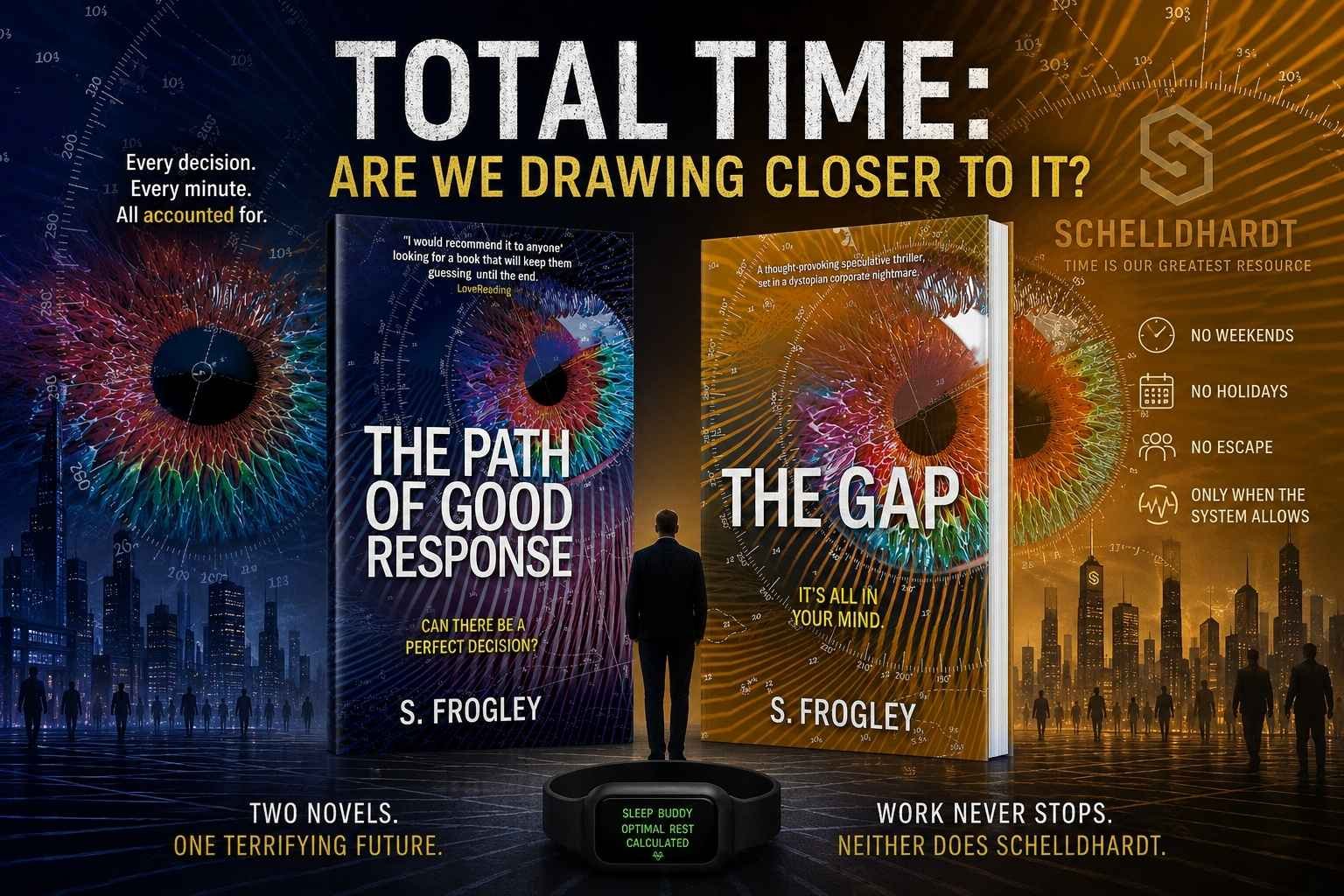
Ad: The Schelldhardt Series. Twisty and offbeat unethical technology thrillers.
3. The Warehouse by Rob Hart
Rob Hart’s corporate dystopia is built around Cloud, a retailer so vast it has become an employer, landlord and near-total ecosystem. Employees live on site, work relentlessly and find that leaving is not as simple as handing in a notice.
This is a thriller about unethical technology because the machinery is not merely the gadgets. It is the system. Algorithms govern work, convenience disguises dependence, and a company’s expansion becomes more important than the people inside it. Read it if the phrase “frictionless customer journey” gives you the tiniest chill.
4. The Passengers by John Marrs
Driverless cars are meant to make roads safer. In The Passengers, someone hacks eight autonomous vehicles, locks the occupants inside and forces the public to decide who should live. No pressure, then.
Marrs knows exactly where the tension lives: not in whether the technology can fail, but in the awful human choices built into it. The book is pacy, twisty and gleefully ruthless about public opinion, media spectacle and the fantasy that an algorithm can make an ethical decision without inheriting our prejudices.
5. The One by John Marrs
Imagine a DNA test that identifies your one true romantic match. No more dubious dating profiles. No more decoding “haha yeah maybe sometime”. Just science, certainty and a relationship industry immediately turned upside down.
The One is catnip for readers who enjoy relationship drama with a sinister speculative edge. Its central idea is seductive precisely because it sounds like a solution. Marrs then asks what certainty does to commitment, marriage, obsession and the people who receive a match they absolutely cannot have.
6. The Feed by Nick Clark Windo
The Feed is a neural implant that lets people communicate, share memories and access information directly through their minds. Naturally, it becomes indispensable. Naturally, something goes very wrong.
Windo gives the connected-life fantasy proper emotional stakes. When the network collapses, people are not simply without a device. They are cut off from memory, identity and the mental infrastructure that made the world function. It is tense, high-concept and very good on the vulnerability hidden inside total connection.
7. Daemon by Daniel Suarez
A brilliant game designer dies, leaving behind a programme that continues to operate after his death. What begins as a strange digital legacy grows into a frighteningly effective force, using networks, surveillance and human ambition to reshape society.
Daemon has the velocity of a conspiracy thriller and the grim satisfaction of watching powerful institutions realise they are not actually in charge. Its technology is more technical than some entries on this list, so it suits readers who enjoy the mechanics as much as the mayhem.
8. Kill Decision by Daniel Suarez
Autonomous military drones are no longer just a future problem in this thriller. They are already making decisions, adapting to threats and demonstrating the sort of initiative one usually prefers in a colleague rather than an armed machine.
The book moves fast, but its central concern lingers: once lethal systems can act without a human hand on the trigger, accountability becomes dangerously slippery. It is a strong pick for readers who want action alongside the bigger question of whether efficiency is ever an acceptable substitute for judgement.
9. Version Control by Dexter Palmer
This is the choice for readers who like their reality-bending fiction a little more cerebral. Rebecca Wright’s life begins to feel subtly wrong as her husband works on a device that may be capable of altering the past - or perhaps reality itself.
Palmer is less interested in explosions than in the unnerving consequences of possibility. What if technology could make a better world, but only by making your own memories unreliable? Version Control carries some of the same deliciously disorientating energy as Inception, with added marital tension and scientific obsession.
10. The Dream Hotel by Laila Lalami
Sara is detained after an airport system claims her dreams indicate she may commit a crime. Her punishment is not based on an action, a plan or even a conscious wish, but on predictive data interpreted by a company with immense power.
Lalami’s premise is chilling because it takes surveillance culture to its logical, dreadful extreme. The book is a reminder that prediction is not neutral simply because it wears the costume of mathematics. Somebody builds the model. Somebody chooses what counts as danger. Somebody profits from being believed.
The detail that makes these stories sting
The most memorable unethical-tech thrillers do not rely on a magical invention with no connection to real life. They exaggerate things we already tolerate: workplace monitoring, targeted advertising, biometric security, predictive policing, algorithmic matchmaking and the casual trade of private data for a slightly faster checkout.
That is why the genre has such range. Some readers will want the full conspiracy engine, where a corporation has plans within plans and the protagonist is running out of safe places to hide. Others will prefer the slow, queasy version, where nothing looks monstrous until the character notices that every choice has already been made for them.
It also depends on how close to home you want the fear. Autonomous weapons and neural implants offer big-screen stakes. Dating algorithms and sleep trackers are quieter, but perhaps nastier, because many of us have already volunteered for the beta test.
The next time an app promises to know you better than you know yourself, do not panic. Just read the privacy policy, keep an eye on the corporation behind the logo, and perhaps choose your next thriller before it chooses one for you.
