
Romance Publishing Trends Readers Set in Motion

Romance Publishing Trends
Romance publishing trends are not being dictated by a mysterious boardroom oracle in a very expensive blazer. They are being pushed, pulled, screen-shotted and enthusiastically argued over by readers who know precisely what they want: the right trope, the right emotional payoff, and a clear idea of whether the book is going to make them blush on the train.
That reader power is changing the genre in fascinating ways. Romance remains gloriously broad, from full-throttle spice to closed-door yearning, from cottagecore comfort to dating-app chaos. The strongest trend is not one plot device or one heat level. It is specificity. Readers are getting better at naming their tastes, and publishers that listen can help them find a book that feels made for their current mood rather than merely filed under “romance”.
Romance publishing trends are becoming reader-first
For years, romance was sold with broad strokes: contemporary, historical, funny, sexy. Now the conversation is much more precise. Is it fake dating or fake engagement? Is the third-act break-up devastating, avoidable, or blessedly absent? Is the hero brooding in a compelling way, or does he simply need to reply to a text? Does “slow burn” mean delicious tension, or 300 pages of two adults refusing to have one honest conversation?
This level of detail is not fussiness. It is discovery. BookTok, Bookstagram, reader reviews and group chats have created a shared shorthand that lets readers explain what they loved and, just as usefully, what was not for them. A cover may catch the eye, but a well-positioned book earns trust when its pitch sets the right expectations.
That means publishers are increasingly thinking like curators. Instead of pretending every romance is for every romance reader, the smarter approach is to say what a book actually delivers. Warm banter. High angst. Workplace friction. A gentle, low-to-no-spice love story. A chaotic dating premise with a genuinely earned happy ending. That clarity helps books travel through recommendation culture, where “you need to read this” still beats a glossy advert every time.
Heat ratings are useful, but they are not the whole story
Spice is still a major part of how readers browse romance, and quite right too. Heat level is a valid reading preference, not a moral referendum. Some readers want open-door scenes with maximum chemistry. Others want the tension, tenderness and emotional intimacy without explicit detail. Plenty move between both depending on the week, their stress level and whether they are reading at the dentist.
The useful shift is that conversations about heat are becoming more nuanced. “Low spice” does not mean low stakes, timid romance or a story without desire. Equally, a highly sensual book is not automatically shallow. What matters is whether the level of intimacy serves the characters and the tone.
Publishers have an opportunity here to be specific without becoming clinical. Readers deserve to know whether a story is closed door, open door, fade to black, or somewhere in the delightfully complicated middle. But the description should also tell them what kind of emotional experience waits on the page. Is this a sparkling rom-com? A grief-aware second-chance story? A flirtation built on mutual respect and spectacularly bad timing?
At Heptagon Books, a title such as The Attraction Abacus speaks to the growing appetite for romance that can be funny, emotionally switched on and accessible to readers who do not measure a book’s worth by the number of explicit scenes. There is room on the shelf for every heat level. The win is making the promise clear.
The new must-have is emotional precision
A romance can have every popular ingredient and still fall flat if the emotional centre feels vague. Readers will forgive a slightly implausible meet-cute. They will not forgive characters who supposedly belong together without showing why.
That is why emotional precision is becoming a quiet superpower in romance publishing. The most talkable books understand the particular fear beneath the flirtation: the person who has confused independence with never needing anyone; the dater exhausted by being endlessly assessed; the couple who must learn that compatibility is not the same as vulnerability.
Modern readers also want characters who feel like adults navigating adult pressures. Money, work, family expectations, friendship, divorce, fertility, identity and the sheer administrative nightmare of modern dating can all raise the stakes. Not every book needs to tackle all of it, obviously. That is how you end up with a spreadsheet wearing a paperback cover. But romance is at its best when the obstacle has emotional logic, not when it exists solely to delay the kiss until chapter 29.
Tropes are becoming invitations, not formulas
The trope boom has sometimes prompted a slightly weary question: have we all become incapable of describing a book without saying “enemies to lovers”? Absolutely not. Tropes are simply an efficient invitation. They signal a familiar kind of pleasure, then leave space for the author to make it strange, moving, funny or very specifically their own.
Fake dating remains popular because it creates immediate stakes and permission for proximity. Forced proximity works because there is nowhere to hide from the person getting under your skin. Friends to lovers has enduring power because it asks the terrifyingly delicious question: what if the person who already knows you best could become something more?
The trend worth watching is not a single trope winning the crown. It is trope combinations with a sharper point of view. Readers are drawn to concepts that feel recognisable but not factory-made: a romantic setup paired with a distinctive career, a particular city, a fresh comic voice, or a social pressure that feels painfully current. The trope gets attention; the execution earns the reread.
This is also where publishers need restraint. A book does not need twelve tropes stapled to its blurb like a hen-do sash. Two or three well-chosen signals, paired with a sense of the book’s emotional tone, will do more work than a frantic pile-up of keywords.
The cover has to survive the scroll
Romance covers are still doing an enormous amount of cultural work. Illustrated designs, bold type, clever visual motifs and confident colour palettes remain powerful because they can communicate tone at thumbnail size. Yet the current marketplace is not a one-look regime. Some readers adore bright, playful rom-com packaging; others want photographic drama, moody elegance or a design that signals quieter literary intimacy.
What matters is alignment. A cover that promises a breezy laugh-out-loud caper should not conceal a tear-stained emotional gut-punch, unless the marketing is prepared to explain the tonal range. Nor should a book with genuine comic sparkle be dressed as though everyone is about to spend 400 pages staring wistfully out of a rain-soaked window.
The same principle applies to titles, taglines and social posts. Reader trust is built when the packaging, pitch and pages are in conversation with each other. In a crowded feed, being accurately intriguing is better than being loudly misleading.
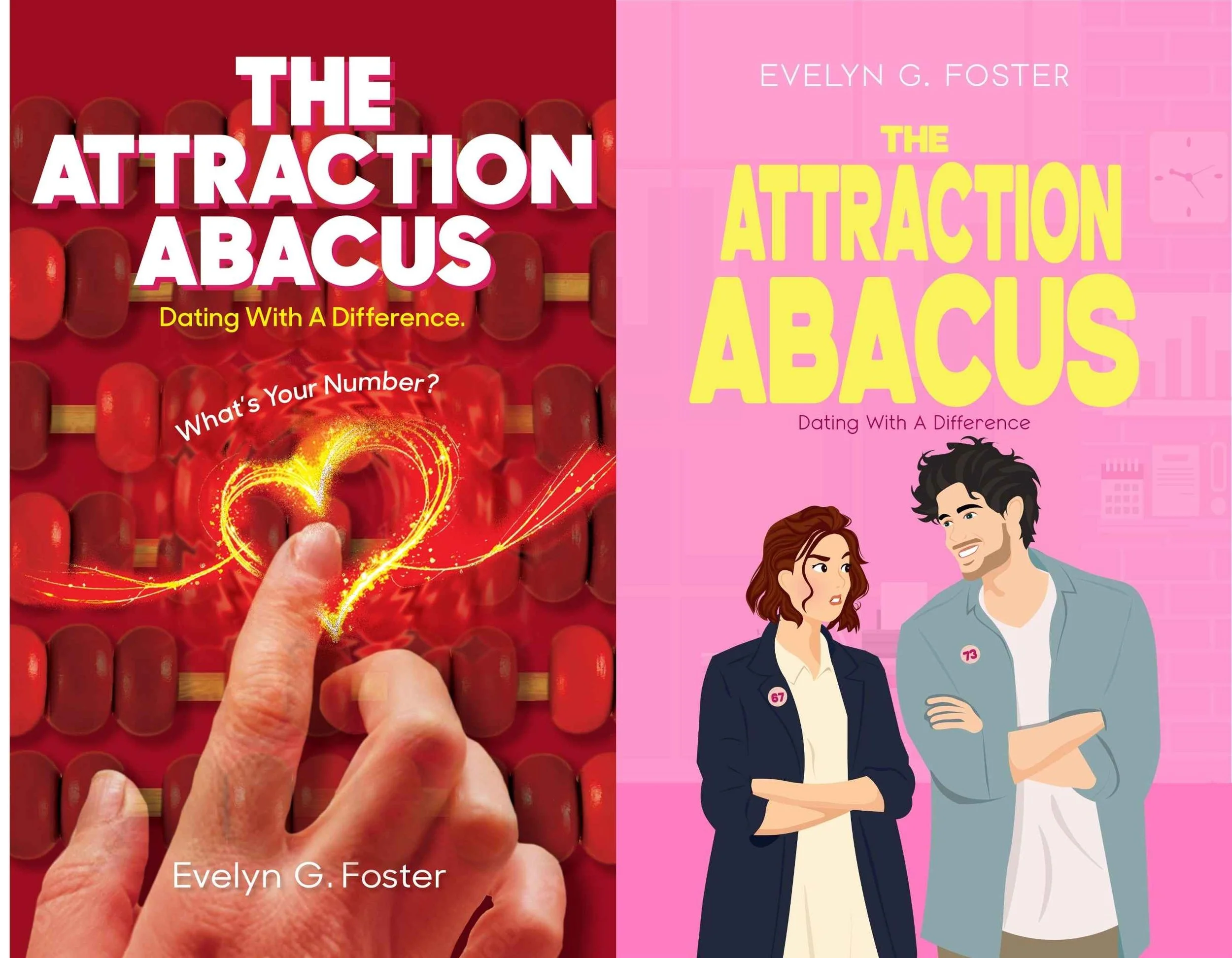
The Attraction Abacus. One of these covers sold the book better than the other. Can you guess which?
Romance is becoming more social, not less literary
There is a tired assumption that books popular on social media must be lightweight. It tends to come from people who have never watched thousands of readers conduct a forensic analysis of fictional communication styles before breakfast.
Social reading culture rewards feeling. It makes room for humour, swoon, anger, comfort and the catharsis of a happy ending that has been properly earned. It also encourages readers to speak plainly about representation, relationship dynamics and what they would like to see more of. Those conversations can be messy, as public conversations tend to be, but they are useful signals rather than noise.
For publishers, this means author personality matters. Readers increasingly connect with writers who can talk about their work in a human way, whether that is sharing a writing quirk, joining a trope debate, or admitting that a fictional man may have been given unreasonable levels of emotional intelligence. The aim is not to turn every author into a full-time content machine. It is to give readers a reason to care before, during and after publication.
What readers should expect next
Expect romance to keep widening rather than narrowing. There will be more books that are explicit about their heat level and their emotional territory. More hybrid stories that borrow from mystery, fantasy, literary fiction and women’s fiction. More dating narratives that understand apps without making every character sound like a push notification. And, thankfully, more recognition that a satisfying romance can be tender, hilarious, sexy, awkward, melancholy or all five by page 80.
The best way to find your next favourite is not to chase every viral title like it is the last croissant at the brunch table. Follow the clues in your own reading life. Notice which scenes you reread, which tropes make you immediately sit up, and whether you want comfort, chaos or a properly inconvenient crush. The right romance is out there, probably already being recommended with six exclamation marks by someone who gets it.
