
Future Romance Publishing Trends We’re Watching

Future Romance Publishing Trends
Romance readers are no longer asking only, “Is it good?” They are asking whether it is grumpy/sunshine good, third-act-break-up good, five-chilli good, no-spice-but-still-kicking-my-feet good. That shift sits at the heart of future romance publishing trends: readers want the emotional experience signposted before they commit, but they still want a story with enough spark to surprise them.
The genre is not becoming less romantic. It is becoming more precise. For publishers, authors and anyone with a TBR pile held together by optimism, this means the next big love story may not be the one that tries to please everybody. It may be the one that knows exactly who will text their mate, “You need to read this immediately.”
Future romance publishing trends are getting specific
For years, “romance” was treated as a very broad shelving instruction. Now it is closer to a reader’s personal ordering system. A book can be a rom-com, a dating story, a workplace romance, a small-town escape, a queer love story, a slow burn, or a closed-door read with enough yearning to power the National Grid.
This is not just BookTok terminology escaping into the wild. It reflects a genuine change in how people choose books. Readers are using tropes, heat levels, mood and emotional stakes to find the right read for the right moment. Someone coming out of a bleak week may want banter and a guaranteed happy ending. Someone else may want a bruising, complicated relationship novel that makes them stare at the ceiling at 1am.
The opportunity is obvious: clearer positioning helps the right readers find a book. The risk is turning fiction into a menu of tags. Tropes can open the door, but they cannot do all the work. “Fake dating” gets attention; two characters with actual chemistry, believable fears and a reason to change each other’s lives are what make readers stay.
Expect publishers to get better at describing the feeling of a novel, not merely its plot. The most useful copy will tell readers whether they are signing up for chaos, comfort, aching longing, a little bit of mess, or all of the above in a very good coat.
Low spice is not low stakes
One of the most interesting shifts in romance is the growing confidence around low-to-no spice fiction. This is not a backlash against high-heat books. Plenty of readers adore them, and fair play. It is a demand for range.
For some, closed-door romance offers an escape without explicit scenes. For others, it puts the focus on dialogue, tension and the tiny unbearable details: the hand that lingers, the joke that lands too accurately, the text message reread six times. A kiss can be the main event when the build-up has earned it.
The publishing lesson is simple but often missed: heat level is not a quality scale. A tender, low-spice story can be wildly romantic. A spicy book can be emotionally rich. A reader’s preference may change from one week to the next, depending on mood, life stage and whether they have just endured three dates with people who described themselves as “entrepreneurs”.
What readers need is honest signalling. Vague marketing creates mismatched expectations, and mismatched expectations create the sort of review nobody wants to meet in a dark alley. Clearer language around intimacy, tone and content helps readers choose with confidence while giving authors room to write the love stories they actually want to write.
The real growth area is emotional clarity
The best romance marketing will increasingly answer questions that matter beyond spice. Is this funny or melancholy? Does it contain a breakup? Is the ending secure? Are the leads adults capable of saying what they mean, or are we enjoying 350 pages of spectacularly avoidable misunderstandings?
Not every detail belongs in a blurb, obviously. Mystery is part of the fun. But readers are becoming more vocal about what makes them feel safe, seen and satisfied. That makes emotional clarity a commercial advantage, not a creative compromise.
Dating fiction is about to get more honest
Modern dating has supplied romance writers with a near-infinite amount of material: apps, situationships, voice-note overthinking, location sharing, accidental soft launches and the strange politics of who pays for the first drink. The next wave of dating-centred fiction is likely to get less glossy about all of it.
Readers still want escapism. They also want recognition. A heroine who has never had a bad date, an awkward flat-share arrangement or an opinionated group chat may feel less like a romantic lead and more like a very well-managed brand partnership.
The strongest contemporary romance will keep the fantasy but acknowledge the admin. Love now happens alongside work stress, money worries, co-parenting, friendship changes and the exhausting task of presenting a coherent self online. That does not mean every book needs to become a spreadsheet with kisses. It means the emotional obstacles should feel lived-in.
Books such as The Attraction Abacus speak to this appetite for romance that understands dating can be funny, chaotic and weirdly strategic without losing sight of the human beings involved. Readers want laughs, yes, but they also want the relief of seeing their own romantic confusion treated with warmth rather than cynicism.
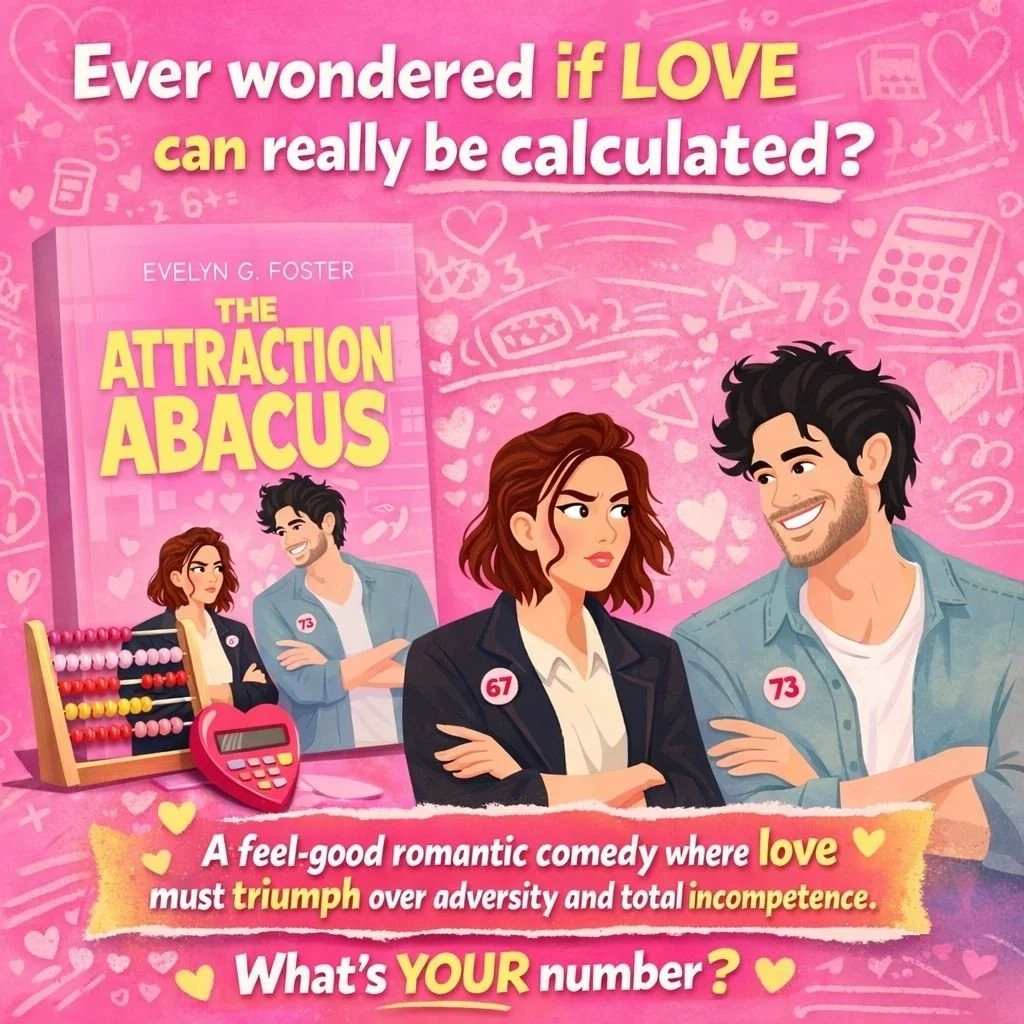
Ad: The Attraction Abacus. Dating chaos!
Author personality will matter, but the book still has to deliver
Romance has always had devoted readers, but social platforms have made author-reader connection more visible. People do not simply follow a book release; they follow the author’s jokes, playlists, cat, writing updates, mildly unhinged character polls and occasional confession that the third-act breakup nearly broke them too.
This direct connection will remain a powerful part of romance publishing. Readers enjoy feeling close to the creative process, and independent publishers can be particularly good at building that sense of invitation. There is a difference, though, between personality-led publishing and asking authors to become full-time content machines with a manuscript squeezed into the gaps.
The trade-off is real. Social visibility can help a brilliant book find its people, but it cannot manufacture lasting affection for a story that feels generic. Nor should every writer be expected to perform their private life for the algorithm. The healthiest future is one where authors can show up in ways that suit them, whether that means sharp videos, thoughtful newsletters, gorgeous visuals or simply writing the sort of book readers cannot stop discussing.
Romance will keep crossing genre lines
Romance readers are famously open to a good premise, provided the love story delivers. That is why romantic suspense, fantasy romance, mystery rom-coms and speculative love stories continue to attract attention. The relationship gives the plot emotional gravity; the genre frame gives readers a fresh way to experience it.
This does not mean every novel needs a dragon, a murder or a time loop. Sometimes two people in a café are plenty. But cross-genre romance can offer a useful answer to reader fatigue. When familiar tropes are placed in a new setting, they can feel exciting again.
The key is balance. If a book is marketed as romance, readers reasonably expect the relationship to matter, the emotional arc to land and the ending to honour the genre’s promise. If it is a thriller with a romantic subplot, say that. Nobody enjoys being catfished by a cover.
What publishers should resist
Trend awareness is valuable. Trend-chasing is how we end up with a shelf full of books trying to recreate last year’s viral moment. Readers are quick to spot copy-and-paste premises, especially in a genre built on emotional sincerity.
Future romance publishing trends should be used as a listening tool, not a formula. Notice that readers want clearer heat labels. Notice that they are craving mature characters, more varied love stories and less judgement around what counts as “real” romance. Then publish books with a point of view.
The stories most likely to last will not be the ones that squeeze every current buzzword into the pitch. They will be the ones that understand why people reach for romance in the first place: for hope, wit, desire, comfort and the delicious possibility that someone might finally say the thing they have been trying not to say.
That is a future worth reading towards. Give readers the signposts they need, leave room for surprise, and let the heart of the story do the flirting.
