
What Makes Speculative Fiction So Addictive?
Speculative Fiction stories
You wake up, make tea, check your phone, and discover the rules of your life were written by a corporation you have never heard of. Or perhaps everyone else has agreed that the sky is green and you are the inconvenient weirdo insisting it was blue yesterday. That delicious itch under the skin is where speculative fiction lives. It takes the world we recognise, nudges one crucial piece out of place, then watches the consequences get very strange indeed.
For readers who enjoy the mind-bending unease of The Matrix, Inception or The Truman Show, the appeal is obvious. Reality is not a stable floor. It is a trapdoor, and someone is reaching for the handle.
What speculative fiction really means
Speculative fiction is an umbrella term for stories that imagine a world different from ours, then use that difference to test an idea, a fear or a human instinct. Science fiction, dystopian fiction, alternate history, fantasy and certain horror stories can all sit beneath it. The common ingredient is not spaceships, dragons or a compulsory scene involving a laboratory with suspiciously dim lighting. It is the question: what if?
What if an algorithm could decide the best choice for every person? What if a company promised happiness, safety and efficiency, then quietly took ownership of the right to disagree? What if the person you love was not quite who they said they were, and neither were you?
The best speculative fiction does not ask these questions for the aesthetic of it. It asks them because they put pressure on something real. Free will. Memory. Consumer culture. Loneliness. The terrifying ease with which people will trade autonomy for comfort when the sales pitch is polished enough.
That is why the genre can feel so current even when its premise is wildly improbable. You might not believe your local supermarket is harvesting your dreams. But you probably understand the sensation of being watched, measured, recommended to and sold a version of yourself. The sci-fi bit is often only half a step ahead of the headlines.
Why blurred reality hits so hard
A reality-bending thriller works because it recruits the reader as an investigator. You are not just wondering what happens next. You are asking whether what has already happened was true.
That shift creates a very particular kind of tension. In a conventional thriller, danger may be outside the protagonist: somebody is following them, a secret is about to surface, a body is in the boot of a car. In speculative fiction, the danger may be built into perception itself. The protagonist cannot trust their employer, their family, their memories or the evidence right in front of them. Frankly, neither can you.
It is a powerful arrangement because readers are wired to look for patterns. Give us an oddly phrased instruction, a smiling executive who is a little too calm, or a town where everyone knows the same impossible story, and we start building theories immediately. We become the friend who has paused the film to say, “Hang on. That lamp was not there before.”
The trade-off is that these stories have to play fair. A twist should reframe the story, not make the reader feel as though the author has nicked the board and gone home. The most satisfying reveals are hiding in plain sight: a detail that seemed decorative becomes devastating; an early warning suddenly reads like a confession.
The ordinary world is doing a lot of work
The more recognisable the starting point, the more unnerving the alteration. A near-future office, a dating app, a family home, a familiar high street or an innocuous wellness programme can be far more unsettling than a galaxy several centuries away.
This is not a vote against big, imaginative world-building. Give us strange planets and impossible technologies by all means. But the emotional grip often comes from a simple human anchor: someone wants to be loved, believed, safe or free. If the reader can feel that need, they will follow the protagonist into the most disorientating premise going.
The corporate villain is not just wearing a nice suit
Modern speculative thrillers are especially alert to the corporation as a source of menace. Not because every business meeting ends with a plan to replace humanity with a subscription service, although some PowerPoint decks do have that energy. The corporation works as a compelling antagonist because it can make control look helpful.
A charismatic global company rarely announces that it wants to erase individual choice. It talks about convenience, progress, connection, wellbeing, optimisation. Its product solves a real problem, which is why people buy in. The creepiness begins when the solution becomes unavoidable.
This is where anti-globalisation themes can become genuinely interesting rather than slogan-heavy. A story does not need to insist that all technology is bad or that every large organisation is staffed by cartoon villains. The sharper question is about scale and accountability. Who gets to make decisions for millions of people? Who benefits when local knowledge, messy differences and awkward dissent are filed away as inefficiencies?
Speculative fiction gives those questions teeth. A policy becomes a life-or-death choice. A data point becomes a person. A corporation's promise of a better world becomes a system in which there is no meaningful way to say no.
A perfect decision can be a frightening thing
Some of the most compelling stories in the genre are not really about whether machines are cleverer than us. They are about whether a flawless decision would still be human.
Imagine a system that can predict the outcome of every choice. It knows which partner will hurt you, which job will make you miserable, which train you should catch and which argument will end a friendship. At first, that sounds less like dystopia and more like the personal assistant of exhausted dreams.
Then comes the difficult bit. If the system is always right, what happens to regret, risk, impulse and change? A life without bad decisions might also be a life without truly chosen ones. There is no clean answer, which is precisely why the premise sticks.
Great speculative fiction does not hand over a laminated moral at the end. It lets the reader sit with competing truths. Security matters. Connection matters. Technology can be useful. But freedom is not only the right to choose well. Sometimes it is the right to choose badly, learn the hard way and remain inconveniently, gloriously responsible for yourself.
It is not all bleakness, promise
The genre has a reputation for grey skies, brutal governments and protagonists running through corridors while an alarm goes off. Those things absolutely have their place. Sometimes you want a book that makes you look suspiciously at the smart speaker in your kitchen. But speculative fiction can also be funny, romantic, tender and full of hope.
A strange premise can sharpen love stories, too. If two people are separated by different versions of reality, is their connection still real? If society assigns compatible partners by formula, what does chemistry look like? If memory can be edited, what do we owe the people we used to be? Suddenly the emotional stakes have extra voltage.
That flexibility is part of the genre's magic. One reader arrives for a cerebral conspiracy. Another wants a high-concept thriller with proper pace. Someone else wants a philosophical gut-punch they can discuss in the group chat at midnight. A strong speculative novel can deliver all three without feeling like it is trying to impress a judging panel.
How to spot the kind you will love
If you are new to speculative fiction, do not get stuck trying to identify the exact subgenre before you start. Follow the feeling you want. If you like paranoia, unreliable reality and puzzle-box plotting, look for speculative thrillers. If you want power structures, surveillance and social pressure, dystopian fiction may be your lane. If you prefer the human mess at the centre of a strange idea, seek books described as character-led or literary speculative fiction.
Also, check the promise of the premise. A book about a secret technology can be an action story, a quiet moral drama, a romance or a full-on nightmare. None is inherently better. It depends whether you want to race through chapters, underline existential observations, or both. The Gap, for instance, is for readers who enjoy a thought experiment with teeth: the kind that makes certainty feel suspicious.
The real joy is finding books that keep working after the final page. You finish the plot, put the kettle on, and then a question follows you around for days: if a better world came with terms and conditions, would you read the small print? That is where speculative fiction earns its place on the shelf - and, usually, in the group chat.
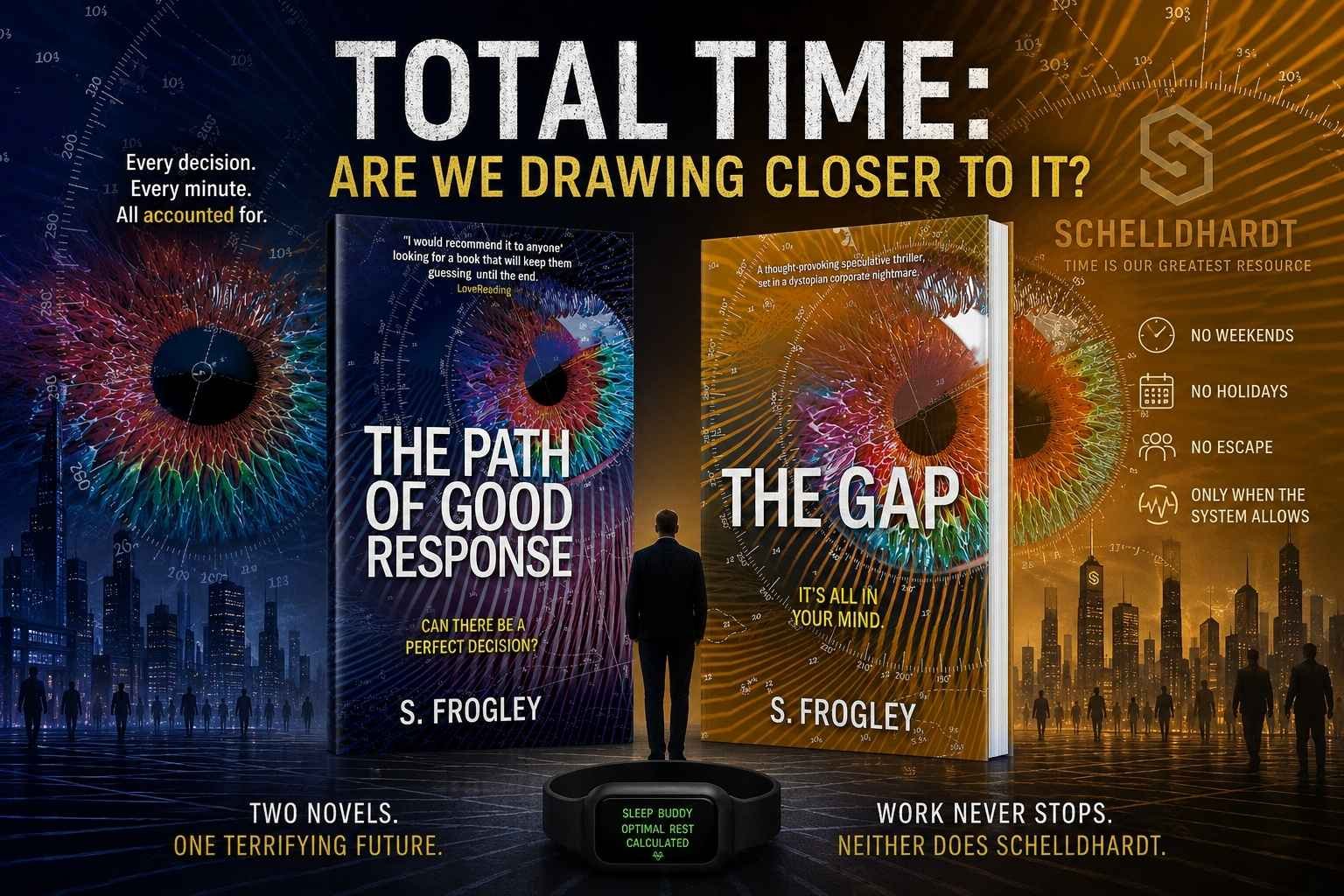
Ad: The Schelldhardt Series. Check out these speculative novels.
