
How to Assess Romance Chemistry in Any Book

Romantic chemistry
A character can have cheekbones sharp enough to cut glass, a tragic backstory and a flat in Notting Hill, but none of that guarantees romantic chemistry. We have all met the supposedly epic book couple who leave us feeling like we have been asked to clap for a work presentation. If you are wondering how to assess romance chemistry before committing to 400 pages, look beyond the blurb’s promise of “sparks”. The real thing has a pulse.
Chemistry is not the same as spice, nor is it simply two attractive people exchanging knowing looks. It is the delicious sense that these particular characters change the temperature of a scene when they are together. It can power a closed-door rom-com just as effectively as a high-heat enemies-to-lovers situation. The question is not, “Do they fancy each other?” It is, “Do I believe nobody else could create this exact mess?”
Start with the energy between them
The quickest way to spot chemistry is to watch what happens when the leads share page space. Do their conversations have movement? Are they listening, deflecting, challenging, surprising one another? Great banter is not just a volley of polished one-liners. It reveals character.
Perhaps she makes a joke because she is terrified of being sincere. Perhaps he refuses to laugh because he knows she is trying to distract him from an uncomfortable truth. The exchange should give you a tiny plot as well as a gag. If the dialogue could be swapped between any two people in any contemporary romance without changing a word, it may be pleasant, but it is not electrically specific.
This does not mean every couple needs bickering worthy of a screwball comedy. Quiet chemistry exists. A reserved pairing may communicate through careful questions, remembered details or a silence that feels safe rather than empty. The key is attention. Each person notices something about the other that matters.
How to assess romance chemistry beyond the banter
Banter gets the clips and quote graphics. Vulnerability is usually what makes readers stay up until 2am making very poor decisions about tomorrow morning.
Look for moments where the characters lower their guard, even briefly. One might reveal a fear and instantly regret it. The other might see through a carefully curated persona. The scene does not need a grand trauma monologue under the rain. In fact, chemistry often becomes clearer in smaller moments: someone being allowed to be boring, grumpy, wrong or unpolished without the connection vanishing.
A convincing romance gives both characters something to risk. If one lead does all the emotional labour while the other remains a gorgeous locked door, the dynamic can feel lopsided. Mystery is attractive. Emotional unavailability, presented as a personality trait with a nice coat, becomes tiring rather quickly.
Ask whether their intimacy has progression. At the start, they may perform for one another. Later, they should begin to react honestly. Their private language develops. Their arguments hit harder because they now know where the soft bits are. That movement is chemistry becoming attachment, and it is catnip when handled well.
Tension needs a reason to exist
Romantic tension is the gap between what characters want and what they will admit. It is not merely prolonged eye contact, although we fully support a strategically deployed glance across a crowded room.
The strongest tension comes from a genuine obstacle. Maybe they have opposing goals, incompatible assumptions or a history that means trust will cost something. The obstacle should arise from who they are, not from a misunderstanding that could be fixed by one text message sent before lunch.
There is a trade-off here. Too little conflict and the romance feels frictionless, like watching two people agree on a restaurant for 300 pages. Too much manufactured conflict and readers begin quietly rooting for everyone to take a week away from their phones. Good chemistry makes you understand why these people cannot simply walk away, even when part of you is yelling, “Please communicate.”
Check whether the attraction is mutual and active
A romance can begin with one-sided longing, of course. Pining has earned its place in the genre hall of fame. But the relationship itself needs reciprocity eventually. Both people should make choices, not merely be chosen.
Pay attention to action. Who remembers the other person’s important presentation? Who adjusts a plan, offers comfort, challenges a harmful belief or turns up when it would be easier not to? Grand gestures are fun, but they land best when backed by a pattern of smaller care.
This is especially useful when deciding whether a book’s romantic lead is actually swoon-worthy or simply described as such by everyone in the room. A character does not become compelling because the narration calls them devastatingly handsome seventeen times. They become compelling when their behaviour creates trust, fascination or an irresistible urge to shake them by the shoulders.
Mutuality also means each character retains a life. The best pairings do not erase friends, ambitions or individual quirks in the name of destiny. They make room for each other while becoming more fully themselves. Yes, even when one of them is a chaos goblin with a questionable dating history.
Notice the scene after the scene
A kiss can be excellent. A declaration can be properly cinematic. But to assess romance chemistry, look at what follows the big moment. Does it alter the way they speak? Does it complicate the plot? Does it expose a new fear or bring a new tenderness into the relationship?
If a major intimate scene changes absolutely nothing, it may have been there for heat rather than connection. That is not automatically bad - sometimes a book is serving a specific fantasy, and we respect the assignment. But readers searching for emotional payoff usually want consequences. They want the post-kiss panic, the sudden honesty, the “oh no, this matters now” realisation.
In low-to-no-spice romance, this principle matters even more because every touch, pause and almost-confession carries extra weight. A hand held under the table can have more impact than an entire bedroom scene if the story has earned it. The Attraction Abacus, for instance, plays in that wonderfully modern space where dating logistics and feelings refuse to stay neatly separated.
Use your own reader settings
There is no universal chemistry detector. Some readers want enemies-to-lovers with verbal sparring sharp enough to require protective eyewear. Others want friends who already know one another’s coffee order and slowly realise that this is, in fact, a very big deal.
Before declaring a couple flat, consider what you personally need from romantic fiction. Do you prefer immediate attraction or a slow burn? Do you need humour, emotional angst, external plot stakes or maximum cosiness? A pairing can be well written and still not be your pairing. That is taste, not a moral failing, despite what the group chat may imply.
It also helps to separate chemistry from compatibility. Two characters may have phenomenal chemistry and make objectively chaotic long-term choices. Equally, a stable, kind couple may be highly compatible but offer less page-scorching tension. The most satisfying romances tend to balance both, but different subgenres lean differently. A rom-com may prioritise comic friction; a relationship-centred novel may prize emotional safety; a thriller with a romantic subplot may ration every charged encounter.
The final test: do you feel the pull?
The clearest sign of romance chemistry is beautifully unscientific: you want them back in the same room. When the plot separates them, you notice the absence. When they misunderstand each other, you feel the particular frustration of knowing exactly why it hurts. When they finally choose each other, it feels less like the author ticking a genre box and more like a release of pressure that has been building all along.
Trust that response. The best romantic pairings do not merely tell you that love is possible. They make you believe, for a few gloriously inconvenient hours, that these two people had no chance of escaping it.
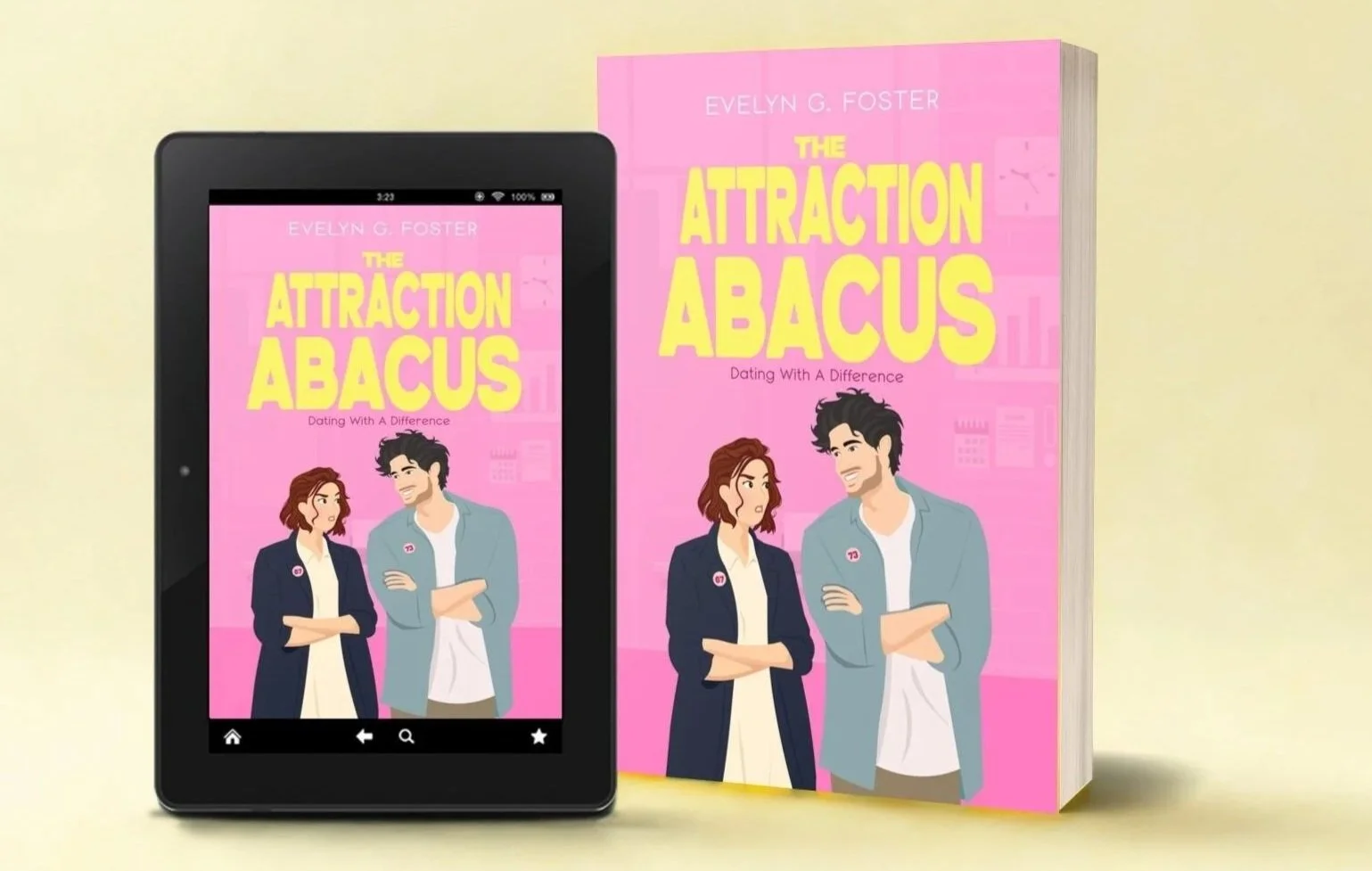
Ad: The Attraction Abacus. Enemies to lovers chemistry!
