
7 Decision Making Novels That Make Certainty Feel Risky
Decision making novels
A choice is only easy before the consequences arrive. That is the deliciously cruel engine behind the best decision making novels: one answer, one missed call, one signature, one person trusted at precisely the wrong moment - and suddenly the whole plot has teeth.
These are not necessarily books about brilliant people making perfect calls. Frankly, perfect decisions make for dreadful fiction. The novels that linger are interested in hesitation, self-justification and the tiny compromises that become impossible to reverse. They ask the uncomfortable question: if you knew more, would you choose better? And the nastier follow-up: what if knowing more is the problem?
For readers who like their thrillers brainy, their dystopias unsettling and their romance emotionally switched on, decision-making fiction offers a particularly satisfying kind of chaos. It puts the reader in the hot seat. You are not just watching a character press the button. You are quietly wondering whether you would press it too.
What makes decision-making novels so addictive?
A proper decision novel does not simply give its protagonist a fork in the road. It makes both roads feel plausible, costly and revealing. One route might protect the person they love but betray a principle. The other might be morally cleaner but emotionally catastrophic. Suddenly, there is no obvious “good choice”, only a choice that shows us who somebody is when the pressure is properly on.
That is why this corner of fiction works across genres. In romance, the decision can be whether to risk vulnerability when old heartbreak has taught you to keep an exit plan. In speculative fiction, it might be whether a safer society is worth surrendering privacy, memory or free will. In a thriller, it is often whether to tell the truth when the truth is the thing most likely to get you killed. No pressure, then.
The very best examples also refuse to treat logic and emotion as enemies. People do not make decisions like spreadsheets with hair. We make them through grief, attraction, fear, ambition, loyalty and whatever story we have been telling ourselves about who we are. A novel can put that mess under a microscope without making it feel like homework.
7 decision making novels worth your next reading sprint
1. The Path of Good Response by Steve Frogley
A story built around the possibility of a “good response” has an irresistible premise for readers who love big philosophical stakes with a thriller pulse. What would a perfect decision look like in a human being? More troublingly, who gets to define perfect?
This is the kind of reality-blurring speculative fiction for readers who enjoy the uneasy aftertaste of The Matrix, Inception and The Truman Show. Expect questions that keep expanding after the chapter ends: whether choice can be engineered, whether certainty is freedom, and what happens when a corporation’s appetite for growth becomes a threat to the people it claims to serve. Ideal if you enjoy a book that makes you stare at the ceiling, then distrust the ceiling slightly.
2. Never Let Me Go by Kazuo Ishiguro
Few novels show the horror of constrained choice more quietly than Never Let Me Go. Its characters live within a system that has already decided what their lives are worth, and the power of the book lies partly in what they do not challenge.
It is not a conventional chase-thriller, but it creates a different kind of dread: the sense that acceptance can be taught, normalised and made to feel almost tender. Read it for its emotional precision, then spend several days thinking about the decisions we call personal when the world has already narrowed the available options.
3. Dark Matter by Blake Crouch
If you have ever wondered how many alternate versions of your life are hiding behind one ordinary choice, Dark Matter is ready to ruin your evening in the best way. A man is pulled into a version of reality shaped by a different path, and suddenly the fantasy of “what if?” becomes a full-scale identity crisis.
Crouch keeps the pace high, but the real hook is emotional. Is a better life still yours if another version of you did the living? And how much damage can be justified in the name of returning to the people you love? This is a strong pick for readers who want their existential panic served at thriller speed.
4. The Circle by Dave Eggers
The pitch for total transparency always sounds cleaner than it feels. In The Circle, a dazzling technology company sells connection, convenience and the end of secrecy. The catch is that privacy begins to look suspicious, and opting out becomes harder than opting in.
The novel’s decisions are rarely presented with villainous flashing lights. That is what makes them bite. Each concession seems reasonable in isolation. Share a little more. Track a little more. Let the platform solve one more human problem. By the time the costs are visible, the machine has already gained momentum. For anyone suspicious of a cheerful corporate slogan, this one will feel uncomfortably current.
5. The Gap by S.Frogley
What if decision-making were influenced on a global scale? “Think of Schelldhardt as an influencer . No, think of Schelldhardt as the ultimate influencer,” says Miles Brooke, Schelldhardt CEO. Using their vast online influence, Schelldhardt, the world's largest company, is bombarding the global population with binary questions, targeting their audience in their individual echo chambers. To what end? This novel takes decision-making to its logical conclusion!
6. The Remains of the Day by Kazuo Ishiguro
Some decisions announce themselves with a bang. Others are made through years of not acting. The Remains of the Day is a masterclass in the latter: a novel about duty, repression and the emotional cost of repeatedly choosing service over self-knowledge.
Stevens, the novel’s butler narrator, is not faced with one cinematic turning point. Instead, he constructs a life from small acts of avoidance and calls it dignity. The result is devastating because it understands a hard truth: indecision is still a decision, and politeness can sometimes be a very elegant form of escape.
7. The Power by Naomi Alderman
A change in the balance of power should create a fairer world. Shouldn’t it? Alderman’s novel takes that tempting assumption, gives it a sharp electric charge and watches what people do with it. As women and girls gain a physical advantage over men, institutions, families and nations begin to tilt.
What makes the book such a strong choice for this list is its refusal to offer easy moral comfort. Power does not automatically improve the person holding it. Good intentions do not stay good when they meet fear, status and opportunity. It is provocative, playful and properly thorny - exactly the sort of book that makes a reading group chat go feral.
The choice is the point, not the correct answer
The most memorable decision making novels do not hand over a neat lesson in how to live. They make certainty look suspicious. They let characters choose badly for understandable reasons, choose well for selfish ones, and discover that consequences have a wicked habit of arriving late.
So choose according to your current appetite. Want a corporate nightmare with reality wobbling at the edges? Start with The Path of Good Response or The Circle. Want a fast, multiverse-flavoured spiral? Pick up Dark Matter. Want the ache of choices left unmade, with emotional devastation delivered in immaculate prose? Ishiguro has you covered. And if your biggest current dilemma is whether the charming but confusing date deserves a second chance, a sharp contemporary romance may be the most honest fiction of all.
The useful thing about these books is not that they tell us what to do. It is that they make us notice the stories we tell ourselves before we do it.
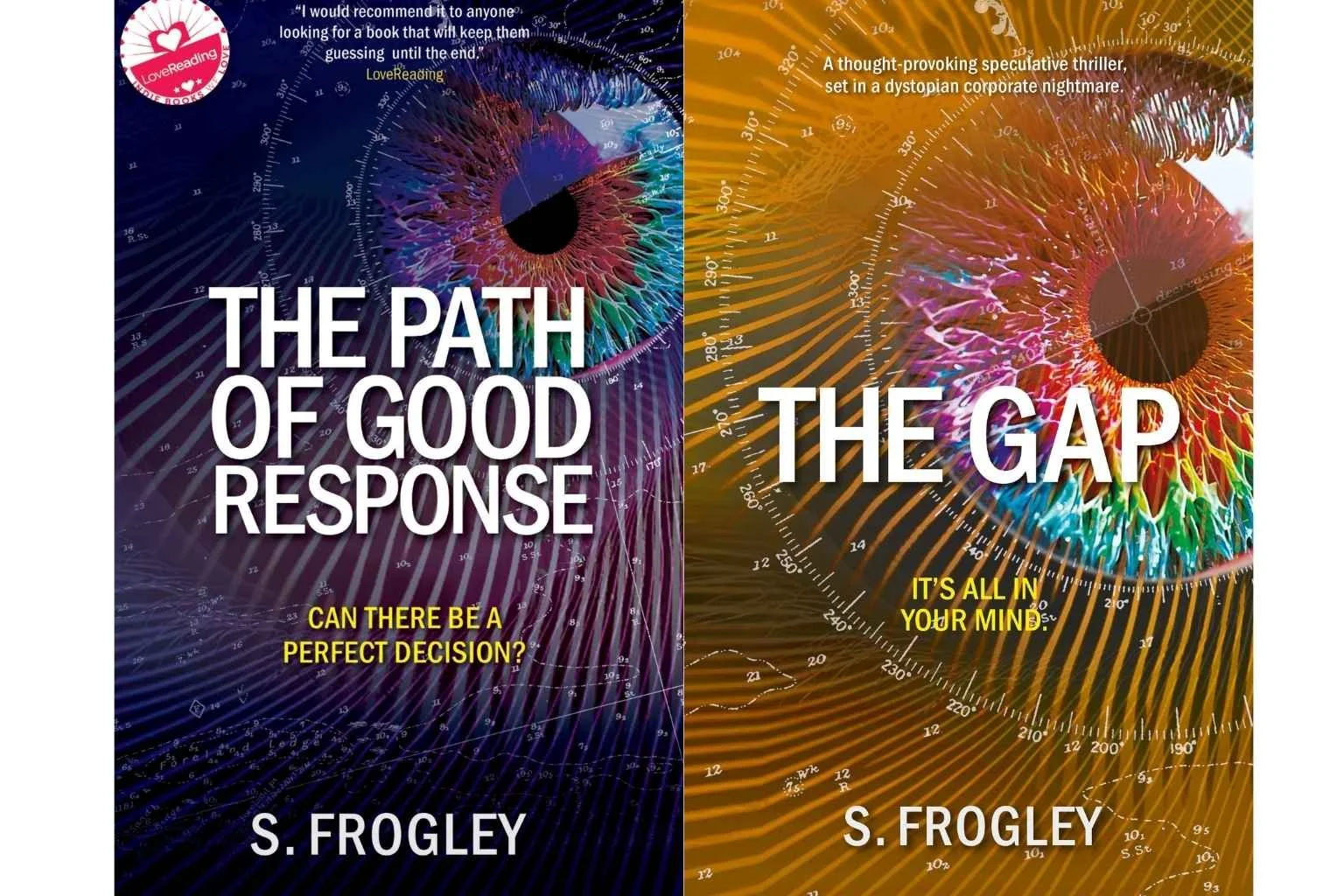
The Schelldhardt Series. Can there be a perfect decision?
