
Guide to Romance Tropes for Adults.

Romance tropes.
You know the feeling: you finish a book at 1.14am, clutching your Kindle like it has personally wronged you, and immediately need another story with exactly that emotional flavour. Not merely “a romance”. You need forced proximity, a sharp-tongued heroine, one bed, an apology that makes your chest hurt, and perhaps absolutely no third-act break-up involving poor communication. This guide to romance tropes for adults is here to put names to those cravings - because your reading mood deserves better than a vague “you might like this”.
Romance tropes are not clichés by default. They are story promises. They tell you what sort of delicious emotional trouble is ahead, whether the book is likely to be high heat, low spice, laugh-out-loud, quietly tender, or packed with enough yearning to power the National Grid. The joy is not in being surprised that enemies become lovers. The joy is watching how these two particular people get there.
A guide to romance tropes for adults starts with the vibe
Tropes work best as a combination rather than a single label. “Fake dating” tells you about the setup, but “fake dating, workplace rivals, low spice” gives you a far better sense of whether it belongs in your immediate TBR pile.
It also helps to separate trope from tone. A grumpy/sunshine romance can be a fizzy rom-com, a soft small-town story, or a more emotionally bruising novel about two people learning to trust again. Likewise, a slow burn may mean glorious restraint and meaningful glances, or it may mean you are 300 pages in and still waiting for someone to admit they fancy the other person. Both have their devotees. Know thyself.
And yes, adults read romance for escapism. We also read it because the best love stories take recognisable mess - work, friendship groups, divorce, family baggage, dating-app fatigue, the horror of being perceived - and make it feel survivable. A happy ending is not childish. It is a contract, and romance readers are rightly picky about the terms.
The romance tropes readers return to again and again
Fake dating
Two people pretend to be together for a wedding, a work event, a family emergency, a social-media campaign, or some other entirely reasonable fictional circumstance. Then the performance develops inconvenient feelings. Fake dating thrives on public gestures, private panic and the delicious moment when one character realises they are no longer acting.
This trope is ideal if you want banter and tension without waiting fifty pages for the leads to meet. It can feel less convincing if the reason for the pretence is flimsy, though. The fake relationship needs real stakes, not just a couple of people who apparently cannot say, “Actually, no.”
Enemies to lovers
The headline event. They disagree. They compete. They exchange dialogue so crisp you want to applaud it. Underneath the friction, there is respect, fascination and a dangerous awareness of each other’s cheekbones.
Proper enemies to lovers needs a distinction worth making: enemies are not simply people who have had one mildly awkward conversation. The conflict should reveal clashing values, goals or history. Just as crucially, the story must let them repair the damage. Chemistry is not a substitute for accountability, sorry to every brooding man in a black coat.
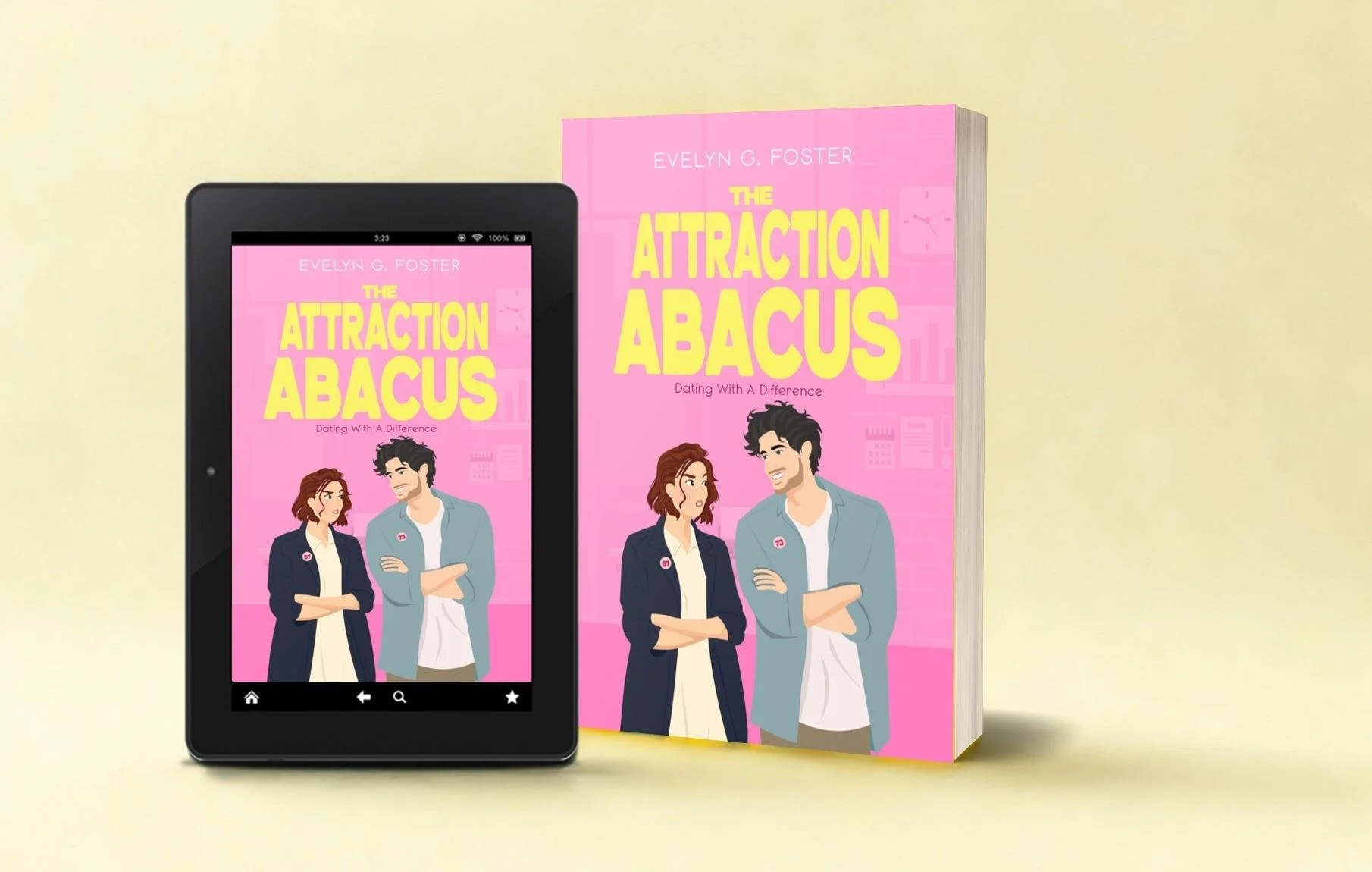
Ad: The Attraction Abacus. Enemies-to-lovers, fake-dating workplace romance fun!
Grumpy/sunshine
One character is guarded, dry and likely to answer a cheerful question with a look. The other brings warmth, optimism or just an alarming ability to make friends in a queue. The appeal is not that sunshine “fixes” grumpy. It is that both people make space for each other: the bright one is allowed depth, and the reserved one is allowed softness.
Look for this if you want comfort with a little bite. Avoid it if relentless perkiness makes you want to lie down in a dark room. Reader preference is personal, and the algorithm cannot save us from a heroine who says “Good vibes only” during an actual crisis.
Forced proximity
They have to share a flat, a holiday cottage, an office, a road trip, a project or, naturally, the only available bed. Forced proximity turns ordinary moments into charged ones: making tea, sharing a sofa, noticing how the other person takes their coffee. It is the micro-tension trope.
The one-bed variation remains beloved because it is silly in premise and extremely serious in execution. The best versions make the closeness matter emotionally, not merely logistically. If both characters sleep perfectly well and never think about it again, what are we doing here?
Slow burn
Slow burn is the long game. Attraction builds through trust, friendship, shared experience and increasingly suspicious eye contact. It is less about delaying a kiss for sport and more about making the eventual change in the relationship feel inevitable.
This is a brilliant fit for readers who want yearning, emotional intimacy and a payoff that lands like a fireworks display. But pacing matters. A slow burn should still move. Each scene needs to alter the connection, deepen the stakes or reveal a new reason they cannot quite let each other go.
Friends to lovers
For many readers, this is the elite category. The foundation is already there: in-jokes, loyalty, a knowledge of each other’s worst habits, maybe one person quietly being in love for years. The tension comes from the risk. If they say it out loud, can the friendship survive?
Friends to lovers can be wonderfully mature because it begins with affection rather than conquest. It also suits low-to-no spice romance beautifully, since emotional closeness is already doing a lot of the heavy lifting. Expect tenderness, not necessarily chaos - although a well-timed jealousy plot can still cause a minor reader emergency.
Second-chance romance
These characters loved each other before, or nearly did, and something went wrong. Now they are back in each other’s orbit with history, regret and a stack of unresolved feelings. The central question is not “Will they fall?” but “Have they changed enough to choose differently?”
That makes second-chance romance especially satisfying for adult readers. Life has happened. Careers, children, grief, geography and bad decisions have left marks. For the reunion to work, the book needs to honour the original hurt rather than treating it as a minor scheduling conflict.
Spice is not a trope, and that is useful to know
Online book chat often bundles trope, heat level and tone into one giant recommendation smoothie. But they describe different things. Spice tells you how explicit the sexual content is. Tropes tell you the relationship shape. Tone tells you whether you are likely to laugh, cry or send your mate fourteen voice notes.
A low-spice enemies-to-lovers rom-com can deliver just as much tension as a high-spice one. The difference is where the book places the camera. Some readers want open-door scenes; some want closed-door intimacy; some want one hand touch and an emotional confession so intense they need a biscuit afterwards. None is a lesser version of romance.
When choosing your next read, use heat labels alongside the details that actually affect your experience: does it feature a third-act split? Is there a love triangle? Is the humour broad and chaotic or dry and observant? Does the story centre twenty-somethings learning to date, or older characters rebuilding after a major life shift? Specificity is a public service.
How to use romance tropes without making your TBR boring
The fear with trope-led reading is ending up with the same book in different jumpers. The fix is to choose one familiar element and one wildcard. If fake dating is your comfort read, try it in a story with older leads, a different setting, or a quieter emotional tone. If you always reach for grumpy/sunshine, pair it with a second-chance plot and see whether your heart is prepared for the consequences.
It is also worth following the feeling, not just the label. Perhaps you do not actually love enemies to lovers. Perhaps you love competent people who challenge one another and eventually become wildly devoted. That preference may lead you to workplace romance, rivals-to-lovers, academic settings or even a sharp contemporary story such as The Attraction Abacus.
A trope is a useful signpost, not a personality test. You are allowed to adore fake dating on Tuesday, demand quiet friends-to-lovers tenderness on Thursday, and spend the weekend reading a chaotic rom-com in which two people who should absolutely know better fall for each other anyway. Pick the promise that suits your mood, then let the particular characters surprise you.
