
Utopian Fiction Versus Dystopia: What Works?
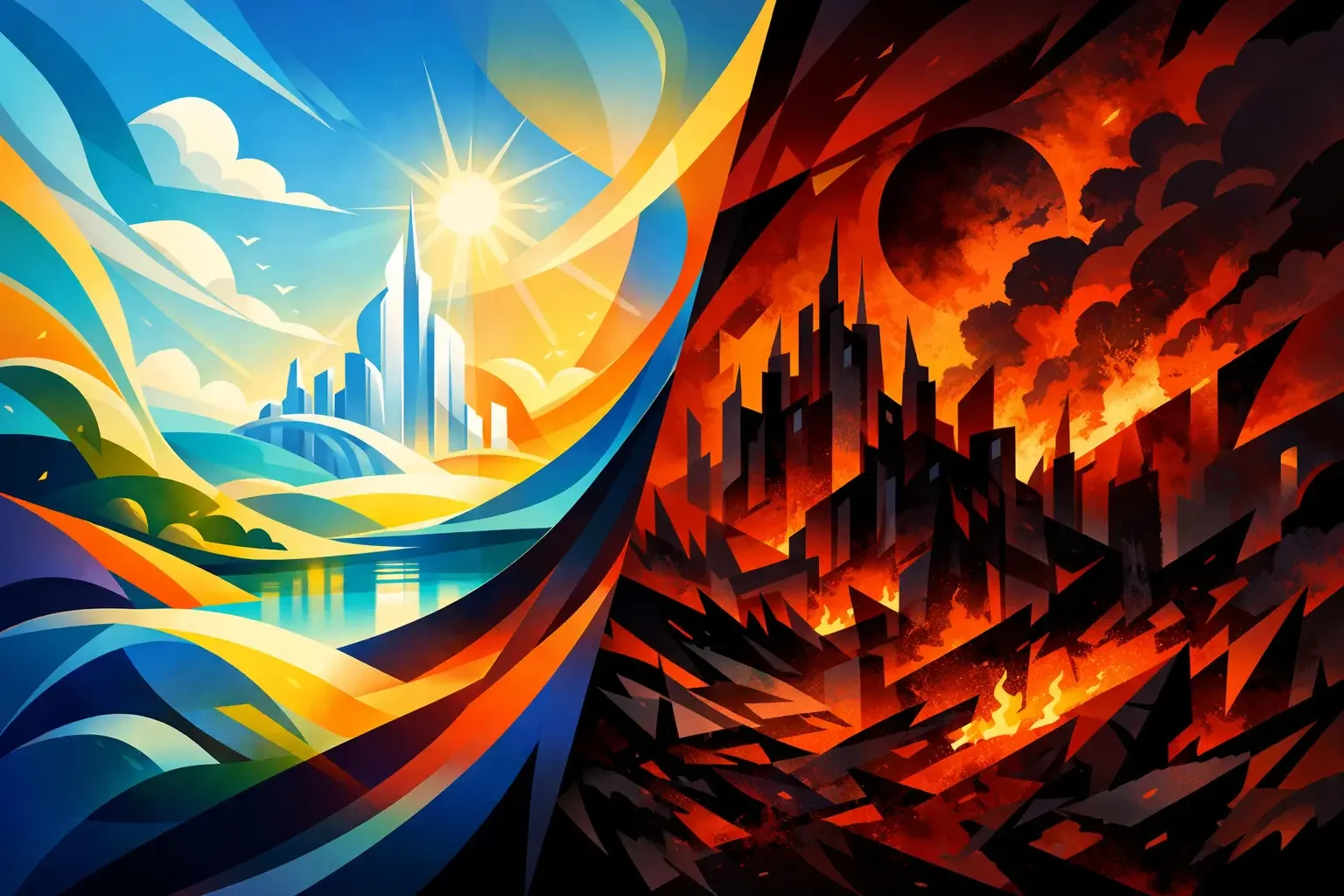
Utopian Fiction Versus Dystopia
A city with no crime, no loneliness and no awkward group chats sounds lovely for approximately three seconds. Then somebody asks who decides what counts as happiness. That tension is the whole delicious point of utopian fiction versus dystopia: one imagines a better world, while the other asks what was sacrificed to build it.
Readers often treat the two as opposites. Utopia equals sunshine, communal gardens and everyone finally replying to messages on time. Dystopia equals surveillance cameras, corporate slogans and a mandatory smile. But the most memorable speculative fiction lives in the uneasy overlap, where a society’s promise of perfection starts to look rather like a warning label.
Utopian Fiction Versus Dystopia Is Not a Fair Fight
Utopian fiction is built around aspiration. It asks what human life might look like if we solved the problems we usually accept as permanent: poverty, war, disease, environmental collapse, prejudice, isolation. Thomas More’s Utopia, which gave the genre its name, was never simply a brochure for an ideal island. It was also a provocation - a way of making readers look back at their own society and notice its absurdities.
Dystopia uses the same impulse, but turns the lighting moodier. Its worlds are shaped by a system that has gone too far: a state, corporation, algorithm, ideology or supposedly sensible social rule that consumes individual freedom. Think Nineteen Eighty-Four, The Handmaid’s Tale, The Hunger Games or the unnerving social machinery of Black Mirror. The future is not the real subject. The present is, just wearing a more alarming outfit.
That is why the divide can be misleading. A utopia always raises the question of who gets included. A dystopia often begins with a promise that sounded reasonable at the time. Safety. Efficiency. Equality. Happiness. No one starts a totalitarian regime by advertising Tuesday as “crushing the human spirit” day. The pitch is usually much better than that.
The Perfect World Has a Catch
The core difference lies in where each form places its doubt. Utopian fiction asks whether we can imagine better. Dystopian fiction asks whether our version of better has become a cage.
In a classic utopia, social structures work in concert. Resources are shared or fairly distributed, people have meaningful roles, and conflict is either reduced or handled constructively. This can make utopian storytelling tricky. Conflict is fiction’s oxygen, and a world where everything genuinely works can feel like reading a council report with nicer weather.
The strongest utopian novels solve this by making perfection active rather than automatic. Their characters still disagree, grieve, fall in love with the wrong person, make bad calls and question the rules. The interest is not that nobody suffers. It is that the society has chosen to respond to suffering differently.
Dystopian stories have the opposite structural advantage. The pressure is already in the room. A protagonist must escape, rebel, investigate or survive. There is a regime to resist, a secret to expose, a rule to break. That immediate engine explains why dystopia has remained such a dependable page-turner, particularly when the real world feels one algorithm update away from requiring a terms-and-conditions acceptance before breakfast.
Yet the genre has a risk of its own. If every authority is cartoonishly evil and every citizen is either asleep or leading a rebellion in excellent outerwear, the story can become predictable. The most unsettling dystopias understand that systems endure because they offer something people want. Comfort. Status. Belonging. Protection from uncertainty. The cage may even be beautifully designed.
Control is rarely announced as control
Consider The Matrix, The Truman Show and Inception. These are not all conventional dystopias, but they share a deliciously destabilising question: what if the reality you trust has been designed for you? Their worlds work because control is not just brute force. It is architecture, narrative and perception.
That idea lands differently now that so much of life is mediated by feeds, targeted adverts and platforms that claim to know what we want before we do. Modern dystopian fiction does not need flying cars or grey jumpsuits to feel plausible. Sometimes it needs a frictionless service, a cheerful corporate voice and an opt-in button nobody properly reads.
Why Readers Keep Returning to Dystopia
Dystopia gives shape to diffuse anxiety. Climate fear, political polarisation, data harvesting, widening inequality and corporate power are enormous problems. A novel can make them personal by placing one character inside the machinery. Suddenly the issue is not an abstract debate. It is whether someone can protect their family, keep their memories, trust their own senses or make a decision that is truly theirs.
It also offers a peculiar kind of comfort. This sounds counterintuitive, because the genre is packed with oppression, collapse and people having a very bad Tuesday. But a dystopian story identifies the threat. It lets readers recognise its patterns. And, often, it insists that resistance matters even when victory is not guaranteed.
That is not the same as saying every dystopia is secretly hopeful. Some are bleak because bleakness is the point. But the best of them leave a spark: a forbidden friendship, an act of defiance, a moment of truth or the stubborn decision not to become what the system demands. Readers do not need a tidy revolution. They need to feel that the human part has not been entirely deleted.
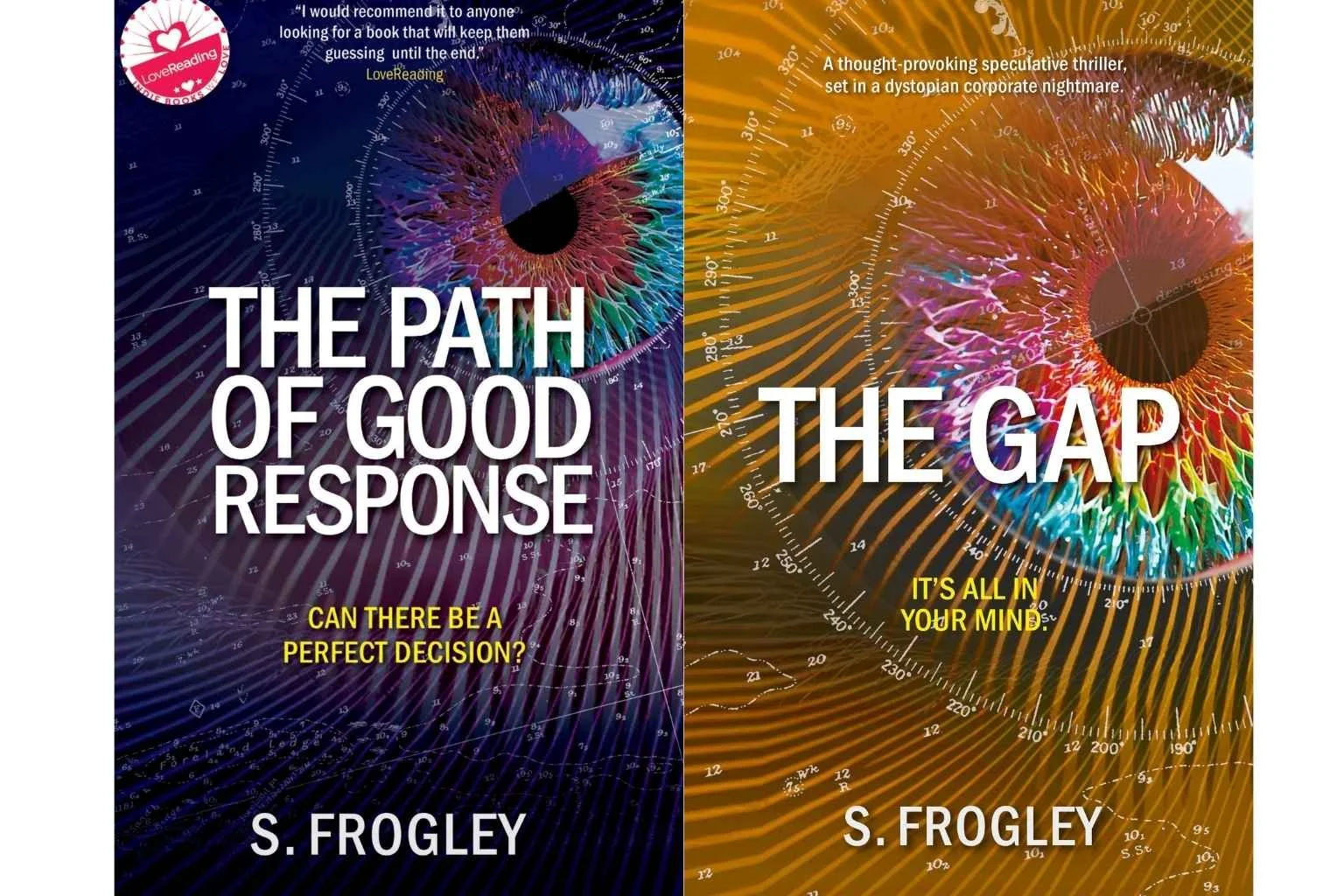
Ad: The Schelldhardt Series. Utopian or dystopian depends on your perspective,
Why Utopian Fiction Deserves More Attention
Dystopia is very good at spotting what is broken. Utopian fiction has the harder, less glamorous task of proposing alternatives. It asks readers to practise hope without becoming naïve about human nature.
That matters because constant catastrophe can make collapse feel inevitable, even fashionable. If every imagined future is authoritarian, burnt-out or owned by one mega-corporation with a suspiciously soothing logo, we can start to believe there are no other routes available. Utopian fiction pushes back. It makes room for mutual aid, community, ecological repair and different definitions of success.
This does not mean utopian fiction must be relentlessly wholesome. Frankly, a novel in which everyone communicates perfectly and nobody makes an emotionally catastrophic choice would struggle to set Bookstagram alight. Better futures can contain desire, mess, ambition and moral disagreement. The point is not to erase drama. It is to imagine structures that do not treat cruelty as inevitable.
For writers, that makes utopia an excellent challenge. Instead of asking, “What terrible rule traps my protagonist?”, try asking, “What good principle creates a difficult trade-off?” A society that prioritises collective wellbeing may still clash with personal freedom. A community built on transparency may struggle with privacy. Equality can become conformity if nobody is allowed to be strange, brilliant, annoying or gloriously difficult.
The most interesting stories sit between the labels
Many contemporary speculative thrillers are neither clean utopias nor straightforward dystopias. They begin with a seductive proposition: a technology that improves judgement, a company that removes uncertainty, a system that promises a more ethical life. Then the protagonist notices the gap between the official story and the lived reality.
That grey area is where the genre gets properly fun. You can understand why people comply. You may even agree with parts of the system. The antagonist is not merely a villain twirling a metaphorical moustache, but an idea pushed beyond its humane limits.
It is also where anti-globalisation themes gain bite. The threat is not business itself, but expansion without accountability: a corporation that treats people, communities and even truth as raw material for growth. When one organisation becomes too large to question, convenience can become dependence very quickly.
For readers who enjoy reality-bending thrillers, this is the sweet spot. The world is recognisable enough to make you uneasy, but altered enough to force the bigger question: if a perfect decision could be made for you, would you still want the right to make the wrong one?
Which Genre Should You Pick Next?
It depends what you want from your reading mood. Choose dystopia when you want tension, conspiracy, moral pressure and the gratifying urge to overthrow something before bedtime. Choose utopian fiction when you want a more radical form of escapism: not escape from the world, but a challenge to the idea that this is the best it can be.
And choose the in-between when you want the most troublesome question of all. Not “Would you live in a perfect society?” but “How long would it take before you noticed that perfect was somebody else’s word?”
