
Why Do Readers Like Dystopian Thrillers So Much?
The appeal of dystopian thrillers.
A pristine city. A benevolent corporation. A system that promises to remove uncertainty, inefficiency and maybe even heartbreak. Then someone notices the catch. If you have ever watched The Truman Show and immediately wanted to inspect the nearest hidden camera, you already understand the pull.
So, why do readers like dystopian thrillers? It is not because anyone is longing for surveillance, social collapse or an app that grades their moral worth before breakfast. It is because these stories take the fears already buzzing beneath ordinary life - Who has my data? Who makes the rules? What happens when convenience becomes obedience? - and turn them into a high-stakes, can’t-look-away plot.
Dystopian thrillers are where big ideas get a chase scene. They let readers interrogate power, identity and human choice without having to write a dissertation or join a resistance movement by Tuesday.
Why readers like dystopian thrillers: fear with a plot
The best dystopian fiction starts with something recognisable. The world is not always a smoking ruin full of leather-clad rebels. Sometimes it is clean, efficient and suspiciously well branded. The trains run on time. Everyone is healthy. Every decision is optimised. Which is precisely why it feels unsettling.
That proximity matters. A completely alien future can be fun, but a near-future society built from today’s algorithms, workplace culture, consumer habits and political anxieties lands differently. Readers do not need much help making the leap from targeted adverts to behavioural control, or from a global company’s friendly mission statement to a boardroom deciding that consent is an inconvenient variable.
A thriller gives that unease momentum. Rather than merely asking, “Could this happen?”, it asks, “What will our protagonist do when they find out it already has?” There is a secret to uncover, a rule to break, an authority figure who is far too calm, and a mounting sense that the exit may have been designed by the people keeping everyone in.
That blend makes the genre highly readable. Philosophy is on the page, certainly, but it is wearing running shoes.
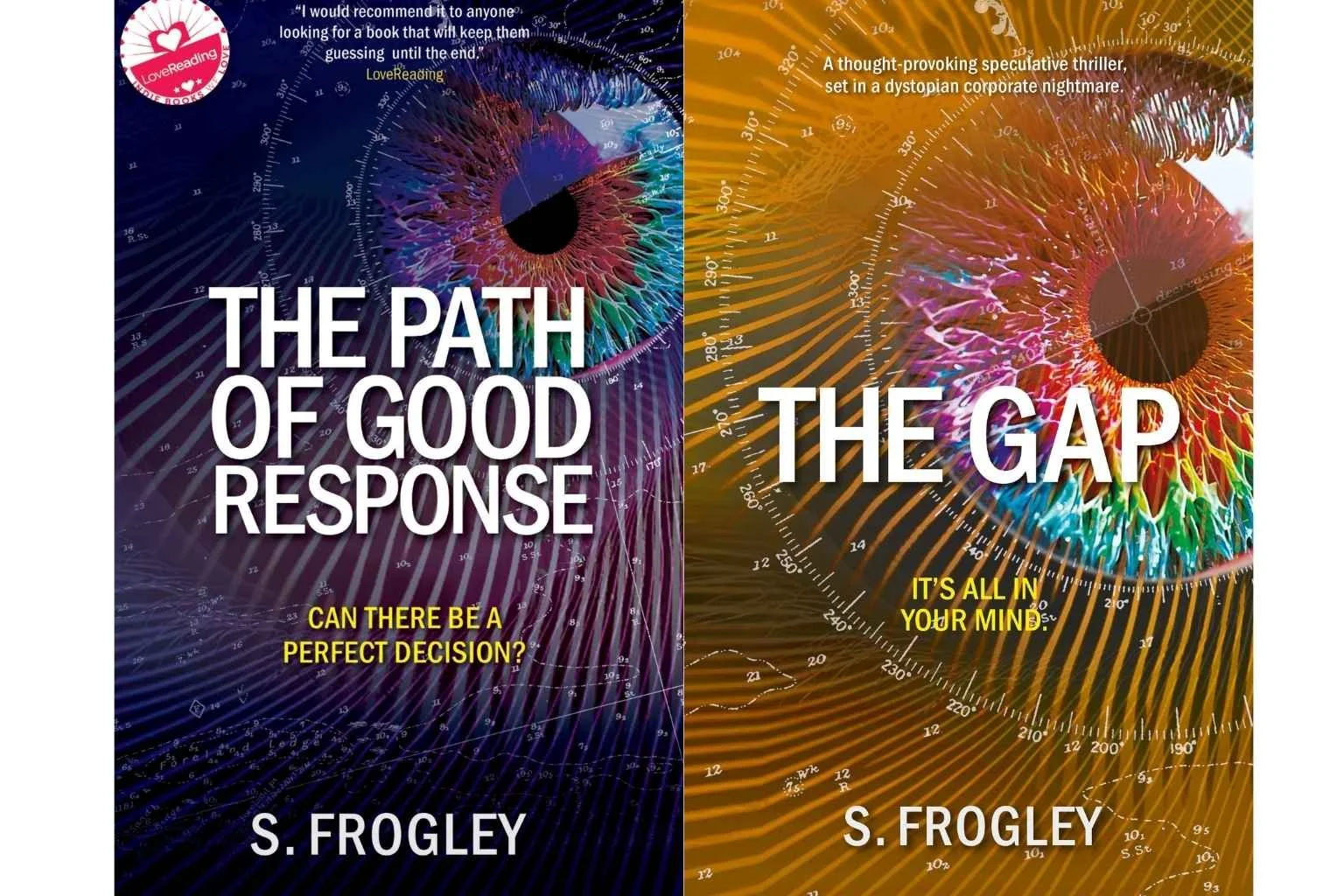
Ad: The Schelldhardt series. Dystopian thrillers that blur reality.
We like a fictional system that needs dismantling
There is a particular satisfaction in watching a character see through a polished lie. Dystopian societies often sell themselves as rational solutions to messy human problems: conflict, inequality, crime, loneliness, waste, bad decisions. Their flaw is rarely that they have no logic. Their flaw is that they prize order over people.
Readers are drawn to that conflict because real life contains smaller versions of it. We are constantly asked to trade something personal for something easier: privacy for convenience, attention for entertainment, individuality for belonging. Most of these bargains are not accompanied by a sinister announcement and a red flashing button. That is why dystopian fiction turns the volume up.
It also offers a gratifying moral pressure test. What would you sacrifice for safety? Would you accept a perfect decision if a machine made it for you? If the system reduced suffering overall, would you forgive what it did to one person? There are no tidy answers, which is far more interesting than being handed a villain with a sign saying VILLAIN.
This is one reason stories such as The Matrix, Inception and The Truman Show keep their grip on us. They do not simply present a bad world. They destabilise the reader’s confidence in what is real, chosen or true. Once that question is in your head, every apparently normal detail becomes suspect. The cup of coffee is never just a cup of coffee. It might be evidence.
Control is scary. Losing choice is scarier.
A dystopian thriller often gives readers an adversary bigger than one nasty individual. The antagonist may be a state, a corporation, a platform or a supposedly neutral programme. This is compelling because systems are hard to fight. You cannot always punch a policy. You cannot reason with an algorithm that has decided you are statistically inconvenient.
Corporate dystopias are especially effective now because they understand the seduction of growth. The fictional company is not usually cackling in a dark tower. It has a clean logo, an optimistic slogan and a solution for everything. It talks about connection, wellbeing and a better future while quietly expanding into every part of its customers’ lives.
That anti-globalisation edge is not nostalgia for a simpler past. It is a suspicion of unaccountable scale. When one organisation grows large enough to shape how people work, love, buy, travel, think and behave, its mistakes are no longer small. Nor are its ambitions.
Readers enjoy seeing that power challenged, especially by protagonists who are not born superheroes. The compelling dystopian hero is often an ordinary person who notices a discrepancy, asks an awkward question or refuses to treat another human being as collateral damage. Their resistance begins with attention. Very relatable, given how often modern life asks us not to look too closely at the terms and conditions.
Reality-bending stories make readers active
There is another delicious ingredient: uncertainty. In a straightforward thriller, the question may be who is lying. In a reality-bending dystopian thriller, the question can become whether reality itself has been edited.
That changes the reading experience. Readers become detectives, scanning dialogue and details for clues. Is this memory reliable? Is the protagonist being manipulated? Is the apparent safe space actually the trap? A well-placed reveal sends people back through earlier chapters with the delighted suspicion of someone rewatching a film and spotting the clue that was hiding in plain sight.
This is also why these books are so talkable. They invite theories, arguments and the sort of message that begins, “I need to discuss that ending, but I cannot say why without ruining your life.” Book clubs get a moral dilemma. BookTok gets a twist reaction. Everyone gets to decide whether they would have taken the red pill, signed the contract or stayed in the comfortable lie.
There is a trade-off, though. If a story becomes too abstract, readers can feel as if the author has moved the goalposts rather than built a mystery. The best reality-bending fiction keeps its emotional rules clear even when its world is not. Readers will follow a wild premise if the character’s fear, grief, hope or fury feels real.
Escapism that does not switch your brain off
Calling dystopian thrillers escapist can sound odd. Escaping into a society where free will is endangered is not exactly a spa day. Yet the genre provides a useful kind of distance. It lets us approach difficult subjects - authoritarianism, climate anxiety, technology, inequality, corporate power - through story rather than a doom-scroll.
The imagined future makes the present easier to examine. A reader may not want a lecture about data extraction, but they may absolutely want to know whether a protagonist can outwit the all-seeing company that has turned every household device into an informant. The message is felt before it is analysed.
Crucially, dystopian thrillers tend to preserve the possibility of agency. Even in bleak worlds, somebody makes a choice. That choice may not repair everything, and a too-neat revolution can feel less convincing than a difficult, partial win. But the act of resisting matters. It reminds readers that people are not only consumers, users, citizens or data points. They are capable of dissent, loyalty and inconvenient compassion.
That is where a thoughtful speculative thriller earns its emotional payoff. It does not promise that one brave act will fix a broken world. It asks what kind of person you become when doing the right thing costs you something.
The future is a mirror, not a prediction
Readers do not come to dystopian thrillers for accurate forecasts. Anyone claiming to know exactly what 2045 looks like is probably trying to sell you a newsletter. They come for an intensified version of the present, one that makes invisible pressures impossible to ignore.
That is the appeal of a novel such as The Gap: the tension is not only in what is happening, but in the uncomfortable question underneath it. What if the system knows how to make the best choice - and what if a human life cannot be reduced to one?
If you are choosing your next dystopian thriller, look for more than a grim setting or a clever premise. Look for a world that feels one bad policy, one irresistible product launch or one quietly monstrous corporate acquisition away from our own. Look for characters with something real to lose. Then let the book make you suspicious of anything described as perfectly efficient.
