
What Is a Reality Thriller? The Genre That Gaslights You
Reality thrillers.
You know that tiny, prickly moment when a character notices the same stranger on their commute three days running, or finds a door in their flat that definitely was not there yesterday? That is the good stuff. If you have ever asked, what is a reality thriller, the short answer is: it is fiction built around a terrifying possibility - that the world you trust is edited, engineered, simulated or quietly lying to you.
Reality thrillers turn certainty into a trap. The protagonist believes they understand their life, their memories and the rules of the place they inhabit. Then something fails the vibe check. A repeated phrase. A missing hour. A corporate slogan that feels a little too interested in their wellbeing. Before long, the question is not simply, “Who is after me?” It is, “What is real, and who benefits if I never find out?”
What Is a Reality Thriller, Exactly?
A reality thriller is a thriller in which reality itself becomes unstable or suspect. It often sits where psychological suspense, speculative fiction, conspiracy drama and dystopian storytelling overlap. The plot may involve a simulation, manipulated memories, surveillance, a controlled community, an alternate version of events or a system so vast that ordinary people cannot see its edges.
It is less a neat bookshelf category than a deliciously unsettling mode of storytelling. Some reality thrillers lean hard into science fiction, with futuristic technology and formal rules. Others stay almost entirely in the present day, letting readers wonder whether the protagonist is uncovering a genuine conspiracy or coming apart under pressure. That uncertainty is not a side dish. It is the engine.
The genre asks readers to do two things at once: follow a propulsive mystery and question the evidence in front of them. A dependable narrator may become questionable. A loving partner may know more than they say. Even a perfectly normal supermarket can start to feel sinister if every customer buys the same brand of cereal. Nothing says dread quite like suspiciously coordinated grocery shopping.
The Core Ingredients of a Reality Thriller
Reality thrillers vary wildly, but most share a few key pressures. There is usually a character whose understanding of the world begins to fracture, a force with a reason to preserve the illusion, and a clue trail that becomes stranger rather than clearer.
The first ingredient is a reality that has rules, even if they are hidden. The story cannot merely throw in random weirdness and call it mind-bending. Readers need to sense that there is a pattern beneath the chaos. The pleasure comes from trying to work out that pattern before the protagonist does.
Next comes personal stakes. The biggest revelation lands harder when it threatens something intimate: a marriage, a child, a memory of grief, a sense of self. Learning that the world is a simulation is alarming. Learning that your most precious memory may have been installed by someone with a business model is worse.
Finally, there is a system with teeth. This can be a government, a tech company, a cult, a research project or an apparently benevolent institution. The best versions understand that control rarely arrives wearing a cartoon villain cape. It arrives as convenience, comfort, optimisation and a cheerful promise to make your choices easier.
Why It Feels So Different from a Standard Thriller
A conventional thriller usually gives you a stable playing field. Someone has committed a crime, someone is hiding information, and the race is on to uncover the truth before time runs out. A reality thriller may begin in the same territory, but then it removes the floorboards.
The detective may be investigating a murder, only to discover the victim never existed. A man may be fleeing a corporation, only to realise his escape route has been designed as part of an experiment. A woman may uncover a perfect society’s darkest secret, then have to decide whether its lie is kinder than the truth. The central threat expands from danger within the world to danger built into the world.
That is why the genre can feel so intimate despite its large ideas. It plays on a fear most of us recognise: that we are not as informed, autonomous or perceptive as we like to think. Algorithms already shape what we watch, buy and argue about. Reality thrillers take that low-level modern unease and give it a locked room, a countdown and a corporation with far too many glass meeting rooms.
The Films That Help Explain the Vibe
If you love The Matrix, The Truman Show or Inception, you already understand the appeal. Each takes a recognisable human anxiety and turns it into a reality-sized puzzle.
The Matrix makes the physical world suspect, then turns awakening into rebellion. The Truman Show is more sunlit and politely horrifying: its hero’s entire life has been packaged as entertainment. Inception makes dreams feel architectural, dangerous and emotionally loaded, with every layer raising the risk that nobody gets back to solid ground.
The same mood appears in fiction that deals with altered memory, digital consciousness, coercive wellness schemes and closed communities that are just a touch too perfect. The setting does not have to be flashy or futuristic. Often, the more ordinary it looks, the more unnerving the reveal becomes.
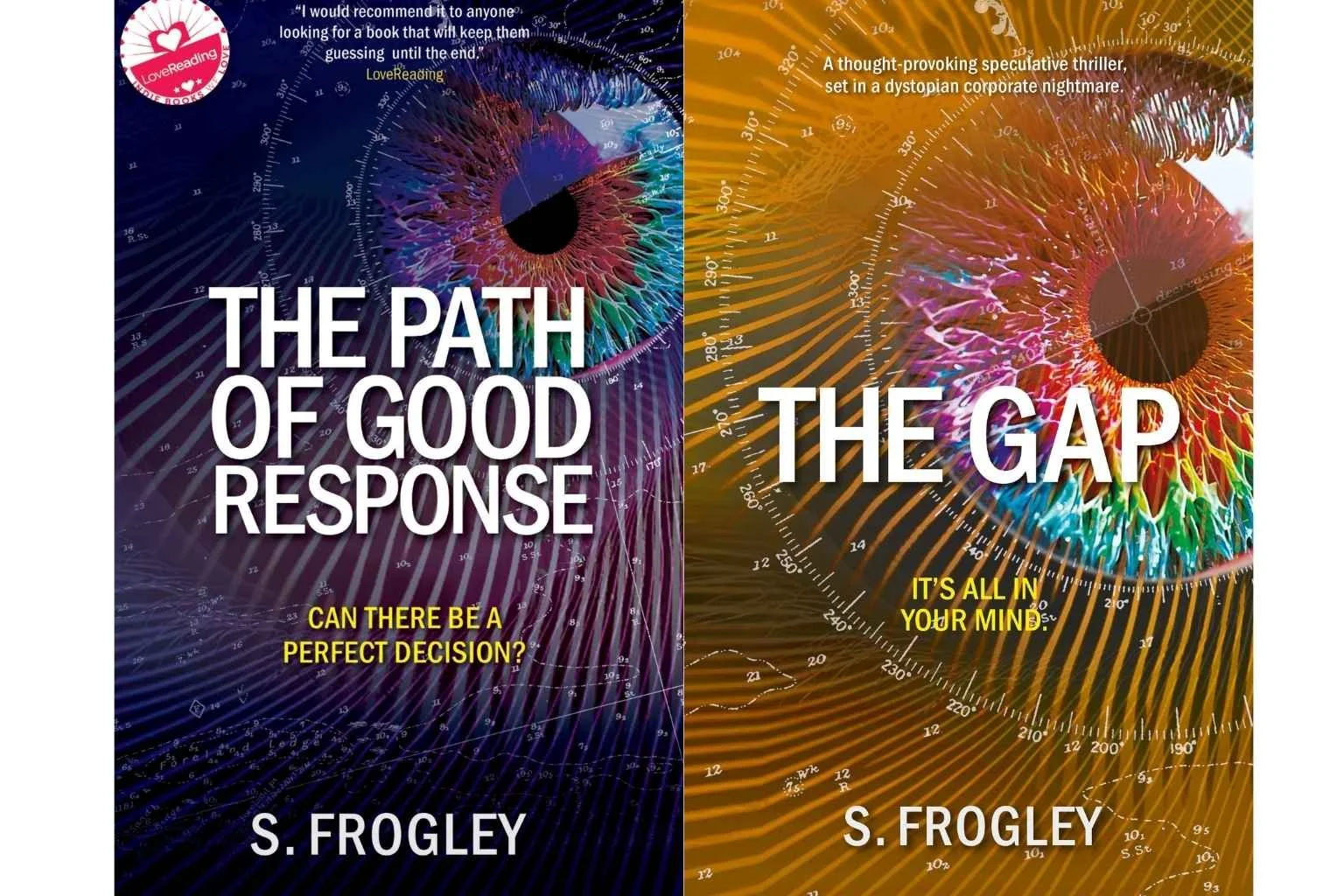
Like the sound of reality thrillers? Try the Schelldhardt series
Is It Psychological Thriller, Sci-Fi or Dystopia?
Yes. Also, not always.
A reality thriller can borrow from all three genres without belonging entirely to any one of them. The distinction comes down to what the story is most interested in. If the tension centres on a character’s perception, trauma or reliability, it may feel closest to a psychological thriller. If it explains reality’s instability through technology, experiments or speculative concepts, it leans science fiction. If the story exposes a controlling social order, especially one sold as progress, it has dystopian DNA.
But labels are guides, not handcuffs. A book can be philosophical without becoming a lecture. It can include a high-concept premise without requiring a flowchart and three mugs of tea to follow. The strongest reality thrillers make their big ideas serve the suspense. You keep reading because you need answers, not because you have been assigned homework.
The Corporate Villain Is Rarely Just a Villain
One reason the form feels especially sharp now is its fascination with institutions that claim to improve life. The corporation in a reality thriller is often not merely greedy. It is convinced it has a superior answer to human messiness.
Perhaps it can remove regret by predicting the perfect choice. Perhaps it can end loneliness by engineering compatibility. Perhaps it can create peace by limiting what people are allowed to know. The anti-globalisation edge comes from asking what happens when a company grows beyond accountability, presenting standardisation as care while flattening everything inconveniently human.
This is where the genre gets properly chewy. Total freedom can be frightening. Total control can be comforting, at least at first. A reality thriller earns its ending when it lets that tension breathe rather than pretending the answer is obvious.
What to Expect When You Pick One Up
Expect clues that gain new meaning later, unanswered questions that feel deliberate rather than lazy, and a protagonist whose confidence is likely to take a battering. Expect a reveal, but do not assume a single twist is the point. The most satisfying books keep changing the shape of the problem.
You may also find that not every reality thriller offers a pristine, sealed-box ending. Some readers want every rule explained; others enjoy a final chill that follows them into the kitchen at midnight. Neither preference is wrong. If you love clean answers, look for stories with strong speculative premises. If ambiguity is your catnip, psychological and literary-leaning versions may be the better bet.
Heptagon Books’ The Gap sits in this thoughtful, reality-blurring tradition: fiction for readers who like their suspense with questions attached, not just explosions attached.
The real joy of a reality thriller is not being fooled. It is noticing the trick, doubting your own theory, then turning one more page because the truth has become much stranger than the lie.
