
A Review of Modern Dating Novels Worth Your Time
Modern dating novels
A good dating novel knows the horror of seeing “seen 14:03” and deciding, against all dignity, to inspect it like a crime scene. A great one understands that dating apps, group chats and post-date voice notes are not just modern props. They are where hope, performance, rejection and the occasional spectacularly bad decision now happen. This review of modern dating novels is for readers who want more than a cute cover and the promise of banter. We want chemistry, yes, but also a reason to care when somebody sends the risky text.
Modern dating fiction has become one of the most reliably talkable corners of contemporary romance. It can be laugh-out-loud awkward, quietly bruising, gloriously escapist or all three before the third chapter. The best books do not pretend a meet-cute fixes everything. They let attraction be complicated by work, friendship, family baggage, timing, class, culture and that most chilling of phrases: “I’m just seeing what’s out there.”
What a review of modern dating novels should actually judge
Calling a book “a dating rom-com” tells us less than publishers sometimes think. Is it frothy and chaotic, with disastrous first dates as the main event? Is it a tender slow burn where two people meet online but spend most of the novel learning how to be honest? Is the romance closed-door, low spice, open-door, or so emotionally intense that one hand brush carries the heat of a minor solar event?
A useful review should tell readers how a novel feels, not merely what trope has been pasted on its cover. Tropes are a brilliant filing system, not a personality. Fake dating can deliver sparkling comedy or become an exhausting game of two adults refusing to use words. Enemies to lovers can mean genuine opposing values, or it can mean he was mildly rude near the pastry counter once.
The strongest modern dating novels tend to succeed in four connected areas: believable communication, distinct chemistry, a social world beyond the couple, and an emotional payoff that has been earned. None requires gritty realism. We happily accept a wildly convenient seating plan at a wedding. We do, however, require the characters to behave like people rather than chess pieces being shoved towards the third-act break-up.
The modern dating novel: more than apps and awkward brunches
Dating apps have changed the visual language of romance fiction. A match can arrive during a work meeting; an ex can reappear through a casual scroll; a promising connection can vanish without explanation by breakfast. Yet the app itself is rarely the story. It is the pressure cooker.
The interesting question is what happens when choice feels endless but emotional energy does not. Modern dating novels are at their best when they understand the strange contradiction of dating culture: people are expected to be open, breezy and unbothered while risking rejection on a near-weekly basis. That is rich material for comedy, but it also carries real tenderness.
Look for novels where technology reveals character rather than replacing it. The person who drafts every message with military precision is telling you something. So is the one who refuses to text after a date because they fear seeming keen. Screens can make a plot current, but the emotional stakes must work even after the phone is put face-down on the bedside table.
Banter needs a pulse
There is a particular flavour of romantic dialogue that BookTok readers will recognise immediately: two people sparring so elegantly that every exchange sounds like it has been through three rounds of copy-editing. It is delightful when handled well. It is less delightful when neither character appears capable of having a normal conversation about a bus timetable.
Good banter should expose vulnerability, difference or desire. It should shift as the relationship shifts. Early teasing might be defensive; later teasing can become affectionate shorthand. If the jokes could be said by any generic handsome man and any generic chaotic woman, the chemistry probably needs more seasoning.
That does not mean every love interest must be a tortured poet with a childhood secret and an aggressively beautiful kitchen. Sometimes the most romantic thing on the page is a person who listens, makes plans and does not treat basic consideration as a rare celestial event.
The third-act break-up still needs a better reason
Readers are divided on the classic late-novel split, and fairly so. A rupture can make the ending feel satisfying when it forces a character to choose honesty over self-protection. It falls flat when the entire conflict could be solved by one ninety-second conversation, preferably before anyone boards a train to Scotland in the rain.
Modern dating fiction has an opportunity here. Its characters often have very recognisable fears: being too much, choosing the wrong person, repeating an old pattern, giving up independence, trusting somebody who has not yet proved themselves. A strong conflict grows from one of these fears. It should not exist simply because the book has reached the 80 per cent mark and the couple have been getting on suspiciously well.
Funny, tender or spicy? Match the book to your reading mood
The phrase “rom-com” is now broad enough to include books with wildly different emotional temperatures. Some readers want a sunny, high-banter escape after a week that felt like an inbox with legs. Others want emotional realism, messy choices and a romance that hurts a little before it heals. Neither preference is more sophisticated. It is simply useful to know what you are ordering.
If you want a comforting dating novel, look for a clear central pairing, supportive friends, comic set pieces and conflict that does not become relentlessly bleak. Low-to-no spice romance can be especially effective here, because it has to build intimacy through humour, trust, gestures and anticipation. Closed-door does not mean low stakes. It means the emotional choreography has nowhere to hide.
If you prefer a sharper, more reflective read, seek books where the dating plot intersects with career pressure, grief, identity, family expectations or the logistics of adult life. These novels can be funny too, but their happy endings may feel quieter and more specific. The goal is not perfection. It is two people becoming more truthful about what they can offer.
For readers who enjoy a slightly more premise-led rom-com, high-concept dating plots can be catnip: compatibility experiments, wedding-date schemes, anonymous messages, reality-show setups or rules that were definitely going to be broken. The Attraction Abacus, from Heptagon Books, plays in that pleasingly nerdy territory where romantic possibility meets the temptation to quantify it. The key is whether the concept amplifies the characters rather than doing all the flirting for them.
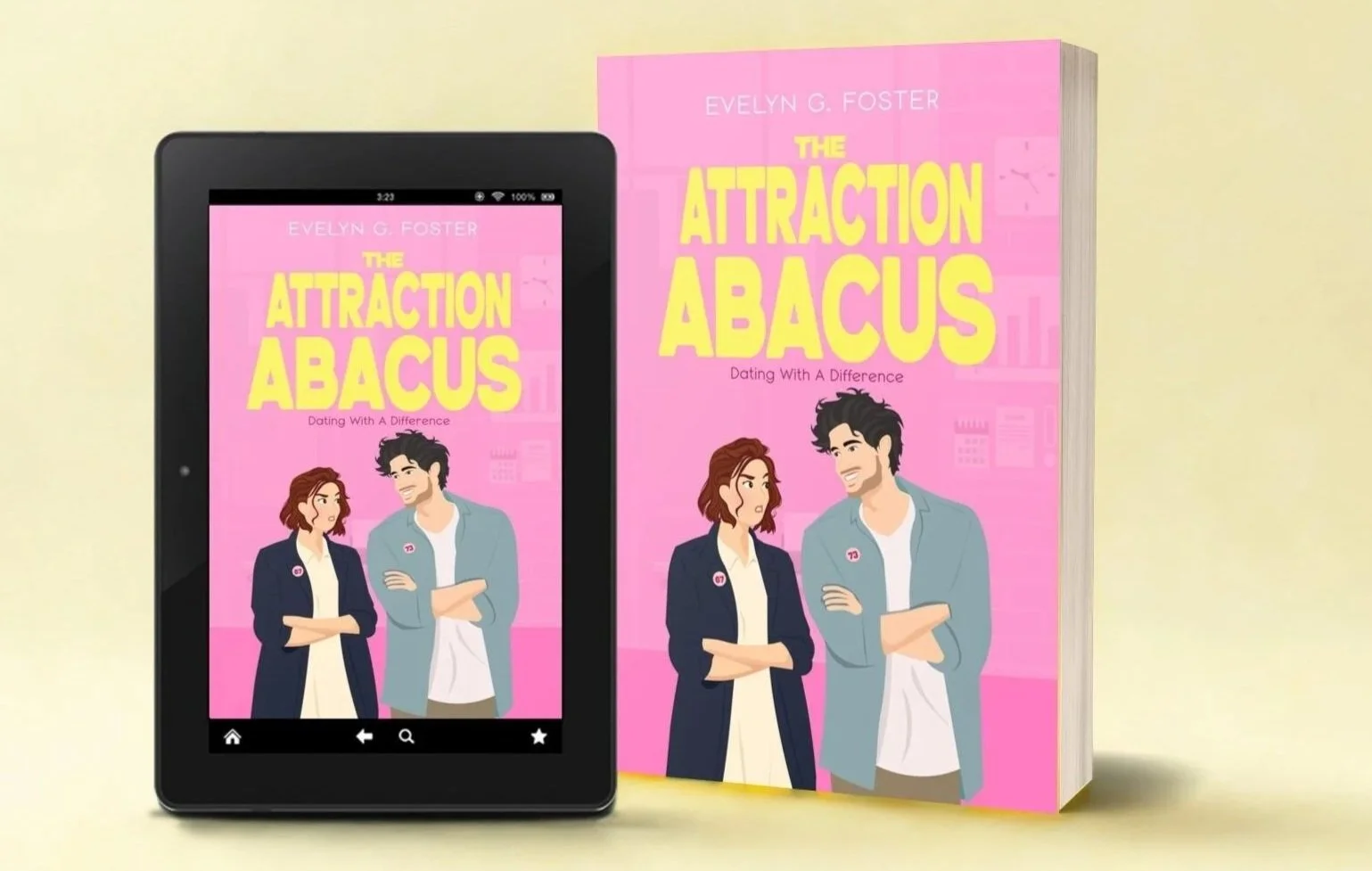
The Attraction Abacus. A hilarious modern dating novel.
Green flags that make a dating story memorable
The books readers press into a friend’s hands usually have one thing in common: they understand that romance is not merely about attraction. Attraction gets the plot moving. Recognition is what makes the ending land.
Pay attention to the supporting cast. Friends should not exist only to say “you like him!” while drinking prosecco at the exact moment the protagonist has denied it. A good friendship circle adds texture, challenges bad choices and shows who the characters are when nobody is trying to impress a date. Likewise, a love interest should have a life that does not appear to be paused in a tasteful flat until the protagonist arrives.
Emotional specificity matters more than grandness. A well-chosen snack after a terrible day, an apology that names the actual harm, a remembered detail from a first date - these can be more swoony than a public declaration with a microphone. Grand gestures are welcome, obviously. We are not monsters. They just need to fit the people making them.
Why this corner of romance keeps growing
Modern dating novels are popular because they offer a strange and useful combination: escape that still feels recognisable. Readers can enjoy the heightened version of dating’s chaos without personally having to answer “what are you looking for on here?” for the fourth time that week.
They also give writers room to challenge old romantic scripts. Not every heroine needs to be rescued from her own ambition. Not every hero needs to perform emotional constipation until page 280. Not every happy ending needs marriage, children and a cottage with suspiciously low energy bills. Commitment can look like choosing a shared future, but it can also look like learning to communicate, respecting boundaries and turning up when it counts.
That is why the best modern dating novels linger after the jokes. They remind us that romance is not about finding a flawless person through an immaculate algorithm. It is about the risky, funny, deeply human business of being seen clearly and deciding to stay for the next chapter.
