
How to Find Low Spice Books That Fit

How to Find Low Spice Books That Fit
You know the feeling. A book is sold to you as funny, romantic and perfect for fans of yearning, only for chapter eighteen to take a sharp turn into territory you absolutely did not sign up for. If you are trying to work out how to find low spice books without playing accidental roulette with your TBR, the good news is this: there are patterns, clues and very online reader habits that make it much easier.
The trick is knowing that “low spice” is not one fixed category. To one reader, it means a couple of kisses and a closed bedroom door. To another, it means there can be sexual tension and one on-page scene, as long as the book is still more romcom than thirst trap. Most recommendation chaos starts there.
What “low spice” actually means now
Bookish internet has given us loads of useful language, but it has also made things gloriously messy. “Closed-door”, “clean”, “sweet”, “fade-to-black”, “no spice” and “low spice” get used like they are interchangeable when they are not.
Closed-door usually means intimacy happens, but not on the page. Fade-to-black tends to signal a similar thing, though some readers use it more loosely. Sweet romance often means lower heat, but it can also carry a particular tone - cosy, earnest, low angst, maybe more Hallmark than chaotic group chat energy. “Clean” is the one to treat carefully, because different readers and publishers use it differently, and some people dislike the implication built into the label.
Low spice, then, is often the broad middle ground. There may be chemistry, attraction and emotional intensity. There may even be a bit of on-page detail. But the romance is not being driven mainly by explicit scenes. If you want to avoid surprises, it helps to decide what your own version of low spice is before you start searching.
How to find low spice books without getting catfished by marketing
A lot of books are marketed by mood first. They promise enemies-to-lovers, beach-read banter or one-bed tension, because those are searchable and fun. Heat level can end up buried in the fine print, if it appears at all.
That means your best move is to read beyond the blurb. The blurb tells you the fantasy. The reader language around the book tells you the reality. Reviews, content notes and the way people describe the romantic payoff are often far more revealing than the official copy.
Pay attention to repeated phrases. If multiple readers say “more sweet than spicy”, “romance without explicit scenes” or “all tension, very little detail”, that is useful. If they say “surprisingly steamy for a romcom” or “don’t be fooled by the cute cover”, that is also useful, just in the opposite direction.
The key is pattern recognition. One review can be odd. Fifteen readers casually mentioning the same heat level are giving you data.
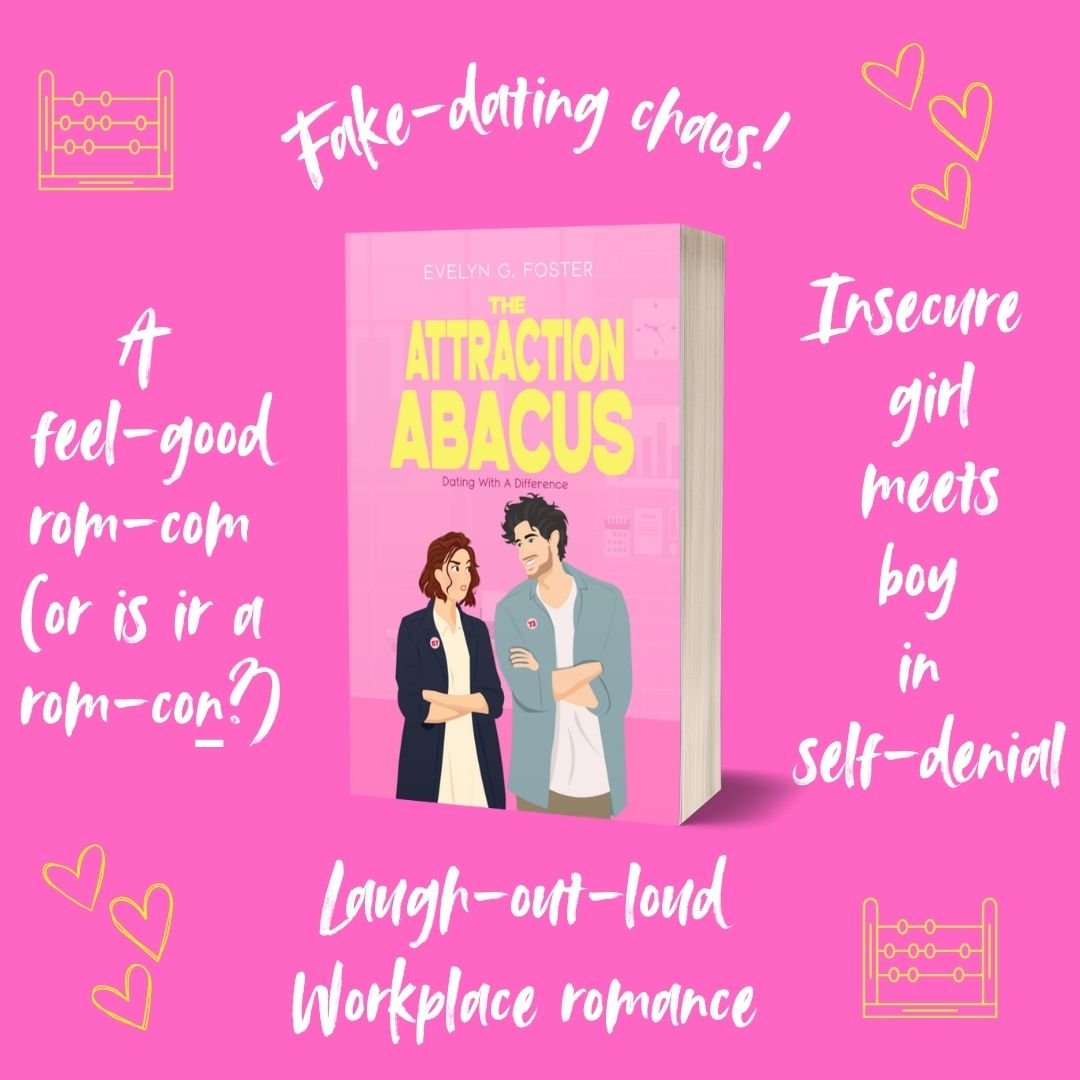
Ad: The Attraction Abacus. A low-spice rom-com. Click on the image to find out more.
Start with reader reviews, not publisher buzz
This is where the internet earns its keep. Readers are usually much more direct than marketing teams, and frankly, a lot funnier about it. Someone will always say the quiet part out loud.
Look for reviews that mention spice level in the first few lines rather than as an afterthought. Those reviewers tend to understand that heat level is part of how people choose books, not a niche concern. If a reviewer says a book is “all emotional payoff, no graphic scenes”, that is gold. If another says “I wanted more spice but it was very tame”, that may be your perfect recommendation.
It also helps to read a mix of positive and negative reviews. The person complaining that a romance was “too mild” may be accidentally handing you exactly what you wanted. One reader’s disappointment is another reader’s ideal Friday night read.
Search by trope plus heat level
If you only search “low spice romance”, you will get broad results and a fair bit of sameness. If you search by trope and heat together, the recommendations usually get better.
Think in combinations: fake dating low spice, rivals-to-lovers closed-door, workplace romcom low heat, friends-to-lovers no explicit scenes. This narrows the field fast and helps you find books that match your taste in both plot and chemistry.
This matters because some subgenres naturally run hotter than others. Dark romance, for example, is rarely where you go for gentle low-spice vibes. Contemporary romcoms, women’s fiction with romantic threads, and certain kinds of commercial romance are often better hunting grounds. Not always, but often enough to save you some time.
Learn the cover and copy clues - but do not trust them blindly
Yes, covers can tell you things. They can also lie straight to your face.
Illustrated romcom covers often suggest lighter tone and, sometimes, lighter heat. But the illustrated-cover era has also produced books with very cute artwork and very adult interiors. Likewise, a more photographic or sultry cover might hint at a steamier read, but that is not a guarantee either.
The same goes for blurb language. If the copy leans hard on “tension”, “banter”, “awkward dates”, “family meddling” or “will-they-won’t-they”, the book may well prioritise emotional and comic beats over spice. If the marketing keeps circling physical obsession, forbidden desire and nights they cannot forget, that is usually not subtle code for a chaste kiss in the rain.
Still, covers and blurbs are clues, not evidence. Use them to build a hunch, then check what actual readers are saying.
Follow reviewers who speak your exact heat-level language
This is probably the single best long-term strategy if you want to know how to find low spice books consistently. Find a few reviewers whose definition of low spice matches yours and stick with them.
Not all reviewers use the same scale. Some call any on-page intimacy “spicy”. Others reserve that word for books that are genuinely explicit. Neither is wrong. They are just using different internal thermostats.
When you find someone who says “low spice” and then recommends books that feel right for you, keep them. Their shelves, round-ups and monthly wrap-ups will save you hours. The goal is not to find the biggest account. It is to find the reader who reads like your slightly more organised twin.
BookTok and Bookstagram can be genuinely helpful here, but they reward speed and hype, so details get flattened. If a creator gives actual heat-level context rather than just “this one had tension”, they are worth following.
Check how the book is shelved and discussed
Reader tagging can reveal a lot. If a book keeps getting grouped with sweet romance, closed-door romance, romantic comedy, or low-heat contemporary fiction, that is a strong sign. If it is living in shelves full of high-steam recs, maybe proceed with caution.
Look at how people compare it, too. “This felt like a noughties romcom with modern dating chaos” suggests one kind of reading experience. “Come for the plot, stay for the chemistry and explicit scenes” suggests another.
Comparisons are sneaky useful because they tell you not just what is in the book, but how the book feels. And if you are after low spice, feel matters. Some readers are happy with one brief on-page scene if the overall vibe is tender and funny. Others want romance with zero graphic detail full stop. Again, it depends.
Don’t ignore genre-adjacent fiction
If straight-up romance recommendations keep overshooting your preferred heat level, broaden the search. Some of the best low-spice love stories live just outside the obvious romance shelf.
Commercial women’s fiction, dating-centred contemporary fiction, and sharp romcom novels with a strong plot beyond the relationship often keep the romance satisfying without making explicit content the main event. If you like emotional payoff, recognisable modern dating disasters and characters who text badly but feel deeply, this lane can be especially good.
That is partly why publishers who understand current reader language are useful. When a publisher is actually tuned into conversations around heat levels, not just tropes, you are more likely to find books positioned honestly. Heptagon Books, for instance, leans into those low-to-no-spice reader conversations rather than pretending every romance reader wants exactly the same thing.
A quick reality check on “safe” recommendations
Even with all the clues in the world, there is still some subjectivity here. A book one reader calls “basically no spice” might feel more detailed than expected to another. Cultural expectations, personal comfort levels and even reading mood can shift how a scene lands.
That is why it helps to think in ranges rather than absolutes. Are you looking for no explicit content at all? Are you fine with implied intimacy? Are you happy with one lightly described scene if the rest is all yearning and banter? Once you know your threshold, filtering gets much easier.
And if you do end up with a book that misses the mark, that is not a moral failure or a reading fail. It just means your algorithm needs better training.
The best way to build a low-spice TBR
Treat it like curation, not guesswork. Save reviewers you trust. Make note of keywords that reliably point you in the right direction. Search by trope and heat level together. Read enough reviews to spot patterns, not just hype. Over time, you will get faster at identifying the books that are all charm, chemistry and emotional payoff, without an unexpected detour into pages you would rather skip.
Because finding the right romance is not about being prudish, picky or hard to please. It is about knowing your taste and reading accordingly. Your TBR should work for you, not behave like a chaotic blind date set up by the internet.
