
Closed Door Versus Open Door Romance
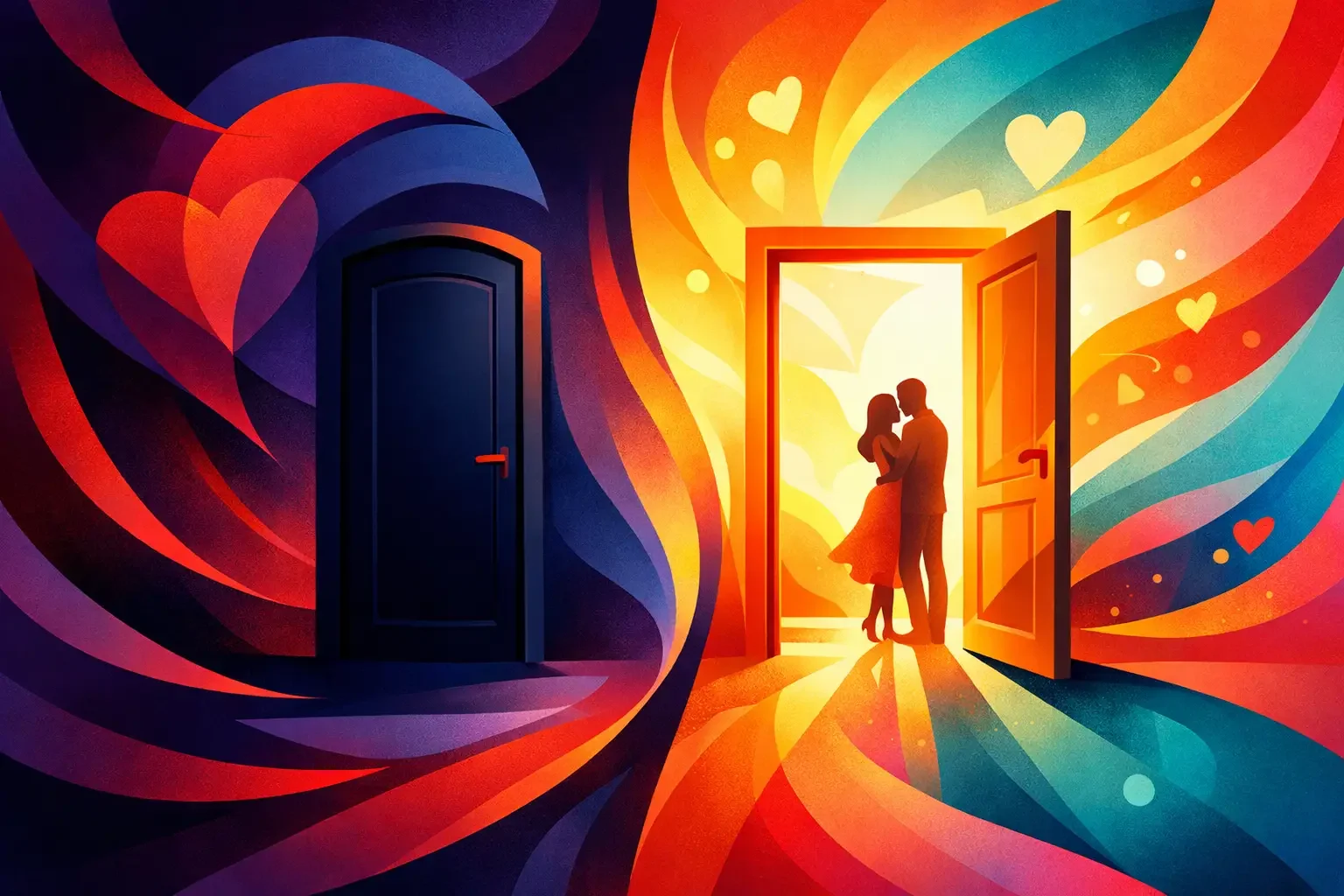
Open door vs closed door romance
One reader’s perfect romance is all yearning, accidental hand brushes and one knockout kiss. Another wants chemistry, tension and the bedroom door very much not shut, thanks. That is exactly why the closed door versus open door romance conversation keeps coming up across BookTok, book clubs and late-night group chats - because “good romance” is not one single thing, and your ideal heat level genuinely changes the reading experience.
If you have ever picked up a rom-com expecting flirty banter and got full page intimacy instead, or chosen a supposedly spicy read only to find the action politely fades to black, you already know the issue. This is not about one style being better. It is about knowing what kind of story you are in the mood for, and why the distinction matters more than people sometimes admit.
What closed door versus open door romance actually means
In simple terms, closed door romance includes sexual tension, attraction and romantic payoff, but intimate scenes happen off page or are only lightly described. The metaphorical door closes, and the reader is left to understand what happened without getting a detailed play-by-play.
Open door romance keeps that door open. Intimate scenes are shown on the page with varying levels of explicitness, from mildly sensual to properly spicy. Not every open door romance is wildly graphic, and not every closed door romance is squeaky clean in tone. That is where people get tripped up.
A closed door romance can still feel deeply romantic, emotionally intense and very grown-up. An open door romance can still be tender, funny and character-driven rather than pure steam. The terms describe how the story handles intimacy on the page, not whether the book has emotional depth, literary merit or proper feelings.
Why readers care so much about it
Because vibe is everything.
Romance readers are brilliant at finding exactly the tropes they want - enemies to lovers, fake dating, forced proximity, one bed, second chance, you name it. Heat level belongs in that same conversation. It shapes pacing, tone and even how vulnerable the characters seem.
For some readers, closed door romance is the sweet spot because it lets the emotional arc stay centre stage. The yearning lasts longer. The tension builds differently. A first kiss can hit like a freight train because the book is not trying to top itself with escalating physical scenes. If you love romantic comedies, low-spice stories or books you can recommend to literally anyone without having to cough first, closed door often feels ideal.
For others, open door romance delivers a fuller emotional picture. Physical intimacy is part of the relationship, so seeing it on the page can make the connection feel more complete and believable. When done well, those scenes are not there just for shock value. They reveal trust, insecurity, compatibility, power shifts and all the delicious messy bits of falling for someone.
In other words, this is not prudish versus bold. It is storytelling preference.
Closed door romance is not lesser romance
This really does need saying, because online discourse can get a bit silly.
Some readers hear “closed door” and assume the book will be flat, old-fashioned or emotionally thin. Not true. A romance can have almost no on-page sex and still leave you staring at the wall afterwards because the emotional payoff was that good. Longing is powerful. Restraint is powerful. A perfectly timed almost-kiss can cause more personal damage than ten explicit chapters.
Closed door also gives writers room to focus on dialogue, emotional compatibility and the broader shape of a couple’s life. That can be especially effective in contemporary rom-coms, where the pleasure often comes from watching two people bicker, flirt, misread each other and slowly become impossible to separate.
For readers who want charm, chemistry and all the butterflies without lots of graphic detail, closed door romance is not a compromise. It is the point.
Open door romance is not automatically better either
Let us be fair to the other side while we are here.
Open door romance can be fantastic, but explicit scenes do not magically create chemistry. If the characters do not work, no amount of spice can save them. Readers know this instinctively, which is why reviews so often complain that a book had “heat but no heart”.
At its best, open door romance adds texture. It shows how desire changes the relationship and how characters communicate when they are most exposed. It can also sharpen a book’s tone. A dating-centred contemporary romance with frank, funny sex scenes will feel very different from a softer, more closed-door love story, even if both use similar tropes.
The key point is that explicitness is a stylistic choice, not a quality marker. Some books need it. Some really do not.
How closed door versus open door romance affects the whole book
This is the bit that gets overlooked when the conversation is reduced to spice ratings and little chilli pepper graphics.
The level of on-page intimacy changes the rhythm of a romance. Closed door books often lean harder on anticipation. The emotional build has to carry more weight, so small gestures matter more. Eye contact does overtime. A hand on the small of someone’s back becomes an event.
Open door books can use intimacy as part of the plot progression. A scene might complicate the relationship, expose a fear or create fresh stakes. It can move the story on rather than pause it. That is why the best open door romances do not feel like they have random spicy interludes bolted on for algorithmic reasons.
There is also a tone question. Closed door often suits readers who want warmth, wit and broad recommendation appeal. Open door often suits readers who enjoy more sensual immersion and a stronger sense of adult realism. Neither is fixed, though. You can absolutely get a very funny open door rom-com or a closed door book that still has loads of sexual tension crackling through it.
It depends on execution. Annoying answer, but the honest one.
So which one should you read?
Start with your mood, not your imaginary reader identity.
A lot of people box themselves in with statements like “I only read spice” or “I only read clean romance”, then miss books they would actually love. Sometimes you want a cosy, chemistry-forward story you could hand to your mum, your mate and your office book club without a second thought. Sometimes you want adult romantic tension with every bit of the payoff on the page. Both are valid. Both can be brilliantly done or badly done.
If you are trying to choose, ask what you most want from the book. If it is banter, emotional build-up and a strong romantic arc without detailed intimacy, closed door will probably suit you. If it is emotional connection plus physical detail, open door is likely your lane.
And if you are somewhere in the middle, welcome to being most romance readers, honestly. Plenty of us are not loyal to one camp. We are loyal to good books.
Why this matters for modern romance readers
Reader language has changed. People now talk very openly about spice levels, trope combinations and reading comfort zones, and that is mostly a good thing. It means fewer surprises and better recommendations. It also means readers can be more specific about taste, which is useful when your TBR is already behaving like a structural hazard.
But there is a downside when the conversation gets too reductive. A book should not be dismissed as boring because it is closed door, or treated as shallow because it is open door. Romance is a wide church. Some stories are built around simmering restraint. Others are meant to be emotionally rich and sexually frank. The real question is whether the book understands its own assignment.
That is part of what makes contemporary romance so fun right now. There is room for the full spectrum - from low-spice rom-coms packed with longing to more explicit love stories that still bring the feelings. Publishers who pay attention to how readers actually talk about books are far better placed to match stories with the right audience, which is exactly the energy readers want.
The better question than “which is best?”
Instead of asking whether closed door versus open door romance is superior, ask what kind of reading experience you want this week.
Do you want butterflies, tension and a kiss that feels earned enough to text your friend about immediately? Do you want a modern love story that includes physical intimacy as part of the emotional journey? Are you after comfort, chaos, yearning, laughs, catharsis or all of the above?
Once you frame it like that, the whole debate becomes much less moral and much more useful. Romance is not a test of how spicy your shelves are. It is about finding the stories that hit your exact sweet spot.
And if a book manages to give you chemistry, emotional payoff and the sense that two people absolutely had to end up together, the door situation is not the only thing that matters. It is just one part of the magic.
