
Trends in Dystopian Thriller Fiction Now
Trends in Dystopian Thrillers
The bunker is no longer the main character. Nor is the leather-jacketed rebel with a crossbow, staring moodily at a burning skyline. The most compelling trends in dystopian thriller fiction now begin closer to home: a workplace app that knows too much, a wellness programme with a sinister opt-out policy, a perfect suburb where nobody can remember moving in.
That shift makes sense. Modern life already comes with algorithms, corporate language that sounds faintly threatening, and the odd sensation that every service wants a little more of us than feels reasonable. Dystopian thrillers have noticed. The genre is getting less interested in rubble and more interested in systems. Less "what if civilisation collapses?" and more "what if it carries on, just slightly wrong?"
For readers who like The Matrix, The Truman Show and Inception, this is very good news. Reality is wobbling again, and fiction is making the most of it.
Trends in dystopian thriller fiction: the new unease
The best recent dystopian thrillers do not always announce themselves with a giant premise. Sometimes they arrive wearing the clothes of a domestic thriller, a workplace novel or even a relationship drama. You might get a protagonist trying to keep their job, save a marriage or make one decent decision, only to realise the rules of their world have been quietly rewritten.
That is the genre's current sweet spot: recognisable life, then one turn of the screw.
Readers are drawn to stories that create the deliciously horrible thought, I can see this happening. Not because every new technology is evil or every large company is plotting world domination from a glass tower, but because power rarely looks dramatic while it is expanding. It looks useful. It looks efficient. It offers a free trial.
The corporation is back, but cleverer
Mega-corporations have always had a place in dystopian fiction. What has changed is their presentation. The villain is less likely to be a cackling executive in a black suit and more likely to be a beautifully branded company promising convenience, connection, safety or self-improvement.
This matters because it raises the stakes beyond simple good-versus-evil plotting. A corporation may genuinely solve a problem before it creates five more. Its employees may believe in the mission. Its customers may be happier, at least initially. The horror lands when the system decides that consent is an obstacle, privacy is inefficient, or human messiness needs correcting.
The anti-globalisation thread is becoming more sophisticated, too. Instead of treating scale itself as automatically wicked, strong fiction asks who gets to set the standards when one company spreads everywhere. What happens to local judgement, cultural difference and personal choice when a single model of the "good life" is exported at speed?
That gives thrillers real bite. The question is not merely whether the corporation can be stopped. It is whether the protagonist, and the reader, secretly wanted what it was selling.
Perfect decisions are a very dangerous promise
Another major trend is the obsession with optimised humanity. Imagine an app that tells you the right partner, career move, route home or sentence to say in an argument. Imagine it is right often enough that ignoring it starts to feel reckless.
That premise works because it pokes directly at a modern anxiety: decision fatigue. We are told to choose better food, better work, better relationships, better habits and, apparently, better sleep. A dystopian thriller can take this pressure to its logical and terrifying extreme. If a system can produce the perfect decision, what becomes of intuition, regret, spontaneity and moral responsibility?
The most interesting books do not answer that question too neatly. Total freedom can be exhausting. Total certainty can be seductive. A protagonist who rejects the system at every opportunity may feel less convincing than one who relies on it, benefits from it and only gradually sees the cost.
That moral wobble is where the pages start turning. Nobody wants a lecture with a chase scene stapled to it. We want to be unsettled by the possibility that we would click "accept" as well.
Reality-bending is moving into ordinary spaces
There will always be room for vast ruined cities and post-apocalyptic road trips. But the current appetite is particularly strong for contained, mind-bending dystopias: one office, one estate, one research facility, one family whose shared memories do not quite line up.
It is the Truman Show effect. The world is familiar enough to be comforting until a detail refuses to behave. A neighbour repeats a conversation. A lift opens onto a floor that should not exist. Someone discovers their past has been edited with suspiciously tidy results.
The unreliable world, not just the unreliable narrator
Psychological thrillers taught readers to question the person telling the story. Dystopian thrillers are increasingly asking us to question the world doing the telling.
This is more than a clever twist machine. When reality itself is unstable, every ordinary action becomes loaded. Going to work, ringing a sibling, choosing what to eat, trusting a memory - all can become acts of investigation. The result is an intimate sort of suspense. You are not waiting for the government to fall. You are waiting to find out whether the protagonist's kitchen is real.
There is a trade-off, of course. A reality-bending premise needs rules, even if those rules are withheld at first. Readers will happily be confused; they do not enjoy being fobbed off. The final reveal has to deepen what came before, not merely shrug and announce that none of it counted.
Dystopia is becoming more emotional, not less
The genre's machinery may be getting more high-concept, but its emotional core is becoming warmer and more personal. Big ideas land hardest when they threaten something small: a parent trying to protect a child, two friends divided by different levels of access, a couple discovering that one of them has been curated by an algorithm.
This is where dystopian thrillers are borrowing a useful lesson from contemporary commercial fiction. Readers remember the premise that got them to buy a book, but they recommend the relationship that made them care.
A surveillance state is alarming. A surveillance state that knows exactly which voice note will make you forgive the wrong person is properly chilling.
That emotional focus also broadens the genre. You do not need a degree in political theory to engage with questions about autonomy, conformity and corporate control. You only need to recognise the feeling of being nudged towards a version of yourself that other people find more convenient.
The return of the flawed, ordinary protagonist
Super-competent heroes have their place, preferably somewhere with a locked door and a countdown timer. Yet the protagonist currently gaining ground in dystopian thrillers is often an ordinary person who is not prepared for any of this.
They may be lonely, grieving, underpaid, newly promoted, divorced or simply trying to get through Tuesday. They make bad calls. They miss clues. They may be complicit because they need the money, the housing, the healthcare or the feeling of belonging that the system provides.
This makes the story more believable. In real life, resistance is not always a dramatic gesture. It can be asking an inconvenient question, refusing to sign something, keeping a memory safe or choosing another person over the institution that claims to know best.
It also allows for a sharper kind of suspense. An ordinary protagonist cannot solve everything by being the cleverest person in the room. They have to improvise, trust selectively and work out whether survival without freedom is survival at all.
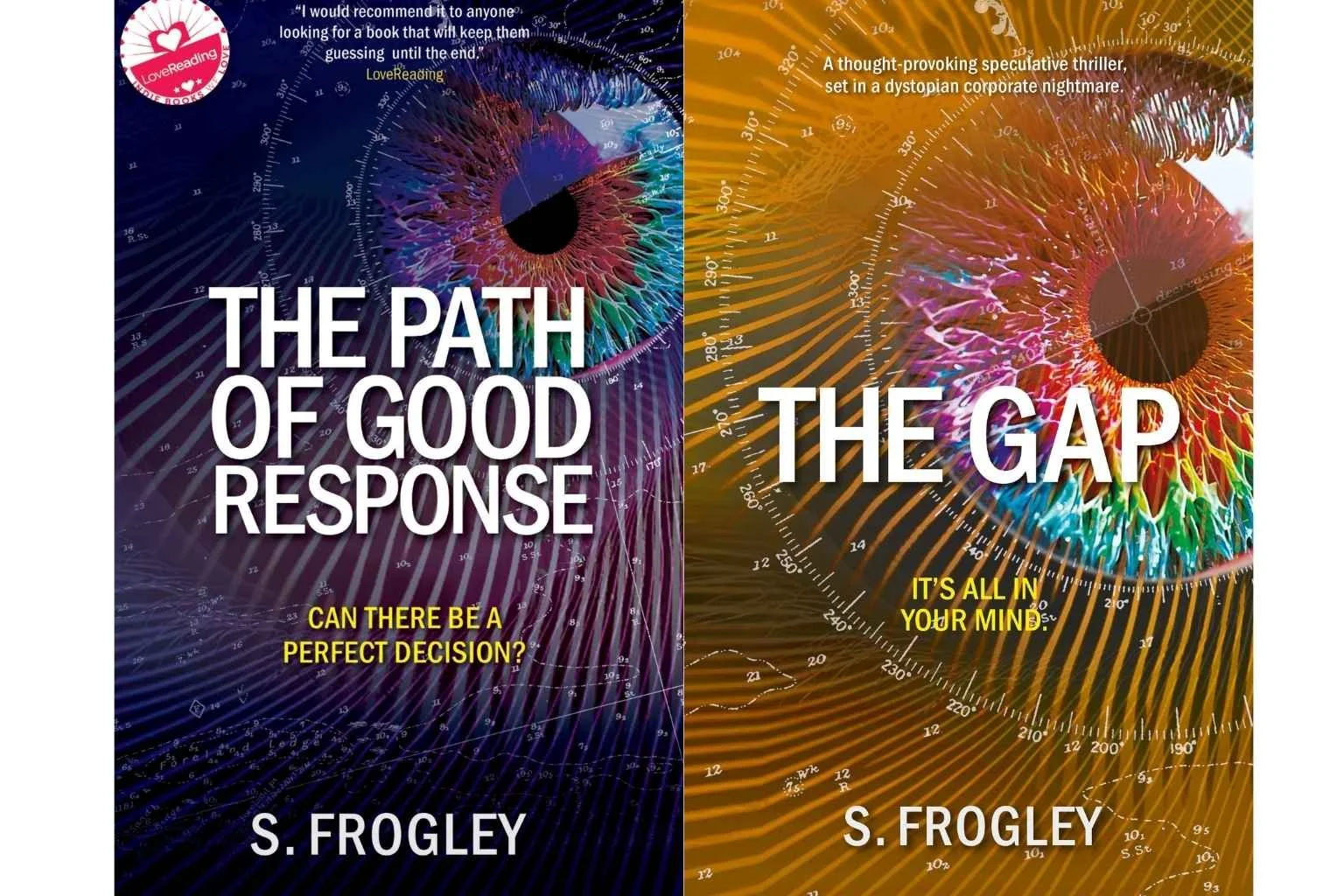
Ad: The Schelldhardt series. The new dystopian thriller releases.
What readers will keep chasing
The next wave of dystopian thrillers is unlikely to abandon spectacle altogether. We still enjoy a locked-down city, a rogue experiment and a reveal that makes us put the kettle on before reading the next chapter. But the stories with staying power will keep their nightmares close to the skin.
Expect more flawed utopias, more systems selling certainty, and more worlds where the real threat is not chaos but order taken far too far. Expect fiction that recognises technology can be useful, connection can be genuine and progress can still come with a receipt nobody thought to read.
For anyone drawn to thoughtful speculative suspense, that is a promisingly unsettling place to be. Books such as The Gap sit in that tension: reality may be shifting under your feet, but the most frightening question is still painfully human - if someone could make every choice for you, how long would it take before you let them?
