
12 Best Speculative Fiction Books to Try
Speculative Fiction Books to Try
If your ideal book leaves you staring at the ceiling afterwards, mildly unnerved and suddenly suspicious of reality itself, you are probably already in the market for the best speculative fiction. This is the shelf where big ideas get teeth. It is where a story asks, what if the world shifted one degree off centre, and then forces ordinary people to live with the consequences.
The genre is gloriously slippery. One reader means dystopia. Another means climate fiction, alternate history, near-future tech paranoia, or that deliciously specific kind of novel where everything seems normal until one tiny detail says absolutely not. The good news is that speculative fiction is broad enough to cover all of that. The bad news is that recommendation lists often lump together anything vaguely strange and call it a day.
So, instead of serving up a random stack of books with a sci-fi sticker slapped on the front, here is a sharper list. These are books that genuinely play with reality, systems, identity, power, and the terrifying possibility that the world you trust is built on rules you never agreed to.
What makes the best speculative fiction work?
The best speculative fiction is not just about a clever premise. Plenty of books can pitch well in one sentence. The ones people press into your hands at parties, or post with all-caps captions on Bookstagram, do something harder. They build a recognisable world, tilt it, and then follow the emotional fallout all the way through.
That usually means the speculative element is doing more than set dressing. A surveillance state is not there because dystopias are trendy. Memory editing is not there because technology is spooky. These ideas matter because they expose something painfully human - grief, vanity, loneliness, ambition, conformity, love, fear. The concept gets you in. The emotional logic is what makes it land.
There is also a spectrum here. Some speculative fiction is very much capital-G Genre, with intricate systems and dramatic worldbuilding. Some barely leaves the real world at all. It depends what you want. If you like your fiction with a strong Black Mirror pulse, you will probably lean near-future and unsettling. If you want philosophical dread with corporate menace, you may prefer books where reality itself feels compromised.
12 best speculative fiction books worth your time
Never Let Me Go by Kazuo Ishiguro
This is the quiet assassin of the genre. On the surface, it is restrained, even gentle. Underneath, it is devastating. Ishiguro gives you an alternate version of England that feels almost normal, then lets the horror emerge gradually, politely, and with terrifying inevitability.
If you like speculative fiction that trusts you to join the dots, this is elite. It is less interested in action than in what happens when people are raised inside a system designed to limit their future. Bleak, beautiful, and annoyingly unforgettable.
The Handmaid's Tale by Margaret Atwood
Yes, it is famous. Yes, it earns that status. Atwood's version of authoritarian control still hits because it understands that power does not merely oppress bodies - it colonises language, ritual, and daily life.
What makes it one of the best speculative fiction novels is how plausible it feels. No aliens, no magic portal, just a society that rearranges itself around misogyny and calls it order. Grim? Absolutely. Essential? Also yes.
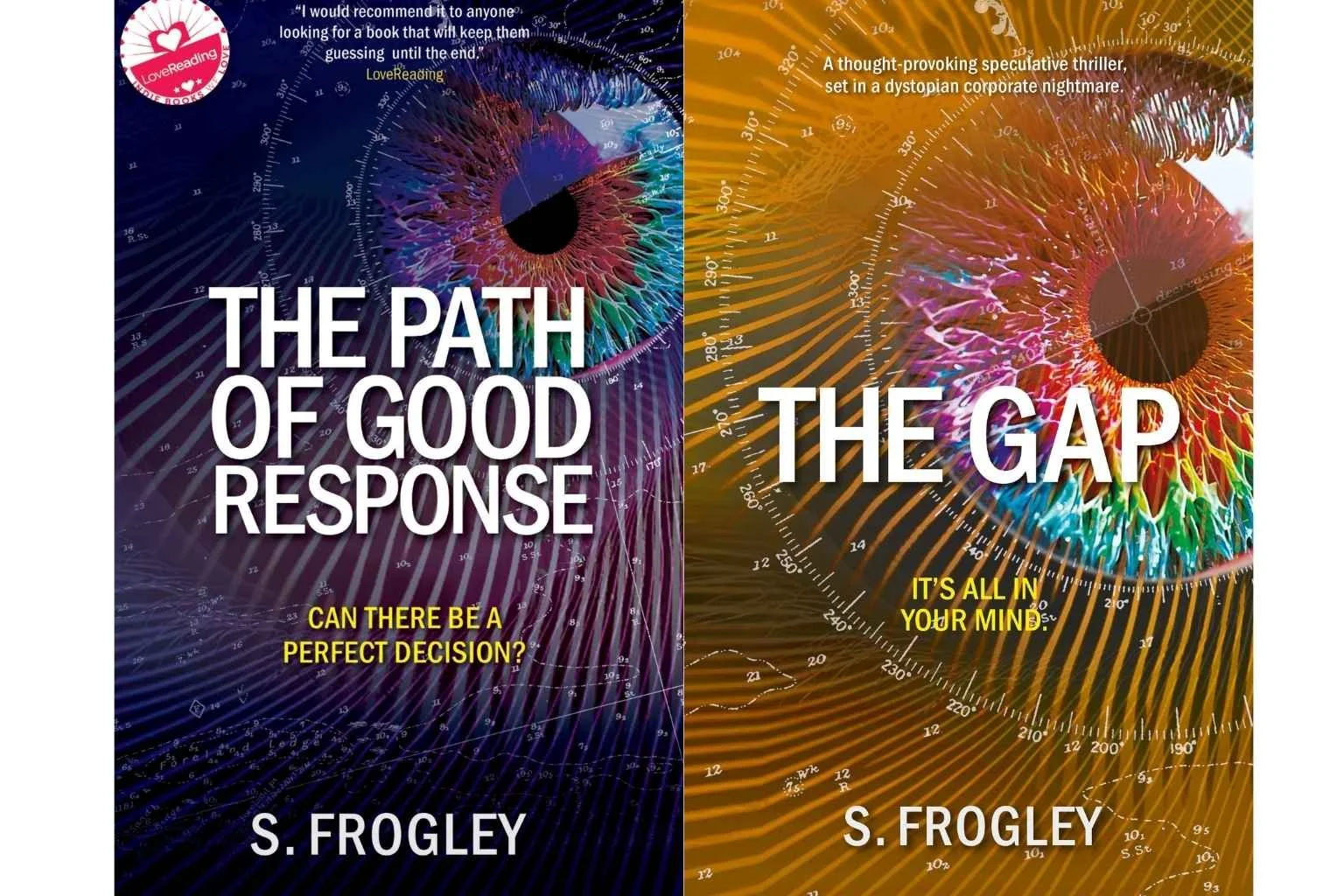
The Path of Good Response/The Gap by Steve Frogley
If your taste leans towards speculative thrillers where reality itself starts looking suspicious, this new series is worth a look. The setup plays in exactly that unnerving zone between everyday life and something much larger, stranger, and more manipulative lurking underneath.
What makes that kind of story work is tension with a philosophical edge. You want pace, but you also want the book to ask what a perfect decision even is, and who gets to define it. That blend of thought experiment and thriller energy is catnip for readers who love The Matrix and The Truman Show for the existential headache as much as the plot.
Station Eleven by Emily St. John Mandel
Post-apocalyptic fiction can sometimes get stuck in survival logistics and canned food inventories. Station Eleven does something far more interesting. It asks what art, memory, and performance mean after collapse.
It is elegant rather than bombastic, and that will either be exactly your thing or not. If you want emotional texture over nonstop mayhem, it is a standout. The travelling symphony alone is one of those ideas that stays lodged in your head.
The Power by Naomi Alderman
A premise with proper bite: what happens if women across the world suddenly develop the ability to inflict electric pain? Alderman uses that setup to flip gendered power structures and then refuses to let the thought experiment stay tidy.
That refusal is what makes the book sing. It is not a victory lap. It is messier than that, and smarter. Anyone wanting speculative fiction that actively argues with easy moral comfort will have a good time here, in the most unsettling sense.
Klara and the Sun by Kazuo Ishiguro
Different flavour, same precision. This one follows an Artificial Friend observing human behaviour with painful sincerity, and the result is both tender and eerie. If Never Let Me Go is the slow heartbreak pick, Klara and the Sun is the quietly existential one.
It works best if you enjoy novels that ask large ethical questions in a soft voice. Not everyone does. Some readers will want more overt plot. But if your taste runs towards reflective, strange, and emotionally disarming, it absolutely belongs on a best speculative fiction list.
Oryx and Crake by Margaret Atwood
For readers who prefer their speculative fiction with more biotech menace and less restraint, this is the one. Corporate science, engineered life, environmental collapse - all the cheerful stuff. Atwood builds a future that feels grotesque and uncomfortably adjacent to our own.
It is also darkly funny, which helps. The satire sharpens the horror instead of softening it. You can see the anti-corporate thread running straight through it, which makes it an especially good fit if you like stories where greed scales up faster than ethics.
The Road by Cormac McCarthy
This is the stripped-back, ash-covered end of the genre. A father and son move through a ruined world, and every sentence feels like it has been sanded down to bone. It is not interested in explaining the apocalypse. It is interested in what remains of love and decency afterwards.
Fair warning: this is bleak even by dystopian standards. But its emotional force is huge. If you want proof that speculative fiction can be literary without losing its tension, here you are.
Dark Matter by Blake Crouch
Sometimes you do not want slow-burn melancholy. Sometimes you want a reality-bending thriller that grabs you by the collar and says right, off we go. Dark Matter absolutely understands the assignment.
Parallel lives, identity panic, scientific ambition, and a pace that makes self-control around bedtime highly unlikely. It is not the most stylistically delicate book on this list, but it is one of the most compulsively readable. Ideal if your favourite flavour of speculative fiction is high-concept and properly cinematic.
Sea of Tranquility by Emily St. John Mandel
This novel has time travel, a moon colony, pandemic echoes, and a sense that existence might be running on unstable code. In lesser hands that could feel like a pile-up. Mandel makes it airy, elegant, and faintly uncanny.
It is especially good for readers who like the speculative element to be intellectually playful rather than relentlessly grim. There is melancholy here, but also curiosity. A lovely choice if you want something brainy without becoming homework.
The Employees by Olga Ravn
If conventional narrative is not a requirement for you, this is one of the strangest and most rewarding picks around. Told through workplace statements from a crew aboard a spacecraft, it turns office culture, personhood, and artificial life into something eerie and oddly intimate.
Very much not for everyone, which is partly why it is so interesting. The best speculative fiction sometimes pushes form as well as premise, and this book absolutely does that. Think less blockbuster, more existential HR nightmare.
Version Control by Dexter Palmer
This is for readers who like their speculative fiction to creep up on them. It begins in a recognisable domestic and professional world, then slowly introduces the possibility that time, reality, and causation are not behaving properly.
What it does brilliantly is connect huge theoretical ideas to ordinary dissatisfaction. Marriage, work, ambition, routine - all the things that make a life feel stable or unstable. It is thoughtful, slightly eerie, and far more emotionally grounded than its premise first suggests.
How to choose the best speculative fiction for your taste
If you are new to the genre, start by deciding what sort of unease you enjoy. Some books are idea-forward and chilly. Some are emotional first and speculative second. Some want to interrogate political systems. Others want to make you question whether your own mind is a reliable narrator.
Mood matters too. If you want elegant devastation, go for Ishiguro. If you want feminist rage with voltage, pick Alderman. If you want pace and plot twists, Blake Crouch is waiting. And if what you really love is that blurred-reality feeling where the world seems one administrative memo away from a full existential collapse, seek out the thrillers that keep one foot in recognisable life while reality quietly buckles.
That is the real joy of speculative fiction. It is not one thing. It is a genre for readers who want more than escapism, but still want a story with momentum. It lets you ask impossible questions without losing the pleasure of a very good page-turner.
The next time a book makes you say, this is too close to real for comfort, you are probably in exactly the right section.
