
Can Romantic Fiction Reflect Real Dating?
Can romantic fiction reflect real dating?
A dating app match who sends a voice note rather than a thumbs-up. The mate who says, “He’s nice, but does he have banter?” The first date that is objectively fine, then becomes a group-chat post-mortem involving screenshots, timestamp analysis and one very committed use of the clown emoji. Can romantic fiction reflect real dating? Absolutely - just not by pretending that every awkward coffee becomes a cinematic rain-soaked declaration.
The best contemporary romance understands that modern dating is already absurdly plotted. We meet strangers through an algorithm. We attempt to appear normal while assessing whether someone’s prompt about pineapple on pizza reveals a fundamental incompatibility. We want chemistry, emotional safety, a decent reply time and preferably someone who does not call themselves “a bit of a bad boy”. Fiction does not need to invent the chaos. It needs to notice it.
Can romantic fiction reflect real dating without becoming grim?
Yes, because realism is not the same thing as misery. Real dating contains ghosting, mixed signals, terrible exes and the occasional person who thinks negging counts as flirting. But it also contains ridiculous in-jokes, unexpectedly good conversations and the very specific thrill of realising you can be fully yourself around somebody.
Romantic fiction earns its happy ending by giving that hope shape. A rom-com may heighten the timing, polish the dialogue and arrange a meet-cute that would be statistically unlikely outside a Richard Curtis montage. Yet the emotional core can still be bang on: the fear of being rejected, the exhaustion of starting again, the awkwardness of wanting more than someone is offering, and the relief of being chosen clearly.
That last bit matters. A good romance is not a lie because it has a happy ending. It is a reminder that a relationship should not require a detective board, three friends on rota and a minor degree in behavioural analysis to establish whether the other person likes you.
What romance gets deliciously right
Dating is partly performance
Everyone has a first-date version of themselves. It might be only slightly edited - a person who casually mentions their gym routine but neglects to say it happened once in February. Or it might be a full rebrand, complete with borrowed opinions about natural wine and a suspiciously rehearsed story about backpacking.
Romance novels know this game well. Characters often begin with an armour: confidence, sarcasm, busyness, perfectionism, the claim that they are “not looking for anything serious”. The love story starts to work when that armour gets inconvenient. Not because a romantic interest magically fixes them, but because intimacy makes the old performance harder to maintain.
That is recognisable. The right person does not demand a flawless, endlessly available version of you. They make room for the unfiltered one - the anxious, enthusiastic, occasionally over-sharing human who is trying their best.
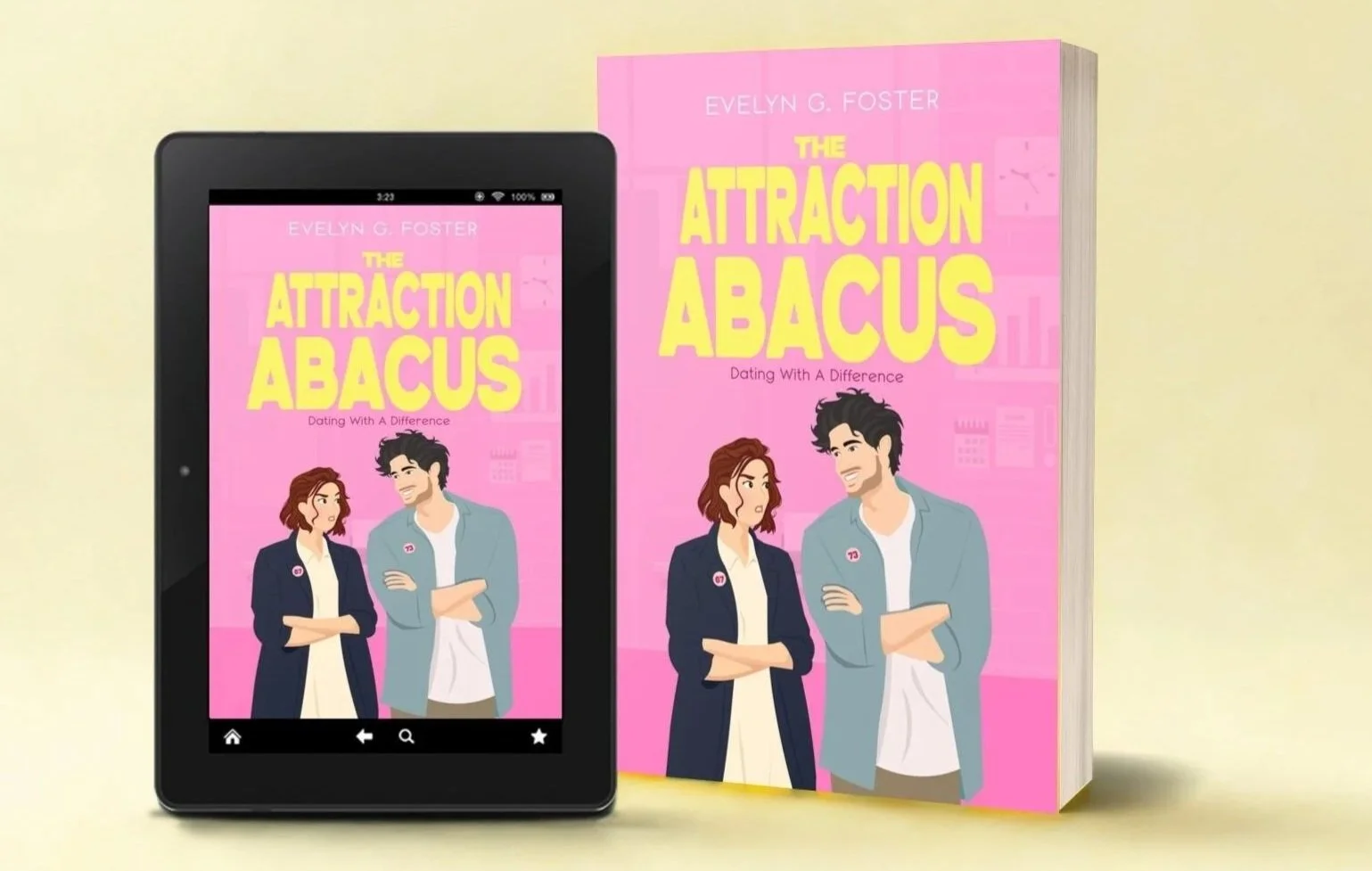
Ad: The Attraction Abacus, a rom-com about a dating agency that summarises its clients as a single score.
Chemistry is not a spreadsheet
Modern dating can make romance feel like recruitment. You assess lifestyle, values, geographical radius, future plans, profile photos and the ominous question of whether they are “open to seeing where things go”. Some of that is sensible. Compatibility matters. Nobody needs a love story powered solely by cheekbones and bad decisions.
But fiction is right to insist that there is something beyond the checklist. Attraction can arrive in the way a person listens, makes you laugh, notices your mood, or looks at you like your overly niche opinion about a television finale is genuinely fascinating. It is not always logical, and that does not make it less real.
The trick is that chemistry is an opening, not evidence. A brilliant first date can become a very average relationship. A slow-burn connection can be worth waiting for, or it can be two people avoiding a necessary conversation for 300 pages. Context, as ever, is doing a lot of heavy lifting.
Grand gestures only work when the groundwork is there
A sprint through an airport is fun on screen. Turning up uninvited at someone’s workplace after they have asked for space is less “romantic hero” and more “please speak to reception”. Romance fiction can reflect real dating when it understands the difference.
The gestures readers remember are not usually expensive or theatrical. They are specific. Someone learns what makes the other person feel cared for. They show up when it counts. They apologise properly. They make a choice that demonstrates attention, effort and emotional growth.
That is why a character returning a borrowed book with a note tucked inside can land harder than a helicopter full of roses. Anyone can hire a helicopter. Remembering someone’s favourite line is the real flex.
Where romantic fiction takes a sharp left from reality
Fiction has a structural advantage: it knows which moments matter. Real life does not provide chapter breaks after an excellent kiss or a beautifully timed realisation. It provides a Thursday afternoon when someone has not replied because they are at the dentist, and you must resist constructing an entire tragedy from their WhatsApp “last seen”.
Novels can also afford coincidence. The rivals have to share an office. The fake date has to become emotionally confusing. The childhood friend has to come back looking unfairly good at exactly the right moment. In real life, proximity is not destiny, and fate has a habit of being stuck on the Northern line.
Then there is the communication issue. If fictional characters spoke plainly in chapter three, plenty of books would be over by tea. Readers accept misunderstandings because they create delicious tension. In an actual relationship, however, repeated refusal to say what you mean is not an enemies-to-lovers trope. It is a headache.
This is where a little genre literacy goes a long way. Enjoy the pining. Relish the almost-confession. But do not let a book persuade you that emotional unavailability is automatically depth, or that being treated badly becomes romantic if the person is very attractive and has sad eyes.
The fantasy is not always the prince bit
For many readers, the most comforting part of romantic fiction is not the declaration. It is the attention. The characters get time to talk, tease, notice and gradually understand one another. Even when the plot is chaotic, the relationship receives narrative focus.
Real dating can feel strangely opposed to that. People are busy. Conversations disappear into work deadlines, family plans and the tiny administrative tasks of adult life. Apps encourage a browse-and-replace mentality, where a slightly imperfect date can feel like a reason to reopen the catalogue. The fantasy of romance, then, may simply be someone being present and intentional.
That does not mean expecting a partner to behave like a fictional lead with a screenwriter in their ear. Nobody is emotionally articulate at all times. Nobody delivers a perfect speech after an argument, preferably under fairy lights. But it is reasonable to want consistency, kindness and the sense that the person you are dating is actively participating rather than merely hovering in your notifications.
Books such as The Attraction Abacus play with this territory because dating is already full of systems, rules and supposed equations. We all know the temptation to calculate: how soon to reply, how much to reveal, whether enthusiasm is cool or catastrophic. The human complication, thankfully, is that feelings refuse to stay inside neat little boxes.
Read for possibility, not a blueprint
The healthiest way to take romantic fiction into your dating life is to treat it as a mood board for values, not instructions for plot mechanics. Keep the parts that remind you to want warmth, humour, desire, honesty and a partner who genuinely likes your company. Leave the parts involving dramatic exits, preventable miscommunication and dating your boss if it would make HR cry.
A brilliant romance does not tell us that love is effortless. It tells us effort can be mutual. It reminds us that being understood is sexy, that laughter can be intimacy, and that a happy ending is not somebody finally changing their mind about you after six months of chaos. It is two people deciding, with clear eyes, to show up.
So take the butterflies, the banter and the belief that love can surprise you. Just keep your standards higher than a third-act grovel from a man who could have sent one honest text.
