
A Review of a Speculative Dystopian Thriller
Speculative dystopian thrillers.
A review of speculative dystopian thriller fiction has to answer one question before it gets carried away with ominous corporations and reality-bending plot twists: does this world feel one bad app update away from our own? The good ones make you put the kettle on, stare at your phone and briefly wonder whether you have agreed to something truly awful in the terms and conditions.
This is a genre built for readers who liked The Matrix, Inception or The Truman Show not simply because they were clever, but because they made certainty feel suspicious. A familiar street becomes a set. A helpful service becomes a trap. The system designed to improve human life starts treating actual humans as inconvenient variables. Deliciously unsettling stuff.
What makes a speculative dystopian thriller work?
Dystopian fiction can be grand, grim and gloriously weird. A thriller, meanwhile, needs momentum. Put the two together and you need more than a miserable future with some fluorescent lighting. You need a premise that presses on a recognisable modern anxiety, then a plot that keeps tightening the screw.
The strongest books in this space understand that dystopia is not always about rubble, uniforms and a government broadcasting instructions from a giant screen. Sometimes it is a polished office, a frictionless subscription or a company promising to make every choice easier. The horror lands because the offer sounds, at first, rather good.
That is where speculative fiction earns its keep. It takes a current idea - data-driven decisions, optimisation culture, corporate consolidation, personalised realities - and pushes it just far enough that we can see its sharp edges. The setting may be invented, but the unease is painfully familiar.
A speculative thriller also needs a central mystery with teeth. What is the protagonist missing? Who benefits from the rules? Why does everyone else seem so comfortable with something deeply strange? Readers will happily follow a high-concept premise, but only if the book gives them a human reason to care about the answer.
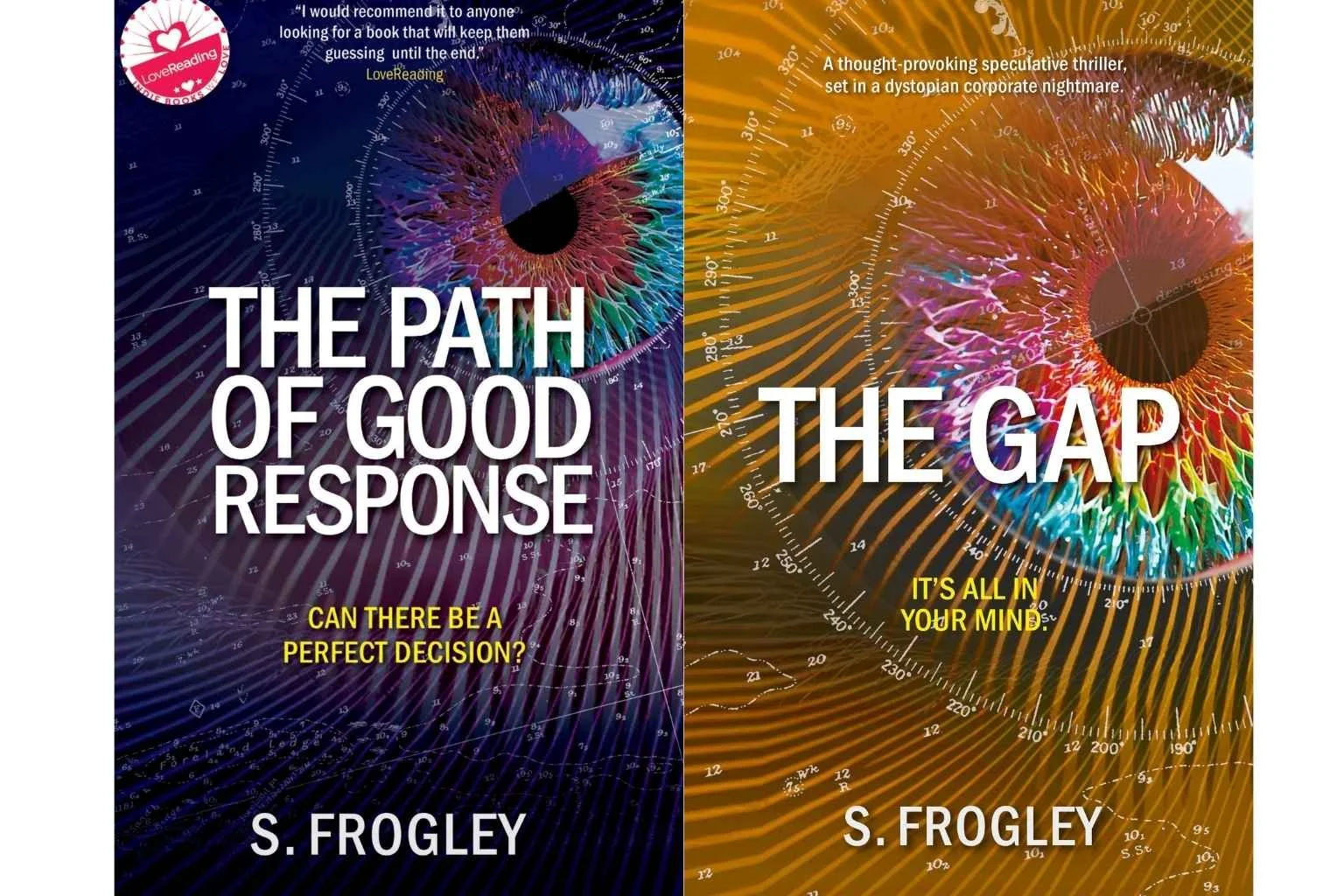
Ad: The Schelldhardt series. A speculative dystopian thriller series.
A review of speculative dystopian thriller conventions
The blurred-reality story is one of the genre’s most reliable pleasures, and for good reason. It turns the reader into an active participant. You are not just watching a character question their world. You are questioning the narration, the clues and your own snap judgements alongside them.
There is a fine line, though. Confusion is not the same thing as intrigue. A book can withhold information without making the reader feel shut out in the rain. The best reality-bending thrillers establish enough emotional truth to keep us grounded: a character’s fear, grief, ambition or need to belong. Even when the floor drops away, we know what they stand to lose.
Think of the difference between a twist that makes you revisit every earlier chapter with a grin, and one that makes you mutter, “Well, apparently none of that counted.” The former reframes the story. The latter often feels like the author has moved the goalposts at half-time.
Corporate dystopias bring a different flavour of menace. The antagonist is not necessarily one cackling executive in a black turtleneck. More often, it is a culture of expansion that has become too large to question. The company has a mission statement, a wellness scheme and a charming spokesperson. It may even make a real problem easier to solve. That is precisely why it is dangerous.
The anti-globalisation thread works best when it avoids cartoon villainy. Scale is not automatically evil, and neither is technology. But a system that centralises power, monetises behaviour and treats local lives as market segments has consequences. Fiction can make those consequences personal in a way a news report rarely can. One person loses a job, a memory, a relationship or the right to decide what is true. Suddenly the global system has a face.
The perfect decision is a frightening idea
A recurring question in thoughtful speculative thrillers is whether a human being can be improved by removing bad choices. It sounds almost compassionate. Nobody wants regret, self-sabotage or a decision made at 2am after three glasses of wine and an ill-advised text.
But choice is messier than an efficiency problem. We become ourselves through wrong turns as much as right ones. We learn, we change our minds, we disappoint people, we recover. A system that can always calculate the “best” outcome may be able to protect us from pain, but it may also flatten everything that makes a life specifically ours.
That tension is far more interesting than a simple warning that machines are bad. A persuasive dystopian thriller lets readers see the attraction before it reveals the cost. If the corporation’s offer is obviously monstrous from page one, there is no temptation. If it promises safety, connection, purpose or relief from impossible decisions, the moral pressure becomes real.
It also gives the protagonist a problem bigger than escaping a building. They may need to decide whether freedom is worth uncertainty, whether comfort has become complicity, or whether the people they love are happier inside the very system they are trying to destroy. No pressure, then.
Pace matters, but so does the aftertaste
There is a particular kind of reader who wants a book to make their brain fizz and their pulse quicken. This genre can deliver both, but the balance matters. Too much philosophy and the thriller stalls. Too much chase-scene momentum and the speculative premise becomes expensive wallpaper.
The sweet spot is when each revelation changes the action. A discovery about the world should force a harder decision, raise the personal stakes or turn an ally into a question mark. The plot keeps moving because the ideas have consequences.
Character is equally non-negotiable. You can forgive a slightly implausible technology if the protagonist feels vividly human. Give us someone whose instincts are not always correct, whose motives are complicated and whose private life has not politely paused for the end of civilisation. The emotional mess is the point.
This is why the genre is not only for readers who enjoy diagrams, theories and late-night arguments about simulation hypotheses. At its best, it is intimate fiction with a very large shadow. The threat may be systemic, but the ache is personal.
Who will enjoy this kind of thriller?
If your ideal read has the propulsive paranoia of a conspiracy thriller but you also want something to argue about after the final page, speculative dystopia is an excellent shelf to browse. It suits readers who enjoy stories where reality has rules nobody fully explained, and where the most frightening villain may be a brand with impeccable customer service.
It may be less satisfying if you want every question tied up with a neat bow. Ambiguity is part of the experience, particularly in books that play with perception. That does not mean an ending can be vague for the sake of it. It means some stories are designed to leave a splinter under the skin: small, irritating and impossible to ignore.
For readers drawn to this particular strain of unease, Heptagon Books’ The Gap sits in the conversation around distorted realities, human judgement and the price of systems built to grow without limits. It is the sort of territory where a supposedly perfect answer is usually the first thing to distrust.
The next time a speculative dystopian thriller offers you a cleaner, safer, more optimised version of life, do not rush to reject it. First, ask what it wants in return. That is where the really good stories begin.
