
Why Contemporary Dating Fiction Feels So Real

Contemporary dating fiction
A bad date used to be a story for your group chat. Now it can be a story for the entire internet, complete with screenshots, a voice note analysis, three friends saying "block him", and one suspiciously persuasive comment from a stranger. That is exactly why contemporary dating fiction has such a grip on readers. It takes the strange, funny and occasionally soul-sapping theatre of looking for love now, then gives it shape, chemistry and an ending worth staying up for.
The best of it does not pretend dating apps are glamorous. It understands the particular horror of seeing someone’s profile pop up after they have vanished mid-conversation. It knows that a first date can involve chemistry, chaos and a discussion about whether splitting chips is a red flag. Most of all, it knows that behind every joke about bad prompts and dry replies is a very human wish: to be chosen clearly.
What contemporary dating fiction gets right
Dating fiction has always existed, obviously. People have been making questionable romantic decisions since literature began. What makes the contemporary version different is its fluency in the systems we live with: apps, algorithms, situationships, long-distance messages, career pressure, friendship WhatsApps and the minor emotional injury of being left on read.
These books rarely treat technology as the villain, either. An app can produce a truly dreadful date, but it can also be the unlikely route to a person who understands your niche obsession with eighties films or knows exactly when to send a meme instead of a paragraph. Contemporary dating fiction is interested in the complication. We have more ways to meet people, more ways to misunderstand them, and more ways to avoid saying what we mean.
That makes for excellent plots. A misplaced assumption can travel at the speed of a notification. An old photograph can derail a promising connection. A carefully curated profile can conceal a person who is far less polished, and far more interesting, in real life. Romance readers do not need every story to be a documentary, but they do want the emotional logistics to make sense.
The rom-com has grown up, thankfully
Modern dating stories can be very funny without making their protagonists the punchline. There is comedy in a disastrous bar date, in a flatmate who has become an unpaid relationship consultant, or in the sheer audacity of a man whose bio says he is "just seeing what’s out there" at 42. But the humour lands because the feelings underneath are real.
A great contemporary rom-com lets a character be clever, successful and still deeply confused by a two-word text. It gives them friends who are not decorative sidekicks but a whole support network with opinions, baggage and potentially even their own romantic subplots. It also makes room for people who have loved before, been hurt before, or simply cannot be bothered to entertain nonsense any longer.
This is why readers often reach for dating-centred fiction after a run of heavier books. It can be escapist without being empty. You get the sparkle of a meet-cute, but also the relief of watching someone learn to ask for better.
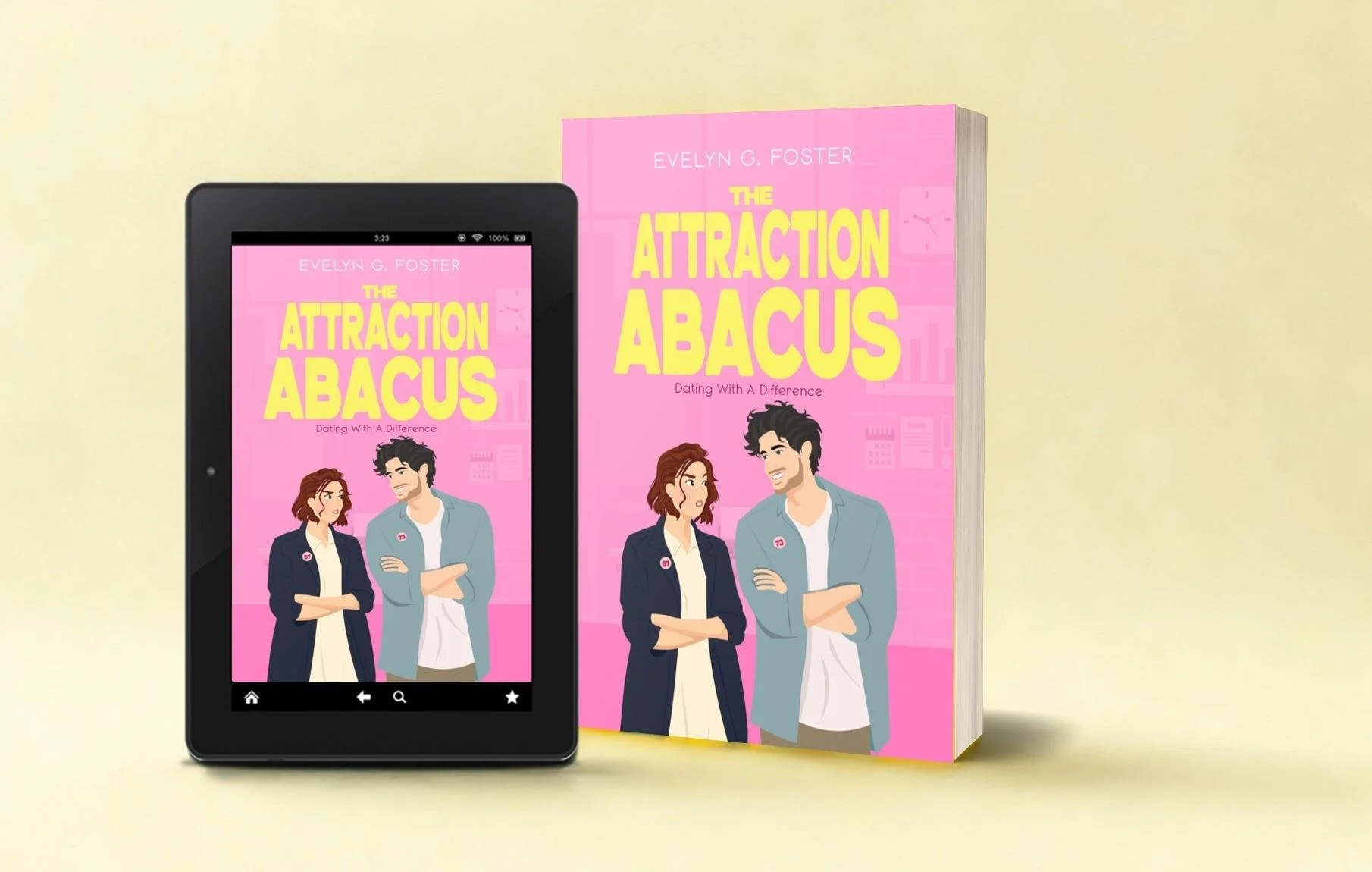
Ad: The Attraction Abacus. A rom-com that is a smart parody of the dating scene.
The real fantasy is emotional clarity
Let us be honest: the fantasy in contemporary dating fiction is not always the penthouse, the perfect jawline or the improbable holiday villa. Sometimes it is a love interest who communicates like an adult.
Readers are not asking for characters to be flawless. Flawless people are exhausting, and they tend to make terrible fictional company. We want the person who gets it wrong, reflects, apologises properly and changes their behaviour. We want a romantic lead who does not treat directness as a loss of mystery. A little yearning is delicious. Forty chapters of avoidable confusion because nobody will speak plainly? Your mileage may vary.
That distinction matters, especially for readers who are tired of being sold emotional chaos as proof of passion. The most satisfying dating fiction understands that tension and tenderness can coexist. A relationship does not need to be toxic to be compelling. In fact, watching two people make a difficult but decent choice can be more swoony than another dramatic storming-out scene.
Spice level is a preference, not a moral test
Modern romance conversation has thankfully become more precise. Readers talk about tropes, heat levels, third-act break-ups and whether a book delivers a happily ever after with the forensic focus of people choosing a new phone contract. This is useful. It helps readers find the experience they actually want.
Some want high heat and a romance that practically sets off the smoke alarm. Others want a closed-door story, a low-spice slow burn or a book where the main event is the emotional reveal. Neither camp is doing romance wrong. The point is not to prove how mature, daring or pure your reading taste is. The point is to find the book that matches your mood.
For plenty of readers, low-to-no-spice contemporary dating fiction offers a particular pleasure. It puts the focus on banter, build-up, longing and the electric moment when someone finally says the thing. If a hand brush across a kitchen counter is written well enough, no one needs to call the fire brigade.
Why the messy bits make the love story better
Dating is rarely just dating. It crashes into money worries, family expectations, work deadlines, grief, confidence, identity and the question of whether your friends secretly think you should stop giving one specific person another chance. Contemporary fiction has room for all of that.
A character may be rebuilding after a break-up, learning to live alone, navigating a new city or deciding whether a relationship fits the life they actually want. These pressures make a romance feel earned. The love story becomes not a prize for becoming perfect, but part of a fuller life.
That is also where the genre can surprise readers who think they do not read romance. A dating plot can be a sharp lens on modern life: how we present ourselves, what we fear admitting, the roles we play at work and online, and the gap between attention and intimacy. You may arrive for the fake dating set-up. You may stay because the protagonist’s best friend says one devastatingly accurate thing over brunch.
How to find your next dating read
Start with the feeling you want, not just the trope. If you want escapism and a lot of laughter, look for a rom-com with a bold premise and a chaotic cast. If you are after emotional depth, seek stories that give the characters lives beyond their romantic prospects. If you dislike explicit scenes but still want serious chemistry, check for low-spice or closed-door signals before you commit.
Then consider the type of complication you enjoy. Some readers love a workplace romance with professional stakes; others would rather watch strangers become friends, then something more. Fake dating can be catnip when you want forced proximity and public pretending. Second-chance romance works best when you are ready for history, regret and the possibility that timing really was the problem. There is no universally superior trope, despite what the comments section would have you believe.
It is worth paying attention to voice, too. The sharpest contemporary dating novels feel like the author knows the difference between a good joke and a joke that exists solely to announce that the book has heard of social media. References date quickly. Emotional truth does not. A story can mention dating apps without reading like a sponsored post for one.
At Heptagon Books, that mix of current-day chaos, wit and genuine emotional payoff is very much the point. A romance should give you something to text a friend about, whether that is a favourite line, a spectacularly awkward date, or a character finally raising their standards where everyone can see.
The next time you are tempted to call a dating novel frivolous, consider the material it is working with: hope after disappointment, intimacy in public-facing lives, and the courage it takes to ask someone to meet you halfway. Pick the story that promises your preferred level of chaos, make a cup of tea, and let somebody else’s questionable first date improve your evening.
