
A Guide to Contemporary Relationship Fiction

Contemporary Relationship Fiction
The group chat has opinions. Someone wants banter and a guaranteed swoon; someone else is allergic to third-act break-ups; another wants a love story that feels less like a fantasy holiday and more like the beautifully unhinged reality of dating apps, bad timing and emotional baggage. This guide to contemporary relationship fiction is for finding the book that meets you where you are, rather than handing you a generic ‘romance’ label and hoping for the best.
Contemporary relationship fiction is one of the most generous corners of the bookshop. It can be funny, tender, awkward, sharp, sexy, low-spice, devastating, or all of those things before page 80. The trick is knowing what the label promises, what it does not, and which reader-language clues will help you choose well.
What contemporary relationship fiction actually means
At its simplest, contemporary relationship fiction centres relationships in a recognisably modern setting. That might mean romantic love, but it can also make room for friendship, family, divorce, grief, work dynamics, exes who inconveniently remain in the same friendship group, and the particular chaos of trying to be emotionally evolved while sending a screenshot to three mates for analysis.
The word ‘contemporary’ matters. These books tend to reflect the social texture of now: online dating, changing ideas about commitment, career uncertainty, long-distance situations, blended families, modern masculinity, therapy-speak, social media, and the tiny indignities of paying rent. A novel does not need to mention a dating app every chapter to feel current. It simply needs to understand the pressures and possibilities shaping people’s emotional lives.
Relationship fiction and romance overlap, but they are not identical twins in matching cardigans. Genre romance usually places the romantic relationship at the centre and traditionally promises an emotionally satisfying ending for the couple. Relationship fiction may have a major romance without making that outcome its sole destination. The love story may be the point, one powerful thread among several, or the lens through which a character figures out who they are.
That difference is not a quality test. It is a route-planning issue. If you need the certainty of a happily-ever-after, look for a book clearly positioned as romance or rom-com. If you are happy with a messier, more reflective emotional landing, contemporary relationship fiction may be exactly your shelf.
A guide to contemporary relationship fiction by mood
Before you chase tropes, decide how you want to feel. Mood is often more useful than genre labels, especially when a cover gives ‘cute date-night read’ but the actual plot gives ‘emotionally ambushed in a Pret at lunchtime’.
For readers who want wit with their yearning
Look for rom-com, romantic comedy, dating fiction, workplace romance, enemies to lovers, fake dating, or friends to lovers. These labels often signal pace, chemistry and scenes you will want to quote in a caption. The best comic relationship fiction still takes feelings seriously. The jokes do not cancel the vulnerability; they make the vulnerability land harder.
A note of caution: ‘rom-com’ does not mean consequence-free. It can still include grief, anxiety, divorce or a relationship that requires actual communication. Frankly, thank goodness. Banter is delicious, but two people refusing to say one honest sentence for 300 pages is a seasoning, not a meal.
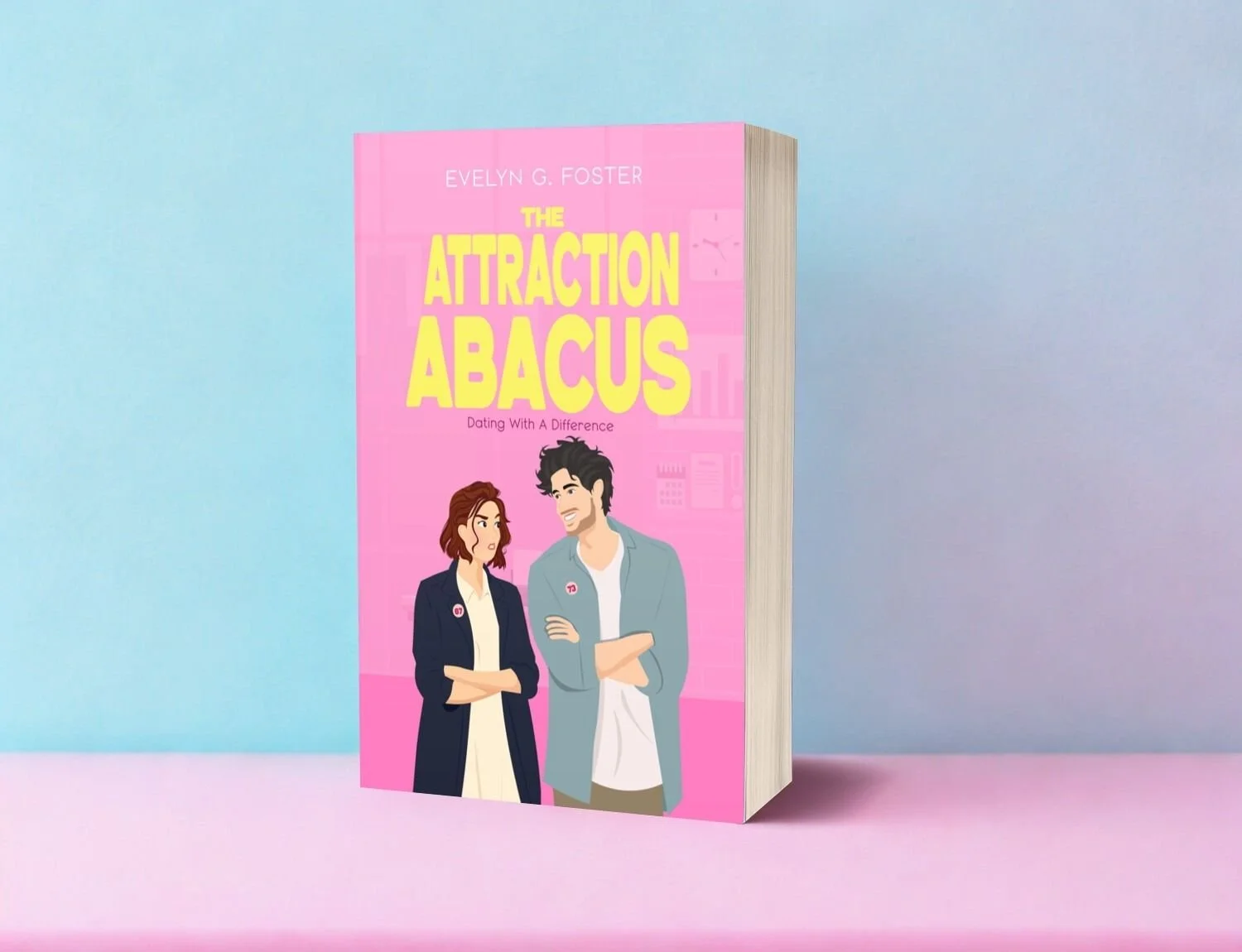
Ad: The Attraction Abacus. Enemies-to-lovers, workplace rom com fun!
For readers who want emotional realism
Try contemporary fiction with relationship themes, women’s fiction, literary commercial fiction, domestic fiction, or character-led fiction. These books are often interested in the decisions around love: whether to stay, leave, forgive, begin again, or admit that being chosen is not the same as being understood.
Expect a little more ambiguity here. The question may not be ‘Will they get together?’ but ‘What does a good relationship look like for this person now?’ For many readers, that is the real catnip. A satisfying ending can be hopeful without being tied up with a bow large enough to obstruct traffic.
For readers who prefer the romance gentle, not graphic
Search for closed-door romance, low-spice romance, sweet romance, fade-to-black, or clean romance, while remembering that these terms are not perfectly standardised. ‘Low spice’ usually means intimacy is present but not highly explicit. ‘Closed door’ generally means the book moves away from on-page sex. ‘Clean’ can sometimes indicate a particular moral or faith-based framework, so read the description rather than assuming.
Low spice is not low chemistry. It is simply a different camera angle. A hand brush, a loaded pause, a brilliant first kiss and a well-timed declaration can produce enough electricity to power a small town.
For readers who want feelings with sharper edges
Look for marriage fiction, break-up fiction, second-chance romance, family drama, love triangle, messy friendship, or stories about dating after divorce. These are often the books for readers who enjoy flawed people making choices that are understandable, even when you would like to confiscate their phone.
Check content notes and reviews if particular topics are difficult for you. Infidelity, fertility struggles, coercive relationships, bereavement and mental health can be handled with insight, but your reading time is not a test of stamina. Curating your TBR is wisdom, not weakness.
Use tropes as a filter, not a prison
Tropes are the book world’s useful shorthand. They tell you about a story’s shape and emotional promise. Fake dating suggests performative closeness becoming real. Friends to lovers offers intimacy, history and the terrifying possibility of ruining a good thing. Grumpy-sunshine promises contrast, while forced proximity removes everyone’s ability to flee when feelings become inconvenient.
But tropes are not plots, and they definitely are not personality types. Two books with the same trope can feel entirely different depending on voice, setting, heat level, pacing and the author’s interest in emotional consequence. One fake-dating novel may be fizzy and escapist; another may ask why its characters find pretend intimacy safer than the real kind.
When choosing, pair a trope with a mood. Instead of searching only for ‘second chance romance’, ask for a funny, low-spice second-chance story, or a tender second-chance novel about people in their forties. That little extra specificity cuts through recommendation overload fast.
Read the signals beyond the cover
A gorgeous illustrated cover can tell you the book is accessible, contemporary and likely romance-adjacent. It cannot reliably tell you whether you are getting slapstick chaos, quiet heartbreak or a bedroom door that remains firmly open. For that, read the blurb with your investigator hat on.
Pay attention to the verbs. ‘Sparks fly’, ‘hilarious’, ‘scheme’, and ‘reluctant roommates’ often point towards a lighter, faster romantic experience. ‘Reckoning’, ‘secrets’, ‘fractured’, ‘reinvent’, and ‘what it means to love’ usually suggest a more introspective read. Neither set of words is better. They are simply different promises.
Reviews can help too, provided you read them strategically. Seek out comments on pacing, spice, humour, angst and ending satisfaction rather than treating a star rating as divine instruction. A two-star review saying ‘not enough drama, everyone communicated like adults’ may be a five-star sales pitch for you.
Give yourself permission to be specific
Modern readers are often told to read more widely, which is lovely advice until it becomes a guilt trip. You are allowed to want a book with no cheating, no explicit scenes, no billionaire heroes, no children, no sad ending, or no plotline in which a woman has to accept crumbs from a man who owns one decent jumper.
You are also allowed to change your mind. Perhaps you usually want frothy dating chaos but this week need a quieter book about a long-term relationship under pressure. Perhaps a predictable happy ending is precisely what your nervous system has ordered. Reading taste is contextual, not a permanent personality badge.
For a contemporary relationship novel that feels made for your current mood, name the emotional payoff first. Do you want to laugh, ache, feel seen, believe in love again, or spend 24 hours thinking about one difficult choice? Then choose the label, trope and heat level that support that feeling. The right book is not the one everyone else is posting about. It is the one that makes you want to message the group chat: ‘Right. You all need to read this.’
