
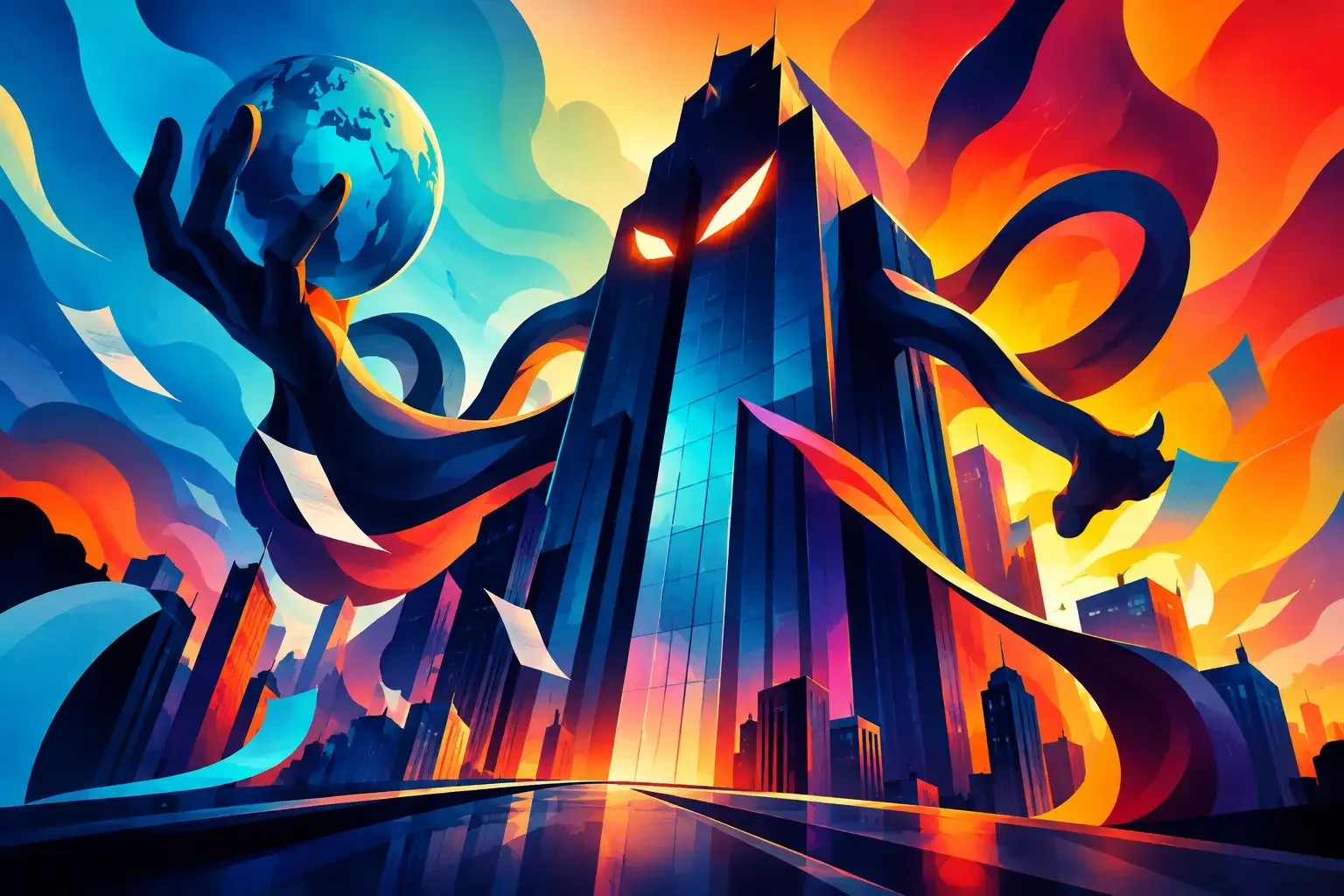
Fictional corporations gone rogue
A corporation is not supposed to be scary. It is supposed to have a glossy logo, a reassuring mission statement and a customer support account posting cheerful replies at 2am. That is precisely why fictional corporations gone rogue hit such a nerve. They take the familiar language of convenience, progress and “making life better”, then reveal the human cost tucked beneath the quarterly results.
The monster is no longer lurking in a castle. It is in the boardroom, the terms and conditions, the wellness initiative and the suspiciously frictionless app. Corporate villains work because they do not need cackling henchmen when they have legal departments, data centres and a growth target that simply cannot be missed.
Why fictional corporations gone rogue feel so plausible
A rogue corporation is rarely frightening because it is openly evil. Openly evil is bad branding. The best fictional companies are seductive first: they promise employment, safety, a miracle cure, faster travel, a better version of you, perhaps even a solution to death itself. By the time the audience notices the fine print, the company has become too large to challenge.
Think of Weyland-Yutani in Alien. Its slogan, “Building Better Worlds”, has the wholesome confidence of a property developer’s brochure. Yet its actual priorities make it clear that a crew is an acceptable expense if an alien organism might be commercially useful. The horror is not merely the xenomorph. It is the moment the crew realise that their employer has calculated their lives into a business plan.
That is the essential trick. A rogue corporation makes evil administrative. Nobody has to wake up twirling a moustache. They can tell themselves they are protecting shareholder value, following protocol or pursuing innovation. The villainy arrives in polite, bloodless phrases, which somehow makes it worse.
The office is already a strange little universe
Workplaces come with their own rituals, hierarchies and language. There are badges, rules nobody can quite explain, motivational slogans, compulsory fun and meetings that could absolutely have been an email. Speculative fiction only has to turn the dial a few clicks before an ordinary office becomes a controlled experiment.
Severance understands this perfectly. Lumon Industries is not terrifying because its corridors are dark. They are terrifying because they are bright, tidy and governed by a cheery corporate logic that becomes more baffling with every wellness session and melon bar. Splitting employees’ work and home memories is an extreme premise, but its emotional question is painfully recognisable: how much of yourself does a job get to own?
That is why stories about fictional corporations gone rogue are so endlessly adaptable. They can be space horror, satire, conspiracy thriller, dystopia or a reality-bending puzzle box. The company changes shape to match the era’s anxiety.
The corporate villain has evolved with us
Earlier corporate nightmares often focused on industrial power: smoke-belching factories, weapons manufacturers and faceless monopolies. Those fears have not vanished, obviously. Plenty of fictional firms are still happy to poison a river or build a weapon that should have stayed a concept sketch.
But contemporary stories have a broader playground. Now the company might know your location, predict your choices, optimise your sleep, curate your dating pool and gently encourage you to hand over your inner life in exchange for a free trial. The menace is intimate. It arrives as personalisation.
Umbrella Corporation in Resident Evil gives us the classic catastrophic version: scientific ambition plus secrecy plus a spectacular lack of concern for public health. Tyrell Corporation in Blade Runner takes a more philosophical route, asking what happens when a company manufactures beings capable of feeling, suffering and demanding more life. Both are monstrous, but not in identical ways.
Then there is Vought from The Boys, which treats superheroes less as moral guardians than as marketable intellectual property. Its genius as satire lies in how familiar its tactics feel: reputation management, demographic targeting, spin, brand partnerships and a willingness to turn disaster into content. The capes are absurd. The press strategy, not so much.
The best rogue corporations offer a bargain
Pure cruelty gets boring. What makes these fictional companies memorable is the deal they put on the table. They offer something the characters genuinely want, and often something readers can understand wanting too.
A corporation may offer security in a collapsing society. It may cure illness, promise a route off a dying planet or create technology that dulls grief. It may even deliver a product that works brilliantly. That complication matters. If the company offers nothing except misery, refusing it is easy. If it offers comfort, connection or a second chance, resistance becomes expensive.
This is where the strongest speculative thrillers get under the skin. They do not just ask, “Would you sign the contract?” They ask what you would trade for certainty. Your privacy? Your memories? Your ability to make a wrong decision? And if a system could guarantee you a happier life, would you notice when happiness became compliance?
The question has real bite because corporations are built to make trade-offs look painless. A button says “Accept all”. A service is free. A subscription has a cancellation process designed by someone who has clearly studied hedge mazes. Fiction makes that everyday friction visible, then follows it to its most chilling conclusion.
Why this trope thrives in reality-bending thrillers
For readers who enjoy The Matrix, Inception and The Truman Show, the rogue corporation is especially useful because it gives unreality an architect. The world is wrong, but not randomly wrong. Someone designed the wrongness, funded it and probably prepared a presentation about the projected benefits.
A corporation can build a simulated reality, edit memory, manufacture consensus or transform a person’s choices into proprietary data. This creates a deliciously paranoid engine for a thriller. Every friendly colleague might be a plant. Every apparent escape route might be part of the test. Every revelation may come with a newer, nastier set of terms and conditions.
There is also a reason these stories often feel more unsettling than tales of a lone mad scientist. A lone genius can be stopped. A global company has subsidiaries, investors, political influence, supply chains and a public-facing campaign about its commitment to community. It can survive a scandal by calling it a learning opportunity.
That scale lets writers explore anti-globalisation fears without turning the novel into a lecture. What happens when one organisation becomes so powerful that opting out is no longer realistic? When its product is not an object but the infrastructure of everyday life? A corporation does not need to conquer the world if the world has already agreed to use its services.
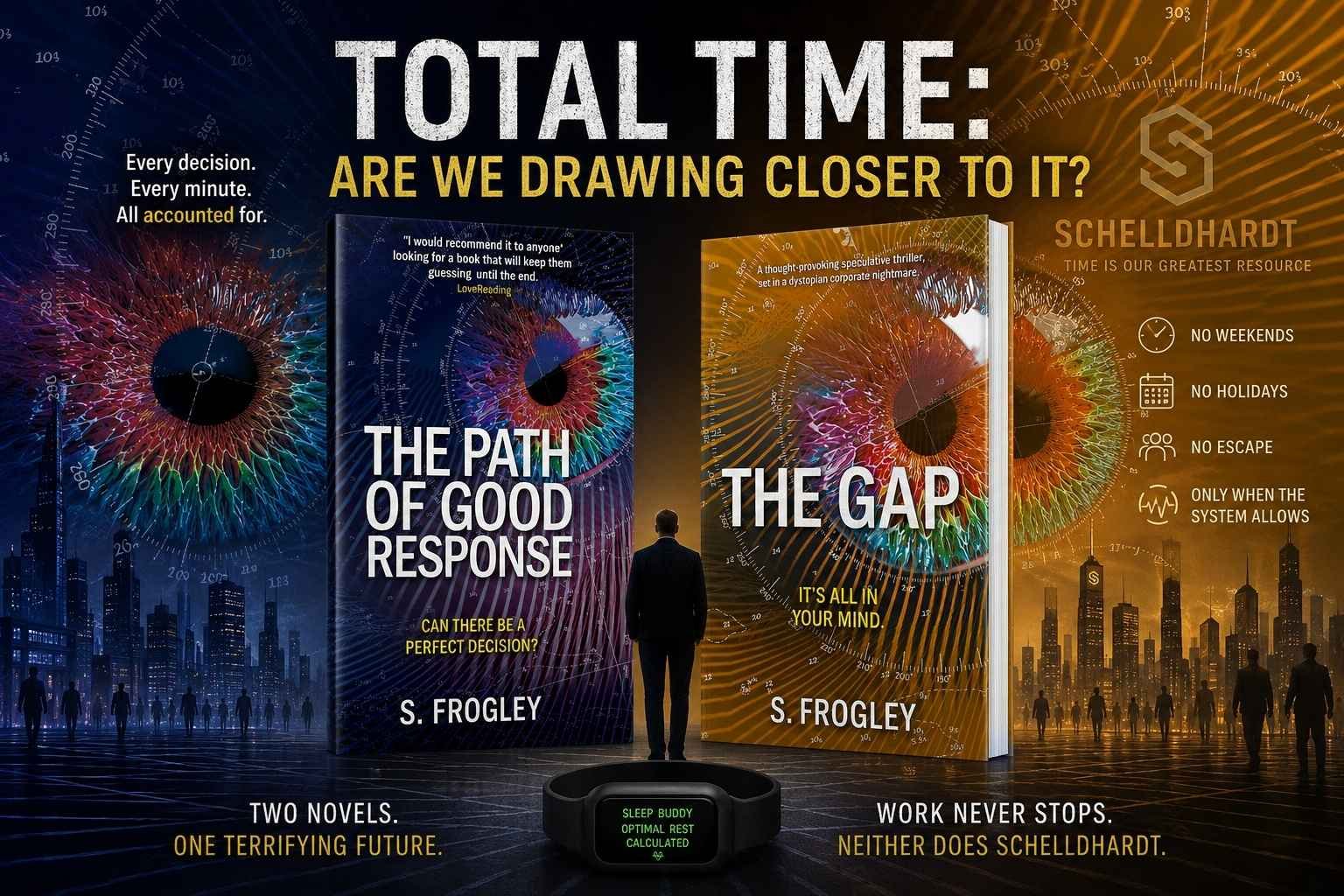
The Schelldhardt series. A corporation out of control.
Not every corporate villain needs to be all-powerful
There is a trade-off here. Make the company too omnipotent and the story can start to feel like a game with no possible winning move. If it owns the government, the media, the moon and everyone’s dreams, why should readers believe the protagonists have a chance?
The answer is not necessarily to make the corporation weaker. It is to make it human in the least flattering sense: vain, divided, bureaucratic and prone to underestimating people who do not fit a spreadsheet. Internal rivalries, whistle-blowers, panicked middle managers and a terrible decision made to protect a launch date can all create the cracks.
The most satisfying rogue corporations are terrifying systems staffed by people. Some are committed believers. Some are frightened. Some are simply trying to get through Friday without being put on a performance improvement plan. That messiness gives a thriller its pulse. It also stops the story becoming an abstract lecture about capitalism with better lighting.
The fantasy of seeing behind the logo
There is a rebellious pleasure in these stories. Readers get to peek behind the immaculate reception desk and find the locked door marked AUTHORISED PERSONNEL ONLY. We are invited to distrust the polished pitch, question the official narrative and root for the person who notices that the perfect world is behaving rather oddly.
Perhaps that is the lasting appeal of corporate horror. It recognises that power rarely announces itself as power. More often, it arrives smiling, offers you a membership discount and asks whether you have a moment to review its privacy settings.
So the next time a fictional company promises a better future, do read the small print. If there is a section titled “acceptable losses”, shut the laptop, take the lift down and do not, under any circumstances, attend the team-building retreat.
