

Awkward first dates
You know the scene: someone has chosen a bar with stools designed by an enemy of the human spine, the conversation has already swerved into exes or tax returns, and one person is pretending not to notice that the other has called them the wrong name. Awkward first dates are a special kind of social horror. They are also catnip for readers.
A meet-cute is lovely. A date that goes perfectly is pleasant. But a first date with a tiny, escalating sense of doom? That is plot. It gives us banter, vulnerability, bad judgement and the delicious certainty that, whatever happens, we are safely on the other side of the page.
Why awkward first dates are romance gold
Romance thrives on stakes, and a first date carries several at once. There is the basic question of attraction, obviously. But there is also the exhausting performance of being a person another person might like. You have to select an outfit that says “I made an effort” rather than “I have constructed a whole identity around this occasion”. You must order food without seeming too self-conscious about ordering food. You must appear relaxed while your brain runs a forensic analysis of every pause longer than 1.4 seconds.
That is why the disastrous date lands. It reveals character faster than a candlelit dinner ever could. Does the hero laugh when the restaurant loses their booking? Does the heroine rescue a waiter from an overfamiliar date? Does someone admit they are nervous rather than trying to perform effortless cool? Chemistry is not always two beautiful people saying clever things over negronis. Sometimes it is surviving an accidental double booking at a pottery class and discovering that the other person is kind when plans go sideways.
For readers, awkwardness also creates the gap between what a character says and what they mean. “I’m having a nice time” can mean “please stop talking about cryptocurrency”. “No, I love spontaneous plans” can mean “I have been internally screaming since you suggested karaoke.” That gap is where rom-coms get their sparkle.
The exact flavour of cringe matters
Not all dating disasters are equally fun. There is a world of difference between relatable awkwardness and behaviour that makes readers want to launch the book into the nearest ornamental pond.
The good kind of awkward is human. Someone spills a drink, makes an overenthusiastic joke, gets caught checking their mobile phone because their sister is having a crisis, or freezes when asked a question they were not expecting. We recognise the panic because most of us have, at some point, replayed a conversation while brushing our teeth and decided we should move to a remote island.
The less charming kind is cruelty dressed up as banter. A character who mocks the waiter, ignores boundaries, lies for sport or treats their date as a captive audience is not creating tension. They are waving a large red flag with both hands. Fiction can absolutely explore awful dates, manipulative people and emotional fallout, but the story needs to understand the difference. The reader should feel that the behaviour is a problem, not a flirtation technique.
It depends on the tone, too. In a high-energy rom-com, a missed train and an ill-advised pair of roller skates can be the beginning of an excellent evening. In a more grounded love story, the awkward moment may be quieter: an unanswered question, a memory of a former partner, a sudden realisation that both people want different futures. The latter can sting harder precisely because nobody is wearing a papier-mâché helmet.
The first-date moments readers remember
The most memorable scenes usually give the characters something practical to deal with. A date is delayed. The table is lost. Rain arrives with the determination of a minor villain. One person’s carefully curated plan falls apart, and the other has a chance to respond.
That response is the point. Grand gestures can wait. On a first date, readers are watching for the small evidence: who listens, who notices, who makes room for embarrassment without turning it into a spectacle. A character does not need perfect lines. Frankly, perfect lines are suspicious. They need to be present enough to say, “That sounds horrible,” or “Shall we get chips instead?” at the right moment.
There is a reason food features so heavily in date scenes. Sharing chips after a restaurant disaster is not really about chips, although chips are objectively useful in a crisis. It is about the collapse of the polished version of the evening. Once the reservation, the dress code and the imagined script have vanished, two people can become more themselves.
This is also why fictional awkwardness is often more satisfying than real-life awkwardness. In real life, you might spend three days wondering whether a polite “take care” means rejection, indifference or simply that the other person had to catch the 19:12. In a novel, the author lets us into both heads. We know that he did not mention a second date because he was terrified. We know that she left early because her phone was on 2 per cent and she had promised to collect her niece. Dramatic irony: the patron saint of shouting “JUST TALK TO EACH OTHER” at a paperback.
When a bad date becomes a good story
A terrible first date does not have to lead to romance. Sometimes the right ending is that both people leave knowing they are not a match, and that is not a failure. Modern dating fiction is at its best when it remembers that compatibility is not a prize awarded to whoever endures the most emotional admin.
But if the date is the start of a love story, it should change something. Perhaps two people who made terrible first impressions encounter each other again and get a second chance. Perhaps the disastrous date exposes a false assumption. Perhaps a character who usually runs at the first sign of discomfort stays long enough to be honest.
The key is not making embarrassment the entire personality of the scene. A sequence of humiliations without emotional movement gets tiring, even if one involves a swan-shaped pedalo. Give the cringe a purpose. Let it reveal a fear, test a boundary, create a private joke or force a choice.
That is part of the appeal of contemporary dating stories such as The Attraction Abacus. Readers are not looking for glossy perfection and a romance that unfolds like a branded advert for expensive sparkling water. They want emotional mess with a pulse: characters trying, fumbling, recalibrating and occasionally saying the exact wrong thing at the exact wrong time.
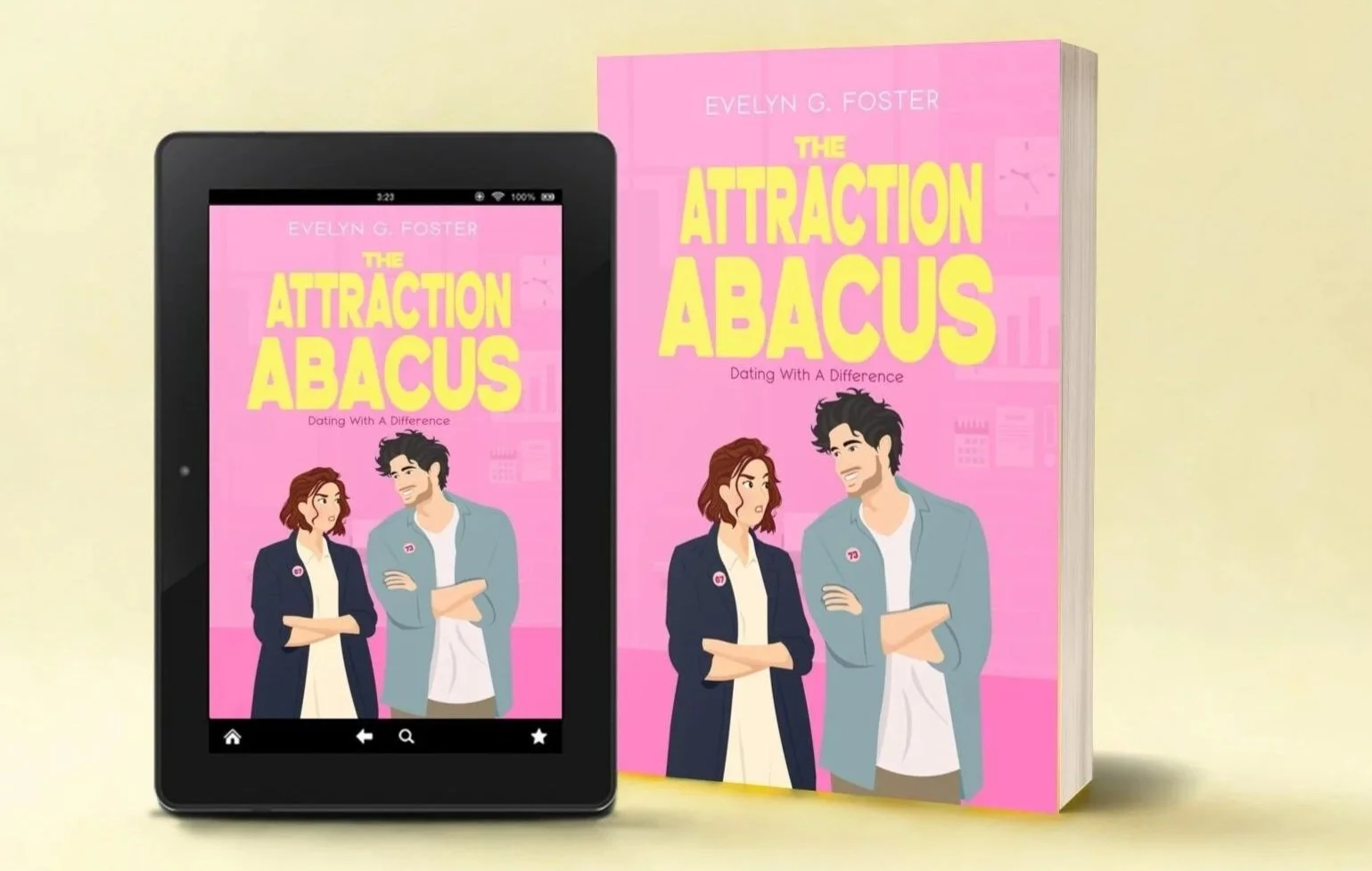
Ad: The Attraction Abacus. First date disasters are standard in this romantic comedy!
A little awkwardness is a green flag
There is a strangely reassuring truth at the centre of all this. A completely smooth first date can be wonderful, but it can also feel like both people arrived with their publicists. A little awkwardness suggests that something real is at stake.
The best first-date scenes do not ask us to celebrate humiliation. They invite us to laugh kindly at the universal nonsense of wanting to be known by another person. They remind us that connection is rarely made in the perfectly rehearsed bit. It is made in the recovery: the offered napkin, the shared eye-roll, the decision to stay for one more drink when the plan has already gone magnificently off-piste.
So if a fictional first date starts to wobble, lean in. The wrong name, the terrible venue, the joke that lands with a thud: these may be the moment the story finally stops posing and starts telling the truth.
