

A Guide to Corporate Dystopias That Bite Back
The worst corporate dystopia does not begin with a skull-shaped logo or a CEO stroking a white cat. It begins with a useful app. A loyalty scheme. A workplace that says it is a family, then asks why you have not answered messages at 11.48 pm. This guide to corporate dystopias is for readers who enjoy the uncomfortable little shiver of recognising that the fictional nightmare is only two product updates away.
Corporate dystopian fiction turns capitalism's most polished promises into pressure points. Convenience becomes control. Personalisation becomes surveillance. Growth becomes a moral imperative so vast that actual people are reduced to a minor inconvenience in the quarterly report. It is the genre's particular party trick: making a glass-walled office, an attractive interface or a branded tote bag feel faintly menacing.
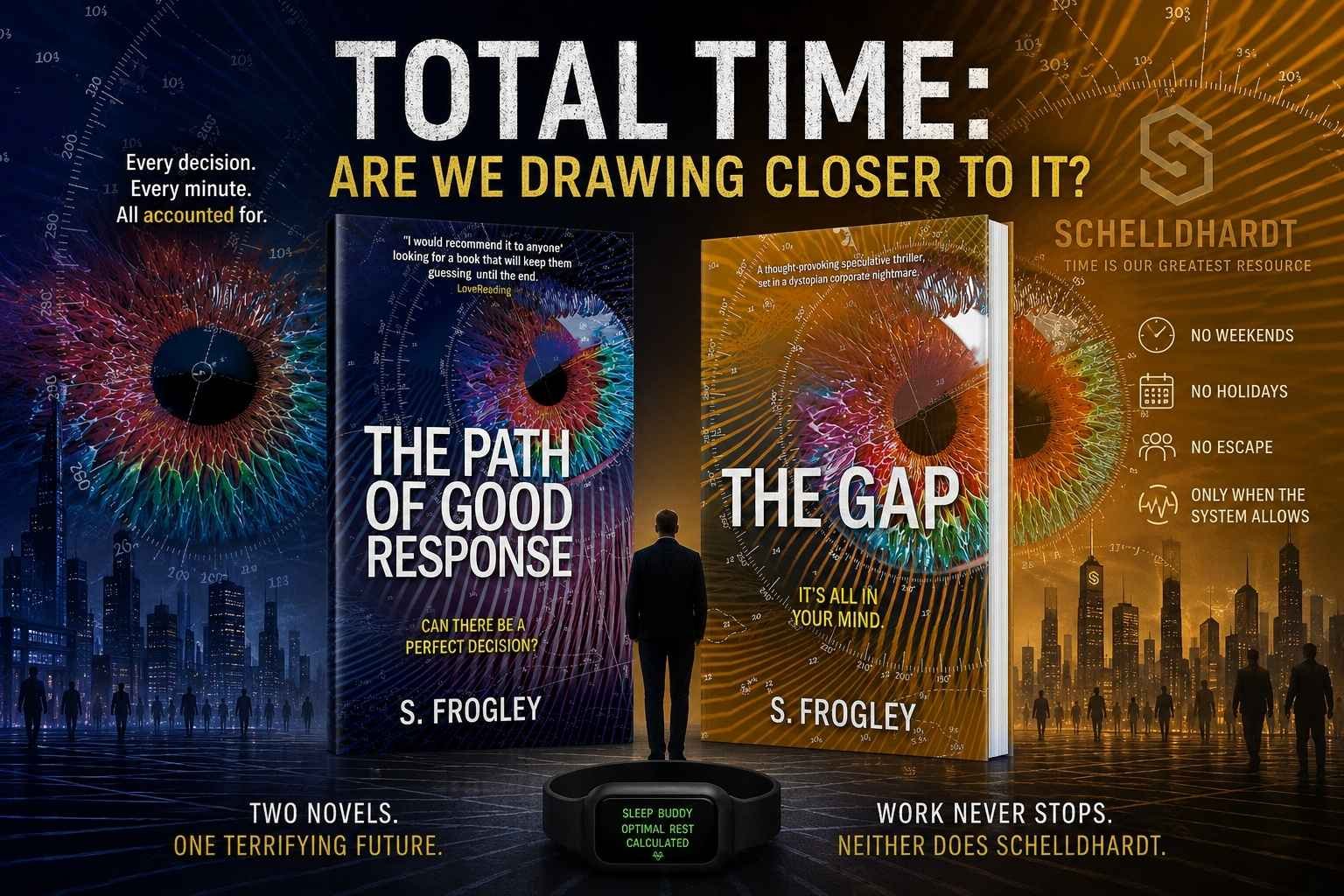
Total Time: Are We Drawing Closer to It?
One of the enduring strengths of dystopian fiction is that it rarely invents entirely new ideas. Instead, it takes existing trends, follows them to their logical conclusion, and asks readers whether the future it depicts is really as impossible as it first appears. George Orwell did not invent surveillance, Aldous Huxley did not invent consumerism, and Margaret Atwood did not invent religious extremism. Each simply imagined what might happen if those forces continued unchecked.
The same question can be asked of Total Time, the fictional employment system operated by Schelldhardt in The Path of Good Response and The Gap. Schelldhardt is the world's largest corporation, one whose relentless pursuit of growth overrides every other consideration. Within its organisation there is no concept of a working day, no weekends, no public holidays and no recognised religious festivals. Christmas Day is simply the twenty-fifth of December. Easter becomes another date in the calendar. Time itself no longer belongs to individuals but to the company.