
Indie Fiction for Romance Readers Worth Reading

Indie fiction romance
The group chat has spoken: you do not need another recommendation that says only “if you liked that massively famous book, try this massively famous book”. You need a story with chemistry, a clear emotional promise and perhaps one scene that makes you stare at the wall for a respectful five minutes. Indie fiction for romance readers can be the answer to the same-old-TBR problem, especially when the algorithm keeps serving up familiar covers with suspiciously identical blurbs.
Independent fiction is not one aesthetic, one heat level or one particular kind of love interest in a rolled-sleeve shirt. It is a broad, lively space where readers can find contemporary rom-coms, dating disasters, tender slow burns and relationship stories that are willing to be a little stranger, sharper or more specific. The good stuff is not hidden because it lacks quality. Often, it is hidden because discovering books has become a competitive sport.
Why indie fiction for romance readers feels different
Big publishing trends move quickly. One month, every book is billing itself as a fake-dating, enemies-to-lovers workplace romance. The next, everyone has moved to a small town and acquired a cinnamon-roll baker. There is nothing wrong with either. A well-executed trope is a public service.
But independent fiction can have more room to follow the reader rather than the rush. That can mean an unusual premise, a heroine with an actual life beyond her love interest, a hero who is allowed to be funny without becoming a walking red flag, or a setting that feels observed rather than assembled from mood-board staples.
It can also mean a more distinct authorial voice. Romance readers are rarely looking only for plot. They want the particular flavour of the book: dry and clever, chaotic and bright, emotionally bruising, comforting, sexy, sweet or very specifically low-spice-but-high-tension. Indie books often make those choices with real confidence because they are not trying to be every romance for every reader.
That said, “indie” is not shorthand for “better”. A larger publisher can deliver a brilliantly original romance, and an independent release can still be uneven. The useful distinction is not corporate size. It is whether a book knows exactly what experience it is offering you.
Start with your romance settings, not the hype
Before adding a book to your TBR, get mildly forensic about what you actually enjoy. Not what you think you ought to enjoy because a viral video had a compelling audio clip. What makes you keep reading past midnight?
Tone comes before trope
You may adore fake dating but only when it is playful, not angsty. You may love a slow burn but lose patience if “slow” means nobody has a meaningful conversation until page 280. You may be perfectly happy with closed-door romance, provided the longing is doing Olympic-level emotional work.
A trope tells you the shape of a story. Tone tells you how it will feel to live inside it. When browsing indie fiction, look for language that signals the emotional weather: witty, tender, bittersweet, high-stakes, awkward, escapist, intimate. A precise description is usually more useful than a wall of tropes stacked like a Jenga tower.
Know your heat level without apologising
There is no morally superior spice preference. Some readers want open-door scenes and plenty of them. Others want a kiss that arrives after 250 pages of unbearable eye contact. Plenty want something in between.
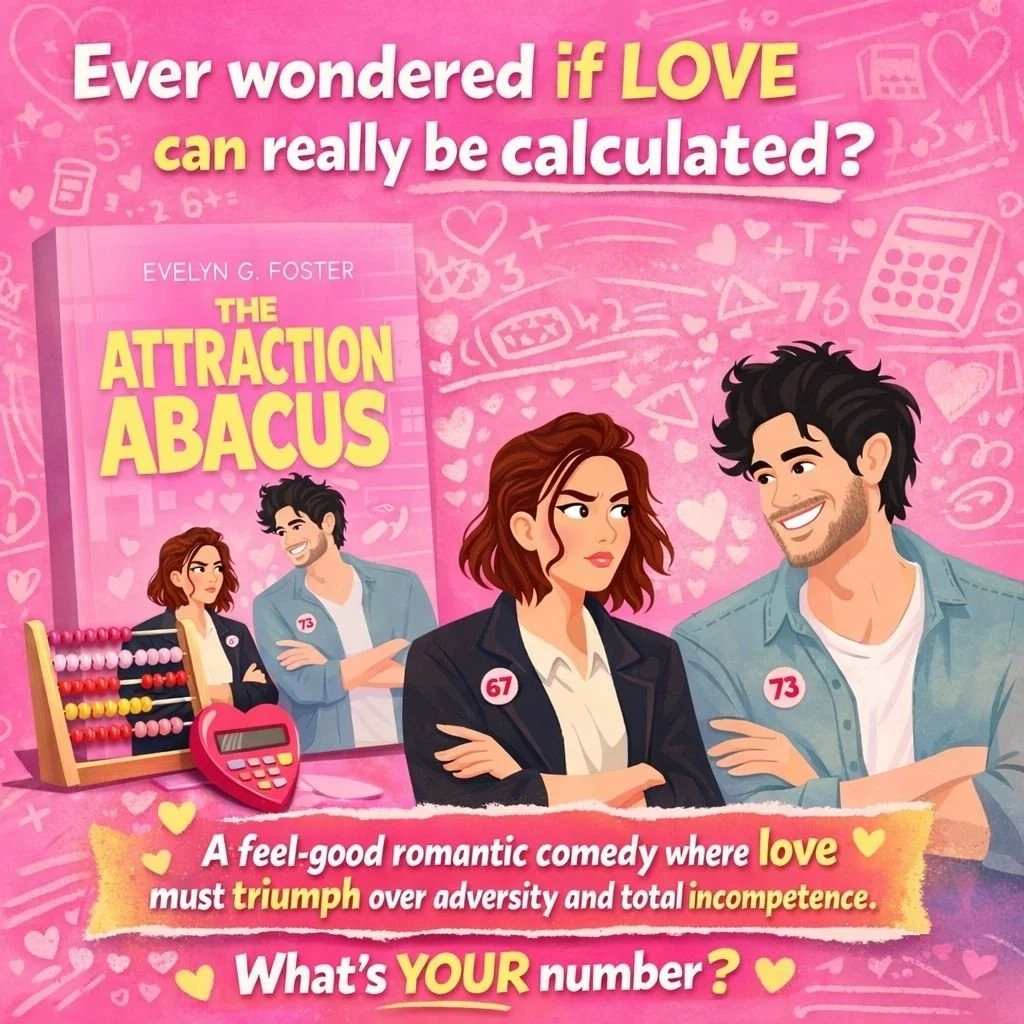
The trick is clarity. If a book is low-spice or no-spice, that should not be treated as code for low chemistry. Romantic tension comes from attention, anticipation, vulnerability and the terrifying act of saying what you mean. A book such as The Attraction Abacus speaks to readers looking for contemporary romantic energy without assuming that every love story needs the same level of on-page heat.
Equally, if you want steam, you deserve a book that delivers it rather than coyly implying a heat level it does not have. Read the blurb closely, check content notes where available, and treat reader reviews as useful intelligence rather than a spoiler minefield.
The signs a romance is likely to be your kind of indie find
A good blurb does more than announce that two attractive people are about to collide. It gives you the central complication, the emotional stakes and a sense of voice. “They must work together” is not enough. Why is that inconvenient? What does each person stand to lose? Will the book make you laugh, ache, or message a friend in all caps?
Reviews can be even more revealing, particularly the ones written by readers who explain their taste. Look for comments about pacing, banter, emotional payoff and how central the romance is to the plot. One reader’s “not enough angst” is another reader’s ideal Sunday afternoon. One person’s “too much miscommunication” is a valuable warning label, not a universal verdict.
Sampling a few pages is also wildly underrated. Romance lives or dies by voice. If the internal monologue makes you smile, the dialogue has snap, and the characters feel like people rather than a trope wearing trainers, you are probably onto something.
Ad: The Attraction Abacus. Indie romcom fun!
Let the book be specific
The most memorable romances tend to have a point of view about modern life. Dating apps, career pressure, friendship groups, family expectations, bad timing and the weird performance of seeming chill when you are absolutely not chill all give a love story texture. They also give readers something to talk about after the final chapter.
This is one reason indie fiction can be so satisfying for readers who are bored of generic recommendations. A smaller, personality-led book does not have to sand down every odd detail. It can let a character make a questionable decision. It can make the humour dry. It can set a romance in a world that feels more like your actual life, or your preferred fantasy of it, than a copy-and-paste fantasy flat with fairy lights.
Specificity does not mean realism has to be grim. Rom-com readers still deserve escapism, immaculate timing and a third-act emotional crisis that is resolved through honesty rather than a ten-page speech in the rain. It just means the story has its own fingerprint.
Build a TBR that does not feel like admin
The aim is not to become a full-time researcher with seventeen colour-coded spreadsheets, unless that is your personal love language. A better approach is to make your next few picks more intentional. When you find an indie romance that works for you, note what worked: the comic voice, the restrained heat, the messy dating premise, the fast pacing or the satisfying grovel.
Then use that knowledge to browse with purpose. Four habits make this easier:
Follow reviewers whose dislikes resemble your dislikes, not just those who share your favourites.
Save posts that describe the reading experience, rather than only posts with a beautiful cover reveal.
Give yourself permission to abandon a book that misses your mood, even if it is technically very good.
Rotate your picks: one reliable comfort read, one buzzy recommendation, one wild card from an independent publisher, and one book chosen entirely because the premise made you grin.
That final category matters. Reading culture can make every choice feel like a referendum on your taste. It is not. A TBR is not a curriculum. It is a collection of possible feelings.
The pleasure of reading slightly ahead of the crowd
There is a particular thrill in finding a romance before everyone is quoting it in carousel posts and arguing over the casting in the comments. You get to be the person who presses a book into someone else’s hands, or sends the cover with the unhelpfully persuasive message: “Trust me.”
Independent fiction gives romance readers more chances to have that feeling. It rewards curiosity, but it does not demand that you take a blind leap. Be clear about your tropes, your tone and your non-negotiables, then leave a little room for surprise. Your next favourite might not arrive with the loudest launch. It may simply have the exact line, the exact laugh and the exact kind of yearning you did not know you needed.
