
Dating App Romance Novel Review of The Attraction Abacus

Dating app romance
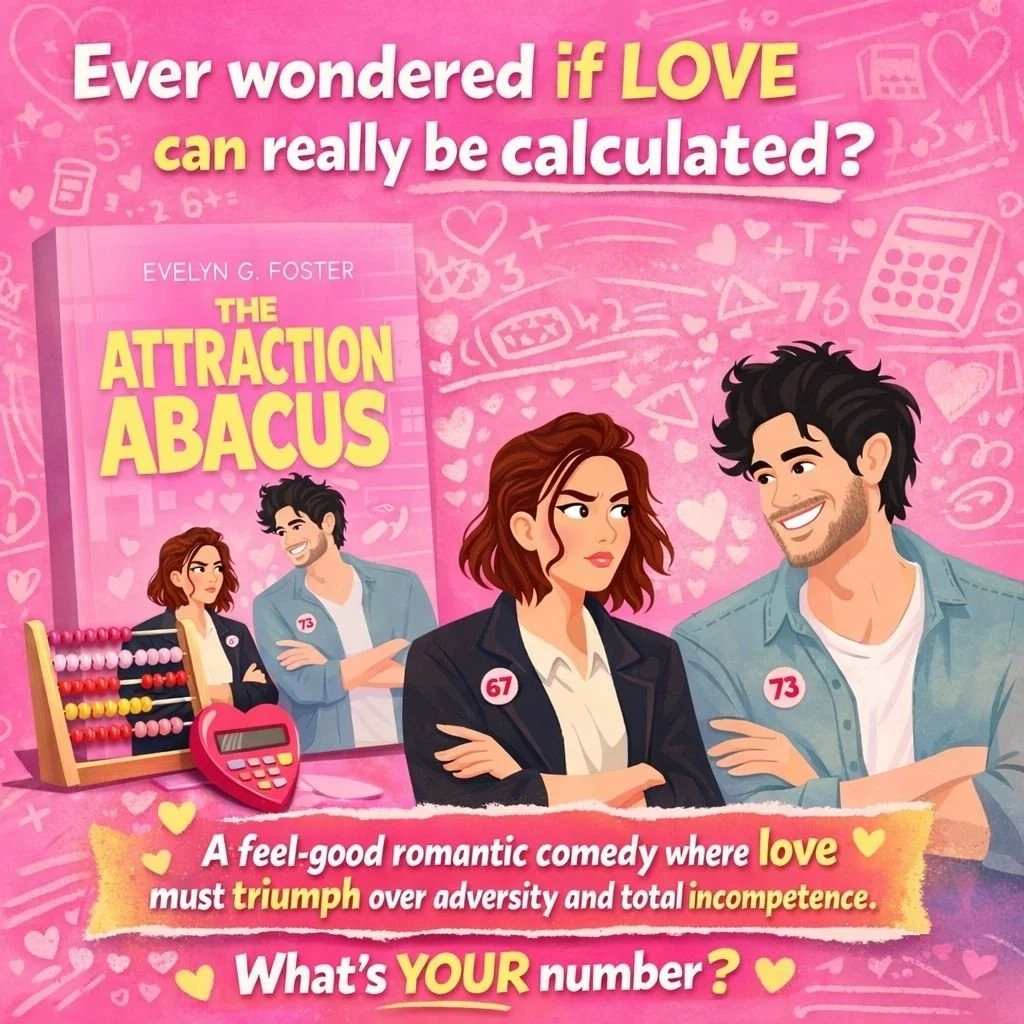
A review of dating app romance novel The Attraction Abacus has to begin with a truth every app dater already knows: an algorithm can tell you who lives nearby, likes dogs and once put “pineapple on pizza” in their bio. It cannot tell you whether they will make you laugh when your train is cancelled, remember how you take your tea, or cause your group chat to enter a state of national emergency.
That gap between a technically ideal match and an actual human connection is where this contemporary rom-com has its fun. The Attraction Abacus takes the very modern exhaustion of swiping, second-guessing and decoding a full stop in a message, then treats it with warmth rather than cynicism. The result is a dating-centred romance for readers who want the chaos of the apps without having to reopen one themselves. A public service, frankly.
What makes this dating app romance novel work
The smartest thing about The Attraction Abacus is that it understands dating apps are not the villain. They are a tool, occasionally a horror show, occasionally a route to something genuinely lovely, and often a place where people carry all their hopes, insecurities and oddly specific deal-breakers. The novel gets the emotional maths of it: the temptation to turn people into data points, the wish for certainty, and the inconvenient fact that feelings refuse to behave like a spreadsheet.
That premise gives the book a fresh, recognisable engine. Rather than relying on a grand, wildly implausible misunderstanding, it finds tension in questions that feel much closer to real life. What do we owe a person after a few good messages? When does being selective become self-protection? And can you trust a connection that makes no logical sense on paper?
Readers who have ever stared at a dating profile and thought, “This is either my future husband or someone selling cryptocurrency,” will feel seen. The humour lands because it is rooted in observation, not because the book is trying to turn every notification into a punchline.
A rom-com that knows the difference between banter and chemistry
There is plenty of contemporary romance built around two people exchanging supposedly devastating quips until the plot politely informs us they are in love. The Attraction Abacus has a better instinct. The spark matters, but so does emotional texture. Attraction is not treated as a magic trick that makes incompatibility disappear.
The romantic pull develops through conversation, vulnerability and those small moments in which a person becomes more interesting once they stop performing. That makes the central relationship feel more satisfying than a string of picture-perfect dates. It also means the book has a little more to offer than the standard “will they, will they not?” treadmill.
The tone is light on its feet, but it does not confuse lightness with emptiness. Modern dating can be funny and bruising in the same five-minute window. A person can be capable, independent and still slightly derailed by a read receipt. This novel makes room for that contradiction.
The emotional payoff is low-spice, not low-stakes
For readers who use heat levels as a serious sorting system - as you should, because reading moods are real - this is a useful distinction. The Attraction Abacus is a low-spice romance, with the focus firmly on emotional chemistry, wit and the gradual business of letting someone in.
That will be a positive for readers looking for a closed-door or gentler rom-com experience. The absence of explicit scenes does not mean the romance has been put in a sensible cardigan and told to sit quietly in the corner. There is still tension, longing and the delicious uncertainty of whether a connection is going to survive contact with reality.
If you want highly explicit spice or a romance that moves at breakneck speed from first date to full-scale obsession, this may not be your match. But if your ideal romantic payoff involves feeling invested in why two people choose each other, the slower emotional build is part of the appeal.
The app is a setting, not the whole personality
Dating-app fiction can sometimes date itself faster than an unfortunate 2014 Tumblr post. Referencing every trending phrase, platform feature and meme is not the same as saying something useful about romance. Happily, The Attraction Abacus is more interested in the human behaviour behind the screen.
The apps matter because they shape how people meet, curate themselves and assess potential. But the novel is not simply a parade of terrible chat-up lines and disastrous drinks dates. It uses the technology to ask a bigger, more romantic question: what happens when we try to quantify a feeling that is gloriously resistant to measurement?
That gives the book a pleasingly talkable quality. It is the kind of read that could prompt a book-club debate about deal-breakers, red flags and whether “good on paper” deserves any power at all. Expect strong opinions. Someone will mention a man with a fish photo. This is unavoidable.
Who should read The Attraction Abacus?
This is an especially good pick for readers who love contemporary rom-coms that feel plugged into the present without sounding like a brand’s social media intern wrote every line. It will suit fans of dating stories, relationship comedy and character-led romance where the emotional stakes are taken seriously, even when the narration is having fun.
It is also a strong choice if you are tired of recommendations that blur every romance into one giant pink-covered pile. The book is not selling a fantasy of perfect compatibility. It is more interested in the awkward, hopeful work of recognising a real person beyond the profile prompts and curated photos.
Readers who prefer a high-spice book may want to treat it as a palate cleanser between more explicit romances. Those who dislike any second-hand embarrassment around dating mishaps should know that modern romance does involve moments of social peril. That is the price of admission. But the cringe is purposeful, not cruel.
Final thoughts on this dating app romance novel review
What lingers after The Attraction Abacus is not a lecture about the evils of online dating, nor a fairy tale in which the right match solves every problem. It is the more comforting idea that connection cannot be reduced to a score, a checklist or an expertly selected photo carousel.
For anyone who has ever wondered whether romance has become too optimised to feel romantic, this book offers a charming answer: leave a little room for the unmeasurable. Your best plot twist may not have been in the algorithm at all.
