
How to Identify Slow Burn Romance in Books

Slow burn romance
The characters have shared one meaningful look across a crowded room, and suddenly you are prepared to read 300 more pages for them to hold hands. That is the particular madness of a good slow burn. But how to identify slow burn romance before you commit to a book, especially when every blurb seems to promise chemistry, yearning and a love story that will apparently alter your DNA?
The short answer: look for emotional accumulation, not merely a delayed kiss. A slow burn romance makes every tiny shift matter. The longer answer is where the fun is.
What slow burn romance actually means
Slow burn is not a synonym for “nothing happens until chapter 28”. Nor is it a polite label for a romance with low spice. It is a deliberate pacing choice: attraction, trust and emotional vulnerability build in layers, until the relationship feels inevitable but still wildly thrilling.
Usually, the central pair do not begin in perfect romantic alignment. They might be colleagues with inconvenient feelings, old friends who are avoiding the obvious, rivals who cannot stop noticing each other, or two people carrying enough baggage to require an excess-luggage fee. The point is not that they take ages to get together. The point is that the reader understands exactly why they cannot simply get together by page 40.
A slow burn can be sweet, angsty, funny, high-spice, closed-door or entirely no-spice. Heat level and pace are separate settings. One tells you what happens on the page; the other tells you how long the story earns its emotional payoff.
How to identify slow burn romance in a blurb
Blurbs are professional flirts. They tease the set-up, conceal the best bits and occasionally make two characters who exchange three emails sound like the next great love story. Still, certain phrases reliably suggest a gradual-build romance.
Look for language about forced proximity, reluctant partnerships, friendship, rebuilding trust, old wounds, competing goals or a relationship that develops “over time”. A blurb that focuses on two people having to work together, live together or repeatedly cross paths is often setting up the repeated contact a slow burn needs.
The most useful clue is conflict with emotional logic. “They cannot stand each other” can mean breezy enemies-to-lovers banter, or it can mean a genuine, carefully developed clash of values. “They must not fall in love” works best when the reason is more substantial than a mildly awkward office policy. If the obstacle sounds specific, personal and difficult to solve, you may be entering slow-burn territory.
Be slightly wary of blurbs that lead with an instant physical pull and then call the book slow burn. It still might be one, particularly if the characters resist acting on that attraction for meaningful reasons. But immediate lust plus a quick hook-up is generally not the slow-burn experience readers mean when they are hunting for yearning and eye contact that deserves its own soundtrack.
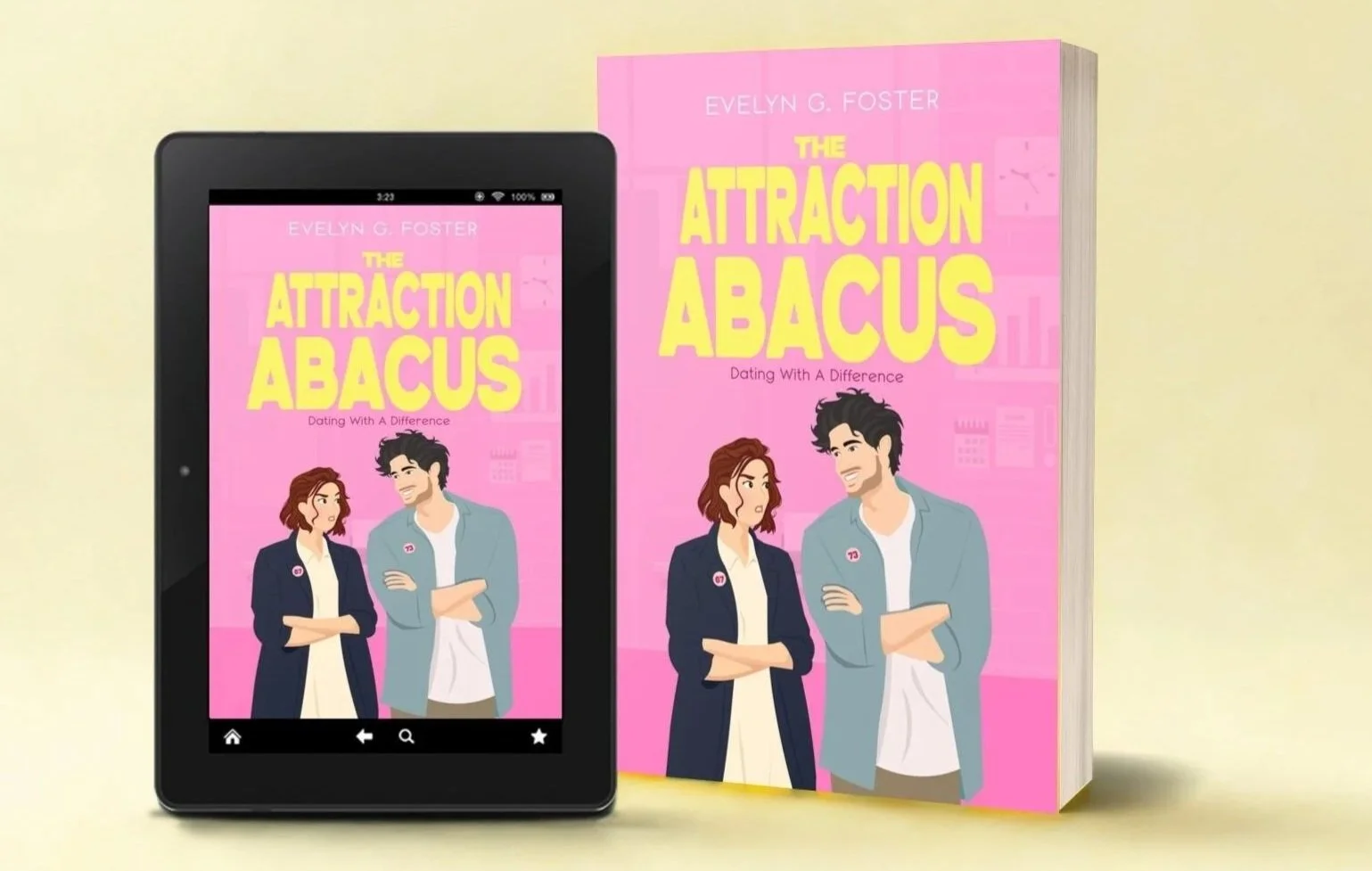
Ad: The Attraction Abacus. A feel-good rom-com!
The signs are in the scenes
Once you have started reading, slow burn reveals itself through pattern rather than one grand gesture. The relationship keeps moving, but in increments. A character remembers how the other takes their tea. An argument exposes a private fear. A joke becomes an in-joke. They begin choosing each other in small, unannounced ways.
Here are the clearest signs that the book is doing the job properly:
The connection changes shape. Early scenes might be prickly or formal, then become playful, protective and finally intimate. You can feel the relationship evolving rather than circling the same drain.
The obstacles have weight. Timing, grief, career pressures, family expectations or a broken sense of trust create genuine friction. The story is not withholding a kiss simply because the author enjoys watching us suffer. Although, respectfully, they often do.
Tiny moments carry charge. Sharing an umbrella, defending someone in a group chat, tending an injury, sitting in companionable silence - these scenes land because the book has taught you to read the subtext.
The point of view lets you ache. Whether the novel uses one perspective or two, you should sense what each person is not saying. That unsent message energy is the genre’s renewable power source.
Good slow burn is active. The characters may not be declaring everlasting love every second chapter, but they should be learning things, making choices and being changed by one another. If nothing shifts for a third of the novel, that is not delicious tension. It may simply be pacing trouble wearing a very nice coat.
Watch for emotional intimacy before physical intimacy
A classic slow-burn move is to make the emotional closeness feel almost more exposing than any kiss. One character tells the other something they have hidden from everyone. They become the person called after bad news. They notice when the other is pretending to be fine, which is romance-reader catnip for a reason.
This does not mean a slow burn must be chaste. Some couples kiss early, sleep together halfway through, or admit attraction well before they are ready for a relationship. The burn can still be slow if commitment, trust or emotional honesty remains complicated. What matters is whether the romantic payoff has been built, brick by yearning brick.
Slow burn versus friends-to-lovers, enemies-to-lovers and low spice
These labels overlap, but they are not interchangeable. Friends-to-lovers is about the starting relationship. It can be a slow burn when years of friendship gradually become something else, but it can also turn romantic very quickly.
Enemies-to-lovers describes the initial dynamic. It often suits a slow burn because conflict gives the characters plenty to work through. Yet a book can deliver enemies, attraction and a kiss within the opening chapters, then spend the rest of the novel on external plot. Still entertaining. Different meal.
Low spice tells you about on-page sexual content, not tension. A closed-door novel can contain enough yearning to power the National Grid; a very spicy book can be an instant connection. Readers after low-to-no spice romance might enjoy the gradual, emotionally attentive rhythm of a slow burn, but it is worth checking both labels rather than assuming one guarantees the other. Books such as The Attraction Abacus speak to readers who want romantic chaos and emotional payoff without treating explicit scenes as the only measure of chemistry.
Why the payoff feels so enormous
Slow burn turns attention into a love language. By the time the characters finally admit what is happening, the reader has clocked every almost-touch, loaded joke and moment of restraint. The payoff is not just a kiss, a confession or a first proper date. It is confirmation that all those little scenes meant what you hoped they meant.
That is also why the trope can be divisive. If you want immediate sparks, fast banter and a couple who are officially together by the halfway mark, the gradual pace may feel like being stuck behind someone paying with loose change. If you live for tension, however, a well-written slow burn offers a rare kind of satisfaction: romance that feels chosen, earned and just a bit unbearable.
When choosing your next read, trust the language that makes you pause. Look for proximity, resistance, vulnerability and characters who keep finding reasons to remain in each other’s orbit. Then settle in, guard your feelings, and remember: if the hand brush is making you gasp, the book probably knows exactly what it is doing.
