
Why Dating App Fiction Reader Appeal Works
Dating app fiction over real life
One rogue hinge prompt, one accidental super-like, one message sent at 11.47pm that should absolutely have stayed in drafts - and suddenly a whole novel exists. That is a big part of dating app fiction reader appeal. These stories take a form of modern romantic chaos most readers already know far too well, then turn it into something funnier, sharper and usually more emotionally satisfying than real life has any right to be.
If you read contemporary romance or rom-coms, this makes immediate sense. Dating apps are not just a backdrop now. They are a social language. They shape how people flirt, misread each other, perform confidence, panic, ghost, circle back and tell their friends, you are not going to believe this. Fiction that uses that world well feels current in the best way. Not gimmicky. Not trying too hard. Just gloriously aware of how romance actually gets messy in the group chat era.
What creates dating app fiction reader appeal?
The strongest pull is recognition. Readers do not need a long briefing on what it means when someone updates their profile photos after a bad date, or when a conversation moves from banter to silence with frightening speed. The emotional shorthand is already there. A writer can get to tension quickly because the app itself comes loaded with stakes, etiquette and tiny humiliations.
That matters because modern romance readers want stories that feel legible. Not necessarily realistic in a grim sense, but emotionally true. Dating app fiction can deliver the fantasy and the cringe at the same time. It gives you meet-cutes with a digital twist, but it also gives you the strange theatre of curated bios, strategic replying and romantic optimism battling total exhaustion.
There is also a built-in pace to these stories. Swiping, matching and messaging create immediate movement. You do not have to wait three chapters for two people to be in each other's orbit. They are already there, often oversharing by paragraph two. For readers, that means quicker chemistry, quicker conflict and more opportunities for delicious misunderstanding.
It feels current without needing to chase trends
There is a fine line here. Some books mention apps the way a school assembly mentions social media - slightly stiff, slightly late, deeply suspicious. That is not the good stuff. The books readers actually fall for understand that apps are not the point. They are the mechanism through which old romantic problems get a fresh outfit.
The tension is still classic romance tension. Are they honest? Are they emotionally available? Are they pretending to be cooler than they are? Are they falling for the idea of each other or the real person? Dating app fiction works when it uses modern behaviour to sharpen timeless questions.
That is why the subgenre can feel fresh without ageing badly overnight. The names of the apps matter less than the dynamics. Performance versus vulnerability. Choice overload versus genuine connection. Instant access versus emotional distance. That all lands whether a reader is an avid swiper, happily coupled, or just spectating with a cup of tea and judgement.
Humour does a lot of heavy lifting
Let us be honest. Dating apps are often funny, and not always on purpose. A profile full of fish photos. A man whose entire personality is "Sunday roast and sarcasm". A woman trying to decode whether "not looking for anything serious" means honesty or nonsense. There is endless comic material in the gap between how people present themselves and who they really are.
That comic potential is a huge part of the appeal for rom-com readers. Dating app fiction gives writers a socially recognisable setting where awkwardness can flourish. Bad first messages, disastrous dates, crossed wires, fake confidence, too much confidence - it is all there. Readers enjoy the release of laughing at behaviour they have seen, survived or screenshotted for the group chat.
But the humour only works if there is heart underneath it. Pure mockery gets old. The better books know that even the cringiest profile belongs to someone who wants to be chosen. That softens the joke. It makes room for tenderness, and tenderness is where reader investment really starts to kick in.
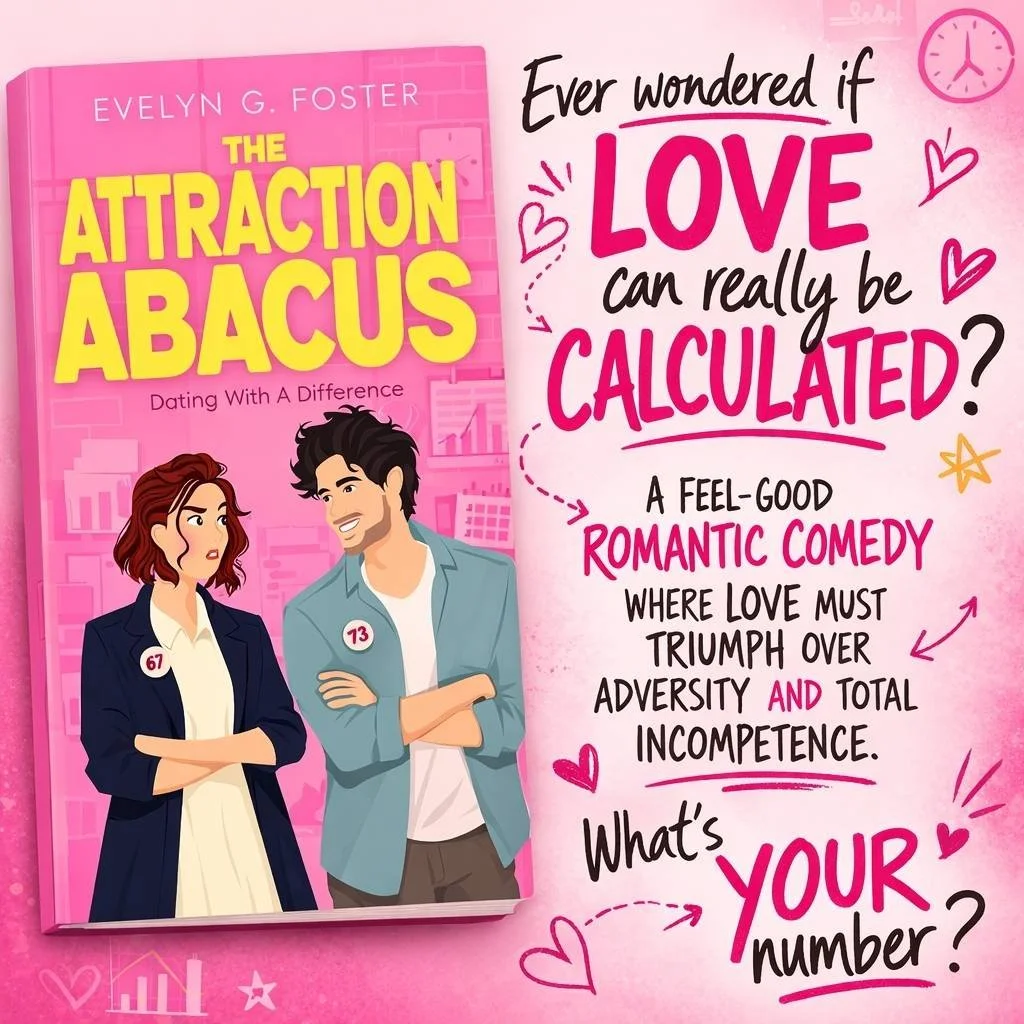
Ad: The Attraction Abacus. A spoof of the ultimate dating app!
The fantasy is not perfect dating. It is being understood.
This is where dating app fiction often gets more emotionally interesting than people expect. On the surface, the app structure suggests abundance. So many options. So many possible matches. So much romantic admin. Underneath that, though, is usually a more vulnerable idea: what if someone actually sees through the performance?
Readers respond to that because it speaks directly to modern dating anxiety. Apps encourage packaging. You choose the flattering photo, the witty line, the curated self. A good romance then asks what happens when that packaging slips. Maybe the confident flirt is deeply unsure. Maybe the chaotic dater is tired of treating connection like a game. Maybe the person who looked wrong on paper turns out to be exactly right in conversation.
That emotional reveal is catnip for romance readers. It taps into the same satisfaction as enemies-to-lovers or fake dating. There is a mask, then there is the person underneath it. And when the person underneath gets loved properly, the payoff lands.
Dating app fiction reader appeal and the low-spice sweet spot
This subgenre is especially effective for readers who like romantic tension without needing every story to go full open-door. Apps are inherently intimate, but they are also chat-based, anticipation-heavy and built on emotional projection. That creates a lot of room for yearning.
Yearning, as any decent romance reader knows, can carry an entire book when done properly. The waiting for a reply. The late-night messaging that gets too honest. The shift from playful banter to something frighteningly real. Dating app fiction can stretch those moments beautifully because the structure encourages delayed gratification.
For readers who want warmth, chemistry and emotional payoff without a heavy spice focus, this is often a sweet spot. The connection can feel intense before anyone has even properly held hands. That does not make the romance less satisfying. In many cases, it makes it more so, because the emotional build has been given room to breathe.
Why these stories are so shareable online
Some books are enjoyable. Some books are discussable. Dating app fiction often manages both, which is exactly why it travels so well through online reading culture.
It gives readers easy hooks to talk about. Was the banter any good? Was the love interest actually decent or merely six-foot-four with a passable fringe? Did the app setup feel true to life? Was the miscommunication delicious or just annoying? Readers love books that let them react in specific, dramatic and slightly nosy ways.
There is also a strong quote-and-clip factor. Text exchanges, awkward profile descriptions and first-date disasters naturally produce moments people want to post about. A scene can feel instantly recognisable and highly memeable without losing emotional depth. That balance matters. Readers are more likely to recommend a book when they can explain its vibe in one brilliant anecdote.
This is part of why contemporary, market-aware fiction publishers have paid close attention to dating-centred stories. When a book understands the rhythm of modern reader conversation, it does not feel like it is begging for attention. It feels built for it.
The trade-off: it can date quickly if handled badly
Of course, there is a catch. Dating app fiction can age badly when it relies too heavily on surface references, platform jargon or a smug sense that technology itself is the plot. Readers notice when a book is trying too hard to sound current. They notice even faster when every character speaks like an exhausted brand manager.
The fix is fairly simple, though not always easy. Keep the emotional truth stronger than the trend dressing. Let the app create pressure, coincidence or confusion, but do not let it replace character. Readers will forgive a slightly vague invented platform. They will not forgive two boring leads with no chemistry.
The same goes for tone. A bit of wit is good. Endless ironic detachment is not. If every bad date is just material for a joke, the story can start to feel hollow. Readers want entertainment, yes, but they also want the moment where someone stops performing and admits they are lonely, hopeful, scared or all three.
So who is this subgenre really for?
Not only people who use dating apps, funnily enough. The appeal is wider than that. Anyone who enjoys modern romance with strong social observation can get a lot from these books. They are especially good for readers who want stories that feel plugged into contemporary life without becoming bleak about it.
If you like romantic comedy with emotional intelligence, if you enjoy a bit of chaos before the feelings properly arrive, and if your ideal reading experience includes at least one moment of saying oh no aloud before immediately turning the page, dating app fiction is probably your lane. And if you have ever judged someone's bio, rewritten a text four times, or fallen slightly in love with a person's sense of humour before meeting them, it is very much your lane.
That is really the secret of it. Dating app fiction takes a modern system that often feels transactional and finds the humanity in it. It turns swipes into stakes, chat into chemistry, and awkward digital beginnings into stories readers can laugh at, ache over and recommend with suspicious speed. If a novel can do that, it does not just feel current. It feels like it gets you.
