
Book Discovery Trends for Romance in 2026

Book Discovery Trends for Romance in 2026
One reader wants enemies-to-lovers with actual banter, another wants low-spice emotional chaos with a big payoff, and someone else just wants a rom-com that does not read like a 2016 dating app joke. That is the real story behind book discovery trends for romance right now. Readers are not simply looking for “a romance novel”. They are looking for a very specific feeling, tone and level of emotional damage, preferably labelled clearly before they commit.
That shift matters because romance discovery has become wildly precise. It is no longer enough for a book to be called funny, heartfelt or steamy. Readers want searchable language. They want to know if the book is soft, sharp, messy, tender, flirty, closed-door, high-heat, third-act-break-up heavy, or the kind of slow burn that could qualify as an endurance sport. The romance market has always been driven by reader appetite, but now that appetite is being expressed in much more detailed public language.
Why book discovery trends for romance look different now
A few years ago, plenty of readers still found romance through bestseller tables, supermarket shelves, traditional reviews and the odd recommendation from a friend who swore a book had “your name written all over it”. That still happens, of course. But digital reading culture has changed the pace and the wording of discovery.
BookTok, Bookstagram, reader forums and review platforms have trained audiences to browse by emotional promise rather than broad genre category. “Contemporary romance” is too vague on its own. “Low-spice workplace rom-com with chaotic dating energy” is much closer to how people actually search, save and share.
That does not mean every reader is using the same phrases, and this is where it gets interesting. Some readers search by trope. Others search by vibe. Others want practical filters like heat level, ending type and age range. Discovery now happens in layers, and the books that travel furthest tend to be the ones that can be described in more than one irresistible way.
The rise of trope-first browsing
If romance readers had a love language outside fictional yearning, it might be metadata. Tropes are no longer a bonus talking point. They are often the front door.
Readers regularly discover books through terms like fake dating, friends-to-lovers, grumpy sunshine, forced proximity and second chance romance. These labels work because they help people narrow the field quickly. When a reader is in the mood for one emotional setup, a generic blurb can feel almost rude.
The catch is that trope labelling only works when it is honest. Calling a book enemies-to-lovers when the couple exchange one mildly frosty email and then fancy each other by chapter three is a fast route to reader side-eye. Romance audiences are generous, but they are not gullible. The books that win trust are the ones that match the pitch.
This is also why niche combinations are doing well. Readers are not just looking for fake dating. They are looking for fake dating with low spice, or fake dating in a contemporary British setting, or fake dating with proper comic timing rather than a wink and a shrug. Precision sells because it saves time.
Vibe is now as important as plot
One of the clearest book discovery trends for romance is that readers increasingly choose books based on atmosphere and emotional texture, not just premise. A plot can get attention, but the vibe gets the screenshot, the reel and the group chat recommendation.
This is why phrases like “cosy romance”, “messy but sweet”, “dating disaster energy” and “soft landing of a book” have become so useful. They communicate how a story feels to read. For many romance readers, especially those juggling work, life and the general nonsense of modern existence, that feeling is the product.
A high-concept premise might catch the eye, but tone determines whether a reader clicks buy. A rom-com with sharp humour lands differently from one that leans sentimental. A low-spice romance with emotional intimacy attracts a different audience from one built around high heat and rapid escalation. Neither approach is better. The key is being clear about what the reader is actually walking into.
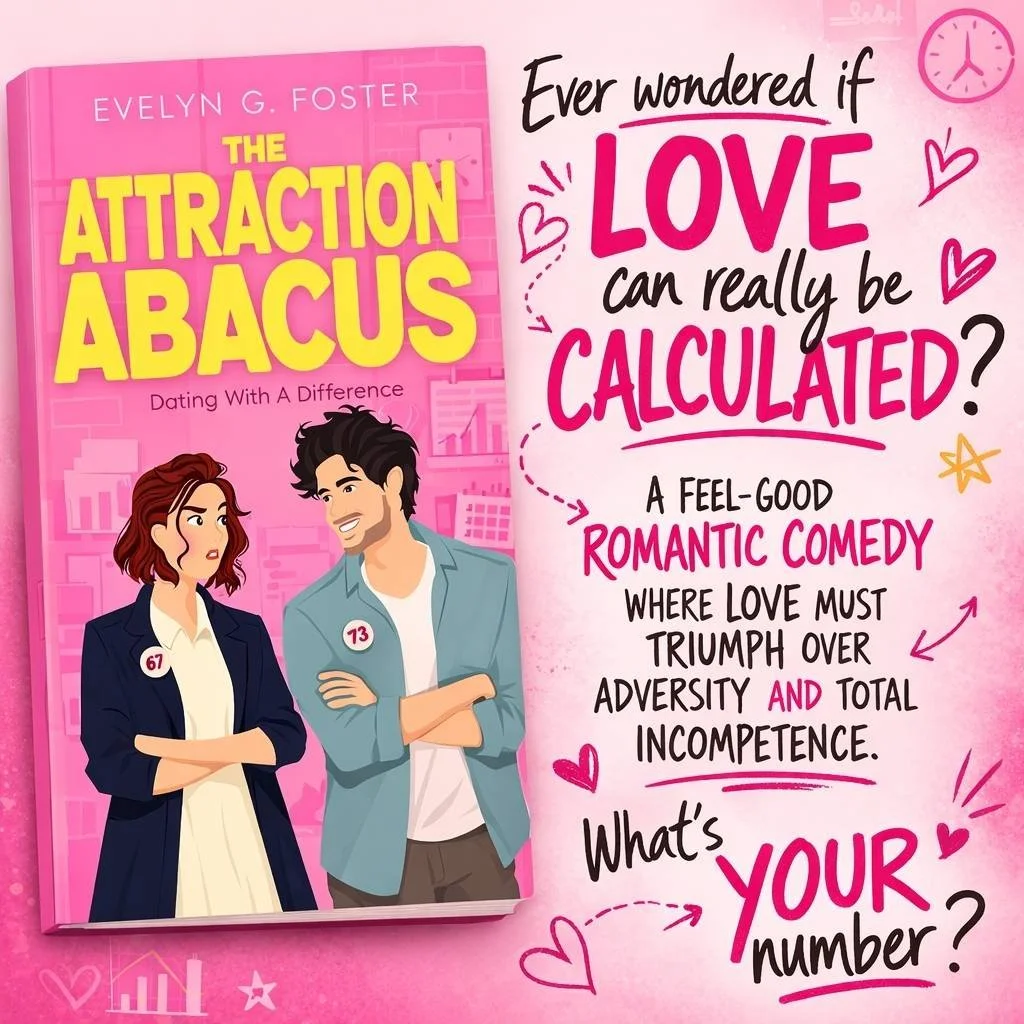
Ad: The Attraction Abacus. Quirky, low-spice romantic comedy.
Low-spice and clearly signposted heat levels
For all the noise around spicy books online, the romance audience is not moving in one direction. If anything, it is splitting into more defined preference groups. Some readers actively want heat. Others want chemistry without explicit content. Others are happy anywhere on the scale as long as they know in advance.
That last point is crucial. One of the strongest discovery behaviours in romance now is filtering by spice level. Readers do not want awkward surprises, and they definitely do not want to play blurb roulette.
This has opened up more space for low-spice and no-spice romance to be discussed with confidence rather than apologetically. Books built on longing, wit, emotional tension and romantic payoff are finding highly engaged audiences, particularly among readers who want all the feelings without pages of explicit detail. That is not a niche afterthought. It is a real and vocal segment of the market.
For publishers and authors, clear positioning matters more than trying to please everyone. A book that knows exactly where it sits on the heat spectrum is easier to recommend, easier to market and much more likely to reach the right reader the first time.
Social proof has become more specific
The old version of social proof was simple: lots of stars, maybe a quote, maybe a bestseller badge. The current version is much more conversational.
Readers are influenced by reactions that sound human and oddly precise. “This made me want to throw my phone and then hug the book.” “The banter was criminally good.” “For people who are tired of alpha nonsense and want grown-up chemistry.” These recommendation styles work because they feel like actual reader speech, not packaging copy.
That change has made romance discovery more personality-led. People follow creators, reviewers and readers whose taste maps onto their own. If someone reliably recommends tender, clever, low-spice contemporary romance, their audience will trust them on the next one too. The algorithm matters, yes, but taste alignment matters more.
This also explains why books with strong talking points travel well online. A romance that taps into current conversations around dating fatigue, emotional availability, commitment panic or modern relationship chaos gives readers more to say than “I liked it”. It becomes discussable.
Covers still matter, but now they have to signal the right audience
Romance readers absolutely judge a book by its cover. Frankly, they should. A cover is a promise, and discovery often begins in half a second.
The trend, though, is less about one dominant cover style and more about accurate visual signalling. Illustrated rom-com covers still perform well, but readers have become more alert to mismatches between packaging and content. If a cover suggests light, frothy comedy and the book delivers heartbreak with a side of existential despair, that creates friction. If the packaging looks ultra-spicy and the story is actually sweet and closed-door, that is another kind of mismatch.
Strong cover design now needs to do two jobs at once. It has to stop the scroll, and it has to attract the right reader rather than every possible reader. Those are not always the same thing.
Search language is getting more natural and more granular
Romance discovery is increasingly shaped by the way people type and speak online. Readers do not always search in polished genre terms. They search in fragments, moods and mini-briefs.
They look for things like “books like a better dating app rom-com”, “romance with no cringe banter”, or “slow burn but not boring”. That means discoverability depends on using the language readers actually use when they are trying to solve a reading slump.
This is where independent publishers can do very well. A sharper sense of audience often leads to sharper positioning. Instead of hiding behind vague literary language, a publisher can say what a book is, who it is for and why it will scratch a particular itch. Heptagon Books, for example, sits neatly in that reader-first space where modern dating themes, romance conversation and culturally fluent positioning actually help books get found.
What readers want most: confidence, not clutter
The biggest trend underneath all of this is not one platform or one trope. It is reader fatigue. People are overwhelmed by choice, suspicious of generic hype and increasingly unwilling to gamble on books that are badly described.
So the romance books getting traction tend to share one quality: clarity. Clear tone. Clear heat level. Clear emotional promise. Clear understanding of the audience. Readers are happy to be sold to when it feels like they are being understood rather than shouted at.
That probably means romance discovery will keep becoming more nuanced, not less. More micro-tastes. More mood-led recommendations. More emphasis on emotional specificity. Less “for fans of love stories”, more “for readers who want sharp contemporary chemistry without maximal spice and with actual wit”. Honestly, fair enough.
If you are trying to find your next romance read, the best move is not to look broader. It is to look smarter - towards the books brave enough to tell you exactly what kind of heart flutter they are offering.
