
How to Find Witty Romance Novels: Books with Banter

Books with banter
Some romance novels are marketed as “hilarious” and then give you one mildly amusing line about a bad date in chapter two. Tragic. If you are trying to work out how to find witty romance novels, the real challenge is not finding romance - there is plenty of that - but finding books with actual comic timing, sharp dialogue, and a love story that does not feel like it was assembled by trope generator.
Wit is a very particular thing. One reader wants sparkling banter and emotional intelligence. Another wants dry observations, social awkwardness, and the kind of flirting that feels one text away from a public embarrassment. So if your reading taste sits somewhere between rom-com chaos, low-spice chemistry, and characters who can actually hold a funny conversation, here is how to sort the genuinely witty from the merely marketed that way.
What readers usually mean by witty romance novels
When people say they want a witty romance, they rarely mean wall-to-wall jokes. They usually mean a book with energy. The dialogue snaps, the narration has personality, and the humour grows out of character rather than random quirkiness pasted on top.
That distinction matters because “funny” can mean several different things in romance. Some books go broad and chaotic, with disastrous weddings, fake boyfriends, and escalating public humiliation. Others are quieter and sharper, built around observational humour, dating fatigue, and that deliciously awkward moment when two people fancy each other but refuse to behave normally about it.
The best witty romance novels usually have three things in common. First, the characters sound like real people, only quicker. Second, the humour does not cancel out the emotional stakes. Third, the romance still works if you strip away the jokes. If the love story falls flat without the comic voice, it may be entertaining, but it will not fully satisfy as a romance.
How to find witty romance novels without wasting your weekend
The quickest way to improve your hit rate is to stop searching by trope alone. Fake dating, enemies to lovers, friends to lovers - all lovely, all useful, but none of them guarantee wit. A fake dating novel can be dead serious. An enemies-to-lovers story can contain less banter than a parking fine.
Instead, search for tone first. Words like rom-com, banter, dry humour, sharp dialogue, awkward chemistry, dating chaos, and low spice often get you closer to the vibe you actually want. If you know that what you enjoy is less “steamy billionaire intensity” and more “emotionally repressed idiots flirting through sarcasm”, use that language when browsing reviews and social posts.
Blurb-reading is also a skill, and frankly, not enough people talk about it. A good blurb for a witty romance usually gives away the voice early. If the copy itself feels flat, generic, or stuffed with drama buzzwords, there is a fair chance the book leans more earnest than sparkling. If the blurb has rhythm, specificity, and an actual sense of comic tension, that is a better sign.
Look out for books where the setup itself creates humour. Modern dating disasters, workplace proximity with personality clashes, carefully controlled protagonists being forced into messy situations - these premises naturally lend themselves to wit. A blurb built entirely around trauma, secrets, or high-stakes heartbreak may still be brilliant, but probably not the breezy, banter-heavy read you are after.
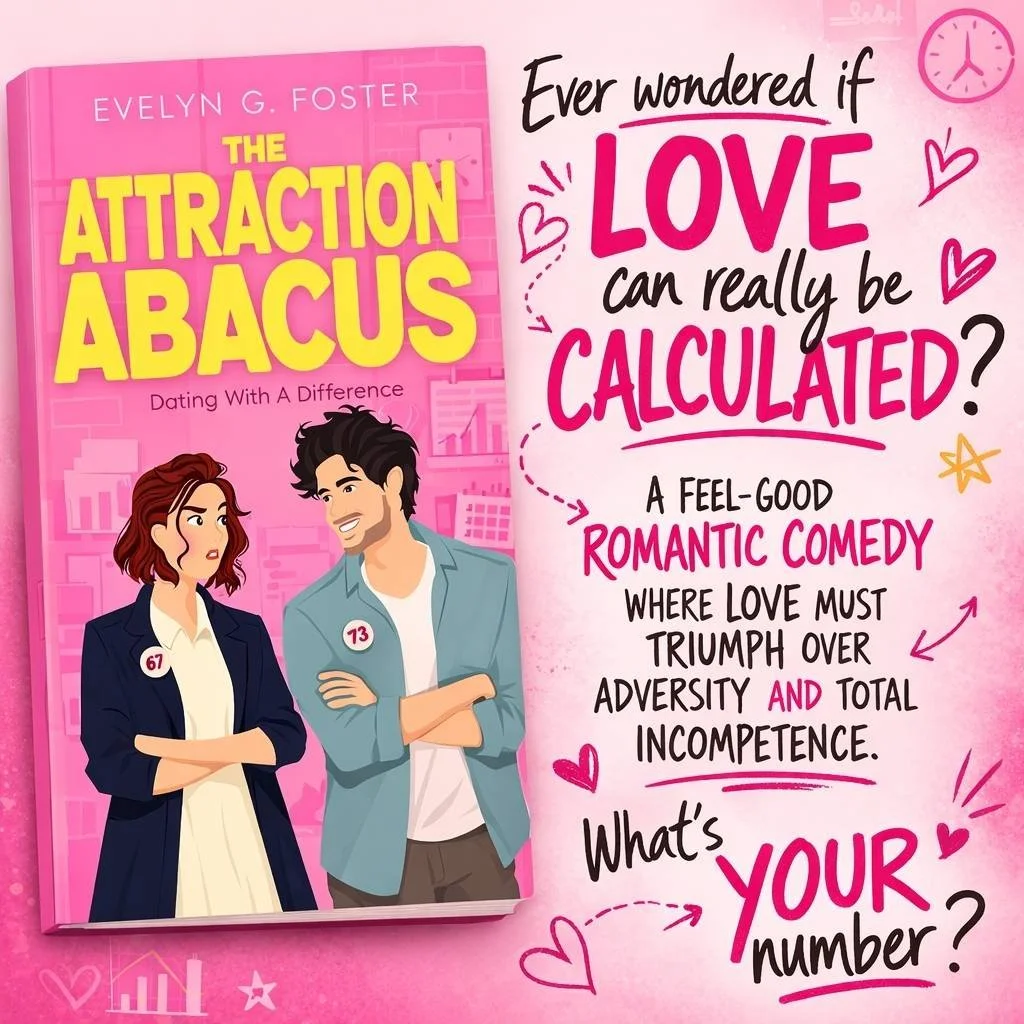
Ad: The Attraction Abacus. Banter and fun throughout!
Read reviews for tone, not stars
If you only look at star ratings, you will miss half the useful information. Four and a half stars tells you very little about whether a book is actually funny. Reader reviews, though, are full of clues if you know what to scan for.
The phrases worth noticing are things like “the banter carried this”, “I laughed out loud”, “the inner monologue was so sharp”, or “the chemistry felt like a screwball comedy”. Those are green flags. On the other hand, if lots of readers say “cute but not really funny” or “marketed as a rom-com but felt more women’s fiction with a romantic subplot”, believe them.
It also helps to pay attention to what readers compare a book to. If someone says it has the energy of a noughties rom-com, a dating app nightmare, or two disaster humans trying to flirt through mutual annoyance, that is useful texture. Vibe is data.
One small warning - humour is personal. A book that one reader finds deliciously dry, another may call slow or smug. That does not mean reviews are useless. It means you want patterns, not one-off declarations from someone who appears to be at war with joy.
Know your preferred kind of wit
This is where your reading life gets easier. “Witty” is not one lane, so it helps to identify your own version of it.
If you love fast, flirtatious exchanges and obvious chemistry, you probably want banter-led romance. These books live and die by dialogue. If your favourite scenes are verbal sparring matches with suspiciously romantic eye contact, start there.
If you prefer humour that comes from narration, you may want a voicey protagonist - someone self-aware, slightly chaotic, and capable of describing a bad hinge date or workplace crush with surgical precision. This style often suits readers who want rom-com fun with a strong contemporary feel.
Then there is dry wit, which is less about big comic set pieces and more about understatement. These books can read smarter, quieter, and occasionally more emotionally devastating because the humour sits right beside vulnerability. If that sounds like your thing, seek out reviews that praise character voice rather than “laugh-out-loud moments”.
And yes, spice level matters. A lot of readers looking for witty romance are also looking for a certain balance - enough chemistry to feel the spark, but not so much steam that the book shifts away from the playful tension. Low-spice or no-spice rom-coms often put more pressure on dialogue and emotional buildup, which can work brilliantly for wit.
Where witty romance novels tend to show up
Book discovery now is part recommendation, part anthropology. Social platforms can absolutely help, but only if you use them with a bit of precision. Searching broad terms like “best romance books” is how you end up with the same ten titles and at least three books that are not remotely what you wanted.
Instead, search with combinations that reflect tone. Think “witty romance novels”, “rom-com with banter”, “funny low spice romance”, or “dating chaos romance books”. Communities on BookTok and Bookstagram are especially good at tone-based recommendations because readers there often talk in mood, not just plot. They will tell you if a book is for people who love tension, text-message flirting, or public second-hand embarrassment.
Publisher websites can also be surprisingly useful when they actually understand reader language. An independent publisher that talks about books in terms of humour, chemistry, and modern dating energy is often doing more helpful curation than a generic retailer category page. If you like contemporary, talkable fiction with rom-com instincts, it is worth keeping an eye on places like Heptagon Books, where the framing tends to sound like it was written by someone who has seen a dating app and survived.
Green flags in a blurb, red flags in the marketing
A witty romance usually announces itself in small ways. The premise has friction. The characters have jobs, flaws, and personalities beyond being attractive and emotionally unavailable. The conflict sounds like it could produce both comedy and genuine feeling.
Green flags include blurbs that hint at sharp character dynamics, awkward social situations, or emotionally intelligent humour. If the copy makes you smirk even slightly, that is promising.
Red flags are vaguer. If every line is trying to tell you the book is “unputdownable”, “sizzling”, and “utterly addictive” without showing any voice, proceed with caution. Likewise, if “rom-com” appears in the marketing but the blurb reads like pure angst with one mention of a quirky best friend, the comedy may be doing a lot of unpaid overtime.
If you want current, look for books that understand modern dating
One thing that often makes a romance feel witty now, rather than just generically funny, is whether it gets the social texture of modern relationships. App fatigue, mixed signals, group chat commentary, niche professional chaos, exes who reappear at deeply inconvenient moments - all of that can feed comic tension when handled well.
This does not mean every witty romance has to sound like a meme in paperback form. Please no. But it should feel aware of how people actually talk, flirt, overthink, and self-sabotage. Contemporary romance is at its funniest when it recognises that dating can be absurd, and then still gives you a love story worth rooting for.
If you repeatedly bounce off romances that feel too glossy or too detached from real emotional behaviour, that may be the missing piece. You do not just want jokes. You want recognition. You want to see your own romantic nonsense reflected back at you, only with better one-liners.
Trust the sample, not the hype
If you are still unsure, read the opening pages. Wit shows up early. You can usually tell within a chapter whether the voice works for you. Is the dialogue alive? Does the narration have timing? Do the characters feel distinct, or are they simply exchanging polished trope content at one another?
A sample is especially useful because humour is chemistry between writer and reader. No amount of glowing praise can force that spark. Sometimes the most hyped “funny” romance on your feed will leave you cold, while a quieter title with less noise around it will feel exactly right.
The good news is that once you find one witty romance that truly lands, it becomes a map. Follow the tone, the reader language, and the emotional texture - not just the trope stack. Your next favourite is probably not hiding in the biggest bestseller pile. It is in the book that knows a romantic lead can be swoony and funny, and that banter counts as foreplay too.
