
How to Choose Dating Fiction You’ll Love
How to Choose Dating Fiction You’ll Love
You know the feeling. You wanted a fun dating novel with flirty chaos, sharp banter and maybe one emotionally unavailable man about to be humbled - and somehow you ended up with a breakup spiral in hardback. If you’ve been wondering how to choose dating fiction without wasting your TBR on the wrong vibe, the trick is not picking by cover alone. It’s picking by emotional payoff.
Dating fiction is a broad church. Some books are basically rom-coms in great shoes. Some are messy, modern and painfully accurate about the apps. Some are soft, low-spice comfort reads. Others are one accidental text away from full emotional warfare. None of those are wrong. The problem is assuming they all offer the same reading experience.
What do you actually want from dating fiction?
Before you even look at tropes, ask the less glamorous question: what mood are you in? Not your ideal reading self. Your actual, current, tired-on-a-Tuesday-night self.
If you want escapism, you’re probably after a book with momentum, chemistry and a decent amount of humour. If you want emotional depth, you may be happier with something that takes its time and lets the awkwardness of modern romance breathe a bit. If you want pure entertainment, look for a story that understands dating as social comedy - mismatched expectations, disastrous first impressions, and all the tiny humiliations that make fiction much more enjoyable than real life.
This is where readers go wrong. They say they want a dating story, but what they really want is one specific flavour of dating story. Cute and hopeful is different from witty and cynical. Slow-burn yearning is different from chaos goblin energy. Choose for mood first, plot second.
How to choose dating fiction by tone
Tone is doing more work than the blurb usually admits. A book can have fake dating, enemies to lovers and a very handsome love interest, but if the tone is too earnest or too arch for your taste, it still won’t land.
If you like your fiction bright, quick and highly quotable, go for books that lean into humour and social observation. These tend to work well for readers who want the dating element to feel entertaining rather than existential. Banter matters here. So does pace. You want scenes that move, not endless internal monologues about whether he meant the full stop in that text.
If you prefer something more heartfelt, look for stories where the dating premise opens into bigger emotional questions - vulnerability, timing, trust, self-worth, all the good stuff. These books can still be funny, but they usually care more about character growth than one-liner density.
And if you enjoy a little edge, modern dating fiction can absolutely deliver that too. Some novels are written with a raised eyebrow, perfectly aware that dating apps, ghosting and situationships have turned romance into a strange little admin task. That tone can be brilliant if you want realism with sparkle. Less brilliant if you were hoping for a warm hug in paperback form.
Tropes matter - but only if you know why you like them
Readers often search by trope because it’s quick and it works. Fair enough. But not all trope lovers want the same thing from the same setup.
Take fake dating. For some readers, fake dating means comedy, public pretending and private panic. For others, it means forced proximity, delicious tension and one bed somewhere down the line. Friends to lovers can be soft and tender or full of years of repressed feelings and truly elite levels of emotional denial. Even the classic dating-app premise can tilt glossy and charming or painfully realistic.
So yes, use tropes. Just don’t stop there. Ask what version of the trope you enjoy. The fluffy version? The aching version? The one where everyone is deeply unserious until suddenly somebody catches feelings and the whole thing becomes alarmingly sincere?
That small bit of self-awareness will save you from a lot of three-star reads.
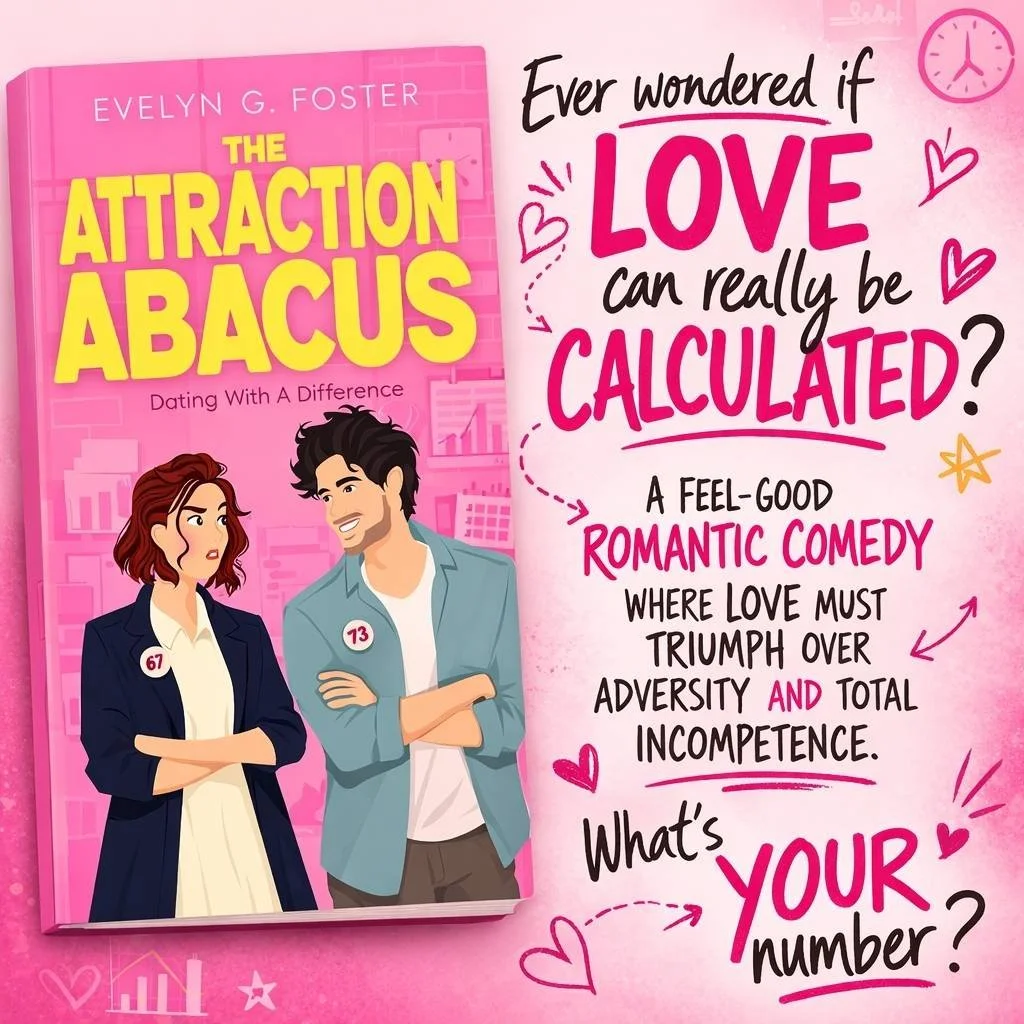
Ad: The Attraction Abacus. Dating fiction at its best.
Spice level is not a side note
Let’s be honest - for most romance-adjacent readers, heat level is not a trivial detail. It shapes pacing, tone and the whole atmosphere of a book. If you like low-spice or no-spice fiction, a very steamy story can feel like you’ve wandered into the wrong party. If you want strong physical chemistry on the page, a closed-door romance may leave you feeling politely underfed.
When working out how to choose dating fiction, be quite literal about this. Decide whether you want low spice, moderate tension, or a book that fully knows what it’s doing. None is morally superior. It is simply about reading satisfaction.
It also helps to remember that spice and emotional intensity are not the same thing. A low-spice dating novel can still be wildly romantic and completely consuming. A high-spice one can still be emotionally light and breezy. If you know which part matters most to you, choosing gets much easier.
Look for books that understand modern dating culture
Not every romance novel needs apps, algorithm jokes and disastrous voice notes. But if you are specifically after dating fiction, it helps when the book actually feels plugged into the current mess.
That doesn’t mean stuffing the pages with references in a desperate bid for relevance. In fact, that usually dates a book in the bad way. What you want is social recognition. Characters who behave like people you might actually know. Dating stakes that feel contemporary. Conversations that sound like adults in this century rather than polished avatars of romantic destiny.
The best dating fiction gets the micro-details right: the overthinking after a decent first date, the performance of pretending not to care, the weirdness of chemistry through a screen, the way humour becomes a defence mechanism and a flirting strategy at the same time. When a book understands that, it tends to feel more addictive.
Pay attention to the promise of the blurb
Blurbs are not perfect, but they do usually tell you what kind of ride you’re boarding. The trick is knowing what signals to watch.
If the blurb is heavy on mishaps, schemes, workplace embarrassment and verbal sparring, you’re likely in rom-com territory. If it leans into healing, vulnerability and difficult past relationships, expect a more emotional read. If it sells the setup but says almost nothing about personality, proceed with caution. A dating premise alone is not a personality.
Also, trust the rhythm of the writing. If the blurb makes you smile, that’s a good sign for a lighter, voice-led read. If it feels intense and introspective, it probably is. Readers often ignore these clues because the trope looks right. Then they wonder why the book feels off. The vibe was in front of you the whole time.
Choose authors, not just concepts
One of the easiest ways to improve your hit rate is to follow authors whose handling of romance already works for you. Not just books with similar blurbs - authors with a sensibility you trust.
That might mean they write brilliant banter, believable attraction, or heroines who feel like functioning adults rather than rom-com furniture. It might mean they understand low-spice tension without making the story feel emotionally thin. Once you know what your taste is, author loyalty becomes less random and much more useful.
This is part of why independent publishers with a clear editorial personality can be such a good source of discovery. If the curation feels aligned with what readers are already discussing - tone, spice, emotional payoff, modern relatability - you’re less likely to end up with something technically on-theme but spiritually wrong.
Reviews are useful, but read them like a detective
A five-star review saying “this destroyed me” could be either a recommendation or a warning, depending on your plans for the evening. The same goes for “slow burn”, “messy” and “so real”. Real in a good way? Or real in a way that makes you want to throw your phone into the Thames?
The smartest way to use reviews is to scan for repeated patterns. Do lots of readers mention the humour? The chemistry? The third-act conflict? The emotional tone? You’re not looking for consensus on whether the book is objectively good. You’re looking for evidence that it is your kind of good.
BookTok and Bookstagram can help, but they can also make every novel sound like a life event. Sometimes you do not need a book that rewires your nervous system. Sometimes you need attractive people making poor romantic decisions in a stylish, readable format. Honour that.
When in doubt, choose the book with a clear emotional payoff
The best dating fiction doesn’t just present a premise. It promises a feeling. Maybe that feeling is delight. Maybe it’s ache. Maybe it’s the specific pleasure of watching two people resist the obvious for 280 pages before finally sorting themselves out.
If you’re stuck between several books, choose the one that seems clearest about what it wants to make you feel. Books with a strong emotional identity are usually more satisfying than books built on trend fragments alone.
And if your taste is very much “funny, romantic, modern, low-to-no spice, but still emotionally switched on”, trust that instinct. You do not need to read against your own preferences just because the internet has declared a different mood this week.
The right dating novel should feel a bit like being texted back by someone you actually fancy - timely, exciting and worth your attention. Pick the one that sounds like it knows exactly what kind of reader you are.
