
How to Choose Low Spice Romance

Low spice romance
You know the feeling: you want chemistry, yearning, banter, maybe one devastating hand touch in a kitchen, but not a book that suddenly turns into a closed-door-free-for-all by chapter twelve. If you have ever wondered how to choose low spice romance without accidentally wandering into the wrong end of BookTok, the good news is that it is absolutely possible. You just need to know where the clues are hiding.
Low spice romance is one of those categories that sounds straightforward until you realise readers use the term slightly differently. For one person, low spice means a couple of brief on-page scenes with more emotional build-up than detail. For another, it means kisses only, fade-to-black, or nothing beyond intense eye contact and one shared umbrella. This is why choosing well is less about finding a perfect universal label and more about learning how to read a book's signals before you commit.
What low spice romance actually means
Let's start with the bit that causes the chaos. "Low spice" is not a tightly regulated genre term. It is reader shorthand. That means publishers, reviewers, booksellers and creators might all use it with slightly different heat scales in mind.
Usually, low spice romance sits somewhere between closed-door and mildly open-door. You can expect attraction, romantic tension, emotional intimacy and some level of physical affection, but the sexual content is limited, lightly described, or kept off the page. The relationship is still central. The butterflies are still doing overtime. You are not being handed a sterile love story with all the fun edited out.
That said, there is a difference between low spice and no spice. If you want absolutely no on-page sexual content, look for terms like "closed-door", "fade-to-black" or "clean romance" - though even "clean" can be annoyingly vague and sometimes carries its own baggage. If you are comfortable with a little heat as long as it does not dominate the story, low spice is often the better fit.
How to choose low spice romance without getting catfished by marketing
A pastel cover and a cartoon couple mean nothing. We have all learned this the hard way.
The smartest way to choose low spice romance is to look at three things together: how the book is described, how readers talk about it, and what kind of emotional experience it is promising. If all three line up, you are much less likely to get a surprise that has you blinking at the page and checking whether you picked up the wrong book.
Start with the blurb. If it leans hard into sexual tension, body language, forbidden attraction and "they should not want each other this much", the heat level may be higher than a cosy illustrated cover suggests. If it talks more about emotional opposites, personal growth, friendship, family complications, awkward dating disasters or workplace chaos, that often points towards a lower-spice read.
Then check early reader reactions. Not just star ratings - the actual wording. Readers are usually very clear when they feel a book is spicier than expected. Phrases like "surprisingly steamy", "more open-door than I thought" or "definitely not closed-door" are useful little warning flares. Equally, if readers keep praising the tension, sweetness, banter or slow-burn payoff, that is often a strong sign the book prioritises romantic build-up over graphic scenes.
Finally, pay attention to tone. A romcom with awkward dates, sharp dialogue and emotional vulnerability often handles intimacy differently from a dark romance, mafia romance or very trope-forward enemies-to-lovers title. Not always - because genre likes to keep us humble - but tone is still a useful indicator.
The best clues are usually tone and trope
If you are trying to avoid reading twenty reviews before choosing a novel, tropes can help. Some tend to show up in lower-spice romances more often than others.
Small-town settings, second-chance stories, friends-to-lovers, slow-burn romantic comedies and relationship-led contemporary fiction are often safer bets if you want warmth without a lot of explicit detail. Books that pitch themselves around emotional healing, personal reinvention or charming social disaster also tend to spend more time on character than bedroom logistics.
By contrast, some tropes can be a bit more heat-forward. Instalust, forced proximity with a very sultry angle, billionaire romance, bodyguard romance and darker power-dynamic setups often come with more on-page intimacy. Not always, because romance has no universal law except readers arguing in comments, but it is worth noticing the pattern.
This is also where author style matters. Some writers are known for high emotional intensity and very little explicit content. Others write sparkling banter and then drop in more graphic scenes than the cover copy suggested. Once you find a few authors whose heat level matches your taste, choosing gets much easier.
Reviews are your best friend, but read them strategically
If you only read one thing before buying, make it a couple of balanced reviews from readers who clearly care about heat levels. They tend to be much more precise than marketing copy.
You are looking for specifics without major spoilers. Did the reviewer mention one brief open-door scene? Did they say the intimacy was mostly implied? Did they describe it as "closed-door with strong chemistry" or "low spice but definitely still sensual"? Those distinctions matter.
It also helps to find reviewers whose preferences sound like yours. Someone who reads very spicy romance might call a moderately explicit book "quite tame", while a reader who prefers kisses-only might find the same book surprisingly intense. Heat is partly about content and partly about your comfort zone. There is no medal for pretending otherwise.
A useful trick is to look for the words readers pair with spice. "Sweet" and "slow-burn" often signal one experience. "Tense", "sizzling" and "spicy but not too much" can signal another. Neither is wrong. It just depends what kind of reading mood you are trying to protect.
Know what you want beyond the spice level
This is the bit people skip, and it is why they end up disappointed by perfectly good books.
Low spice tells you about one aspect of the reading experience. It does not tell you whether the book is funny, angsty, plot-heavy, deeply character-driven, whimsical, sad, or emotionally chaotic in the way that has you staring at the ceiling at midnight. You still need to choose for vibe.
Ask yourself what you actually want the romance to feel like. Do you want clever dialogue and comic timing? Do you want tenderness and emotional safety? Do you want a proper slow-burn where a forehead touch counts as a major event? Or do you want something contemporary and messy that captures the absurdity of modern dating without turning up the explicit content?
When you know the answer, you stop treating low spice as the whole brief. It is just one filter, not the entire personality of the book.
How to choose low spice romance by format and subgenre
Contemporary romance is often the easiest place to start because the language around it is familiar. Readers and reviewers tend to be quite direct about whether a book is closed-door, low spice or more explicit. Romantic comedies are especially useful if you want charm, pace and emotional payoff without pages of graphic description.
Historical romance can be trickier. Some are all aching restraint and social tension, which is excellent if yearning is your thing. Others are much steamier than their elegant covers imply. Fantasy romance is even more mixed. One reader's low-spice fae romance is another reader's absolutely-not-thanks.
Young adult romance is generally lower on explicit content, but if you are an adult reader looking for adult characters and adult emotional stakes, it may not scratch the same itch. That is why the sweet spot for many readers is adult contemporary romance with a romcom or relationship-fiction edge. It gives you maturity, chemistry and a strong emotional arc without assuming you want every detail on the page.
This is part of why books that sit in the modern dating, romantic comedy and low-to-no-spice conversation can feel so satisfying. They understand that tension, humour and emotional intelligence are not consolation prizes. They are the main event.
Red flags that a book may be hotter than you want
Sometimes a book is not badly labelled. Sometimes we just missed the signs because we were blinded by a cute premise.
Be cautious if the marketing leans heavily on "spicy scenes", "book boyfriend energy", "for fans of very steamy romance" or reader quotes focused on how hot the chemistry is. Also take note if the most talked-about aspect of the book is not the plot, the emotional arc or the banter, but the scenes. That usually tells you where the emphasis sits.
Another giveaway is pacing. If the attraction is extremely intense from page one and the book keeps returning to physical description over emotional connection, it may not deliver the low-spice balance you want, even if the total number of explicit scenes is small.
Give yourself permission to be specific
There is nothing fussy about wanting romance that suits your taste. Wanting more yearning and less graphic detail is not prudish. Wanting a few lightly written scenes rather than a fully closed-door story is not contradictory. It is just preference, and romance is a genre built on readers having very exact preferences.
The more precise you are, the easier it gets. You are not just looking for low spice. You might be looking for funny low spice, slow-burn low spice, emotionally intense low spice, or low spice with proper adult dating chaos and no cringe. Once you phrase it that way, your choices get sharper and your reading life gets better.
And if you find a book that gives you crackling chemistry, a believable emotional payoff and exactly the right amount of heat for your taste, hold onto it. That is not being picky. That is having standards, and frankly, your TBR deserves them.
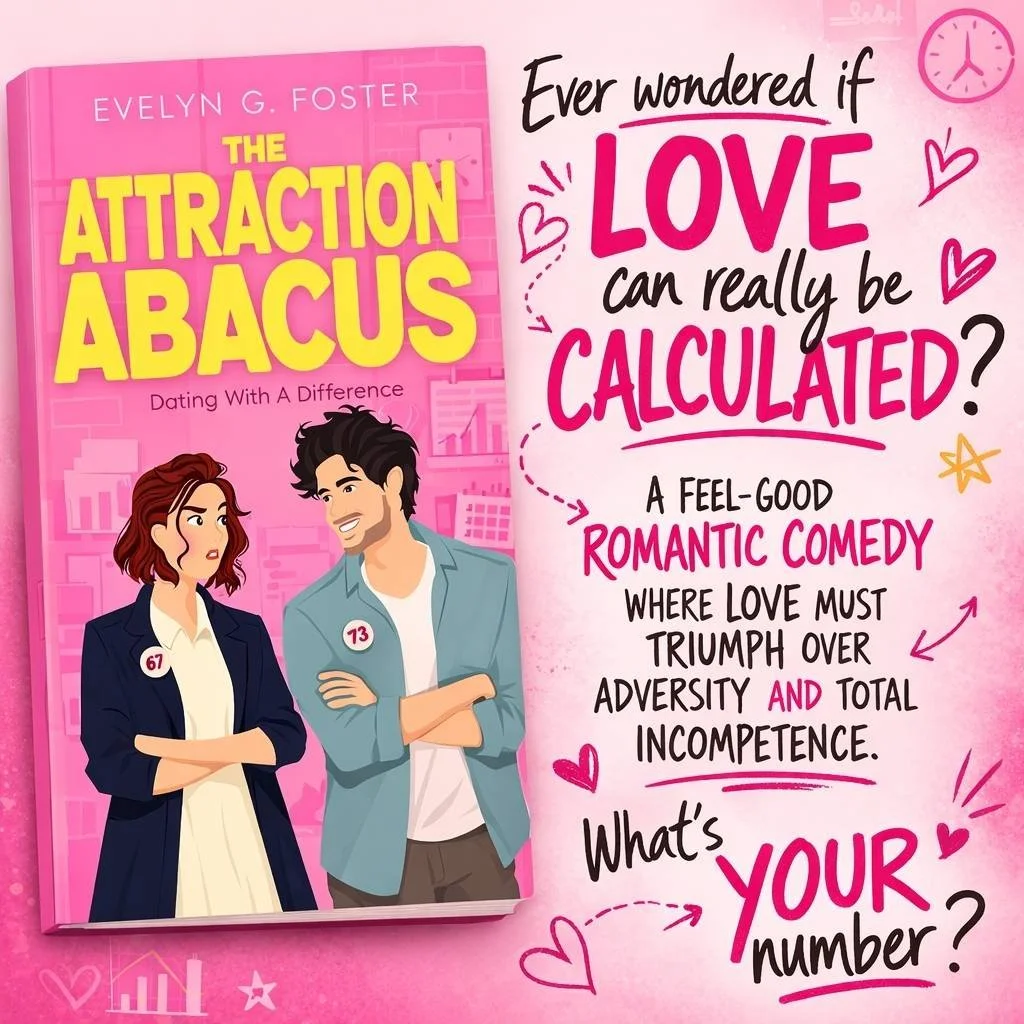
Ad: The Attraction Abacus. Low spice romance fun.
