
Why women's fiction about relationships works
Why women's fiction about relationships works
One awkward wedding seating plan, one emotionally unavailable ex, one best friend who says, “I’m fine” when she is very much not - this is exactly where women's fiction about relationships earns its keep. It deals in the stuff that can wreck your week or remake your life, and it does it with more nuance than a simple will-they-won’t-they setup. If romance gives you the butterflies, this corner of fiction gives you the full group chat analysis afterwards.
What women's fiction about relationships actually means
Let’s clear the fog first. Women’s fiction about relationships is not just romance wearing a different coat. Romance tends to build around the central love story and its emotional payoff. Women’s fiction can absolutely include romance, and often does, but the lens is wider. The real subject is how people connect, drift, hurt each other, forgive each other, and occasionally make catastrophic choices before learning anything useful.
That means the relationship at the centre might be romantic, but it might just as easily be a friendship under strain, a mother and daughter circling old wounds, sisters stuck in the same family patterns, or a woman trying to work out whether her life still fits the version of herself she built ten years ago. The stakes are emotional rather than explosive, which is exactly why they land so hard.
For readers, this matters because not every bookish mood is “give me tension, banter, and one bed”. Sometimes the craving is messier. Sometimes you want a story that understands dating fatigue, shifting friendships in your thirties, emotional baggage with excellent posture, and the weird fact that personal growth rarely arrives looking glamorous.
Why these books feel so addictive
The answer is not subtle: recognition. The best women's fiction about relationships has that unnerving quality of making you pause and think, well, that was a bit too accurate actually. It picks up the rhythms of modern emotional life - the unread message that becomes a referendum on your self-worth, the relationship that looks perfect online and deeply unconvincing in person, the friend who knows your history so well she can wound you in six words.
These books are addictive because they don’t flatten emotional life into heroes and villains. A partner can be lovely and still wrong for someone. A friendship can be formative and still need to end. A character can be deeply frustrating and completely understandable at the same time. That moral untidiness is where the good stuff lives.
There’s also the pleasure of watching a character try to sort out one relationship and accidentally expose the fault lines in all the others. A break-up becomes a family reckoning. A new romance throws an old friendship off balance. An engagement forces everyone to confront what they settled for. It’s domino-effect fiction, and when it’s done well, you can’t look away.
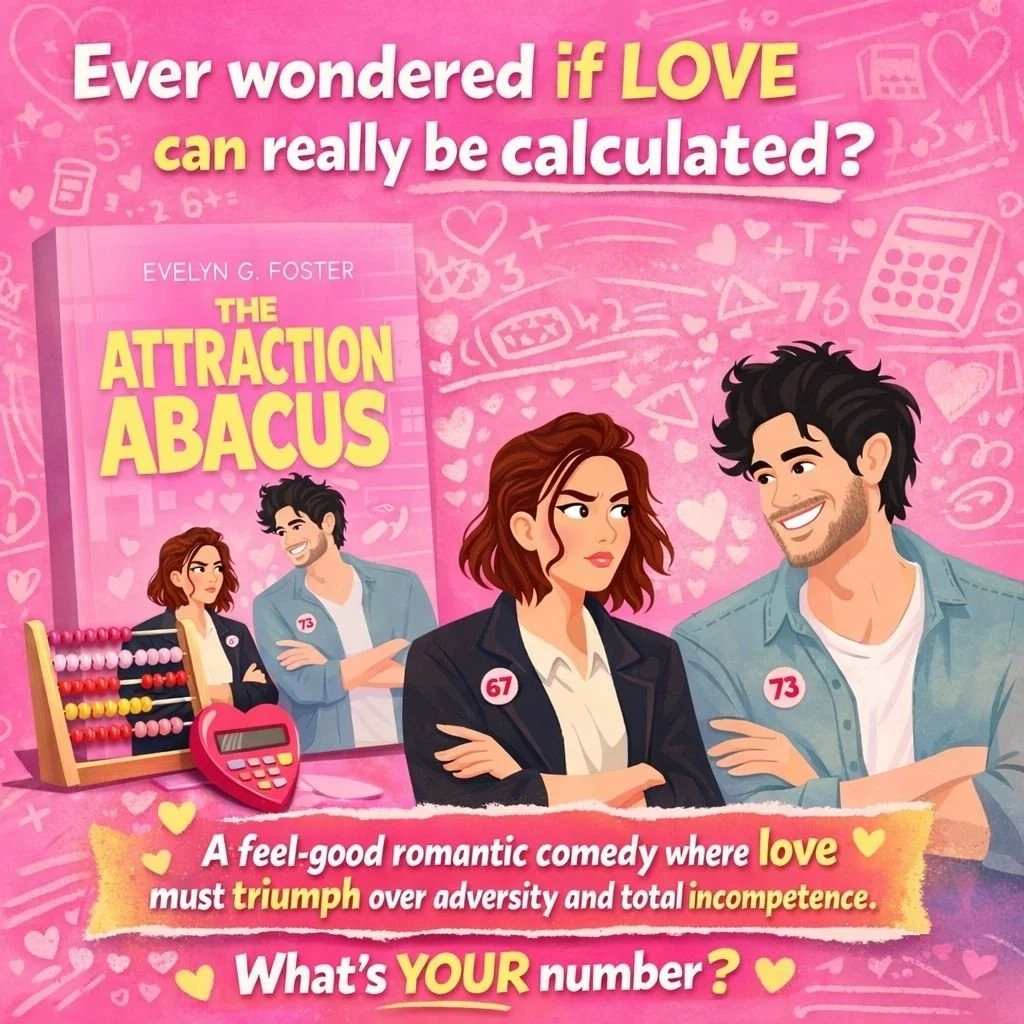
Ad: The Attraction Abacus. A feel-good rom-com.
The difference between romance and relationship-led fiction
This is where readers get picky, and fair enough. If you pick up a book expecting a rom-com sparklefest and get an emotional excavation of grief, divorce, female friendship, and identity instead, that is a mismatch, not a literary revelation.
Romance readers often want a clear central pairing, mounting chemistry, and a satisfying emotional resolution for the couple. Women’s fiction about relationships may offer some or all of that, but it’s under no obligation to make the love story the main event. It may be more interested in why the protagonist keeps choosing unavailable people, or why success at work has not translated into peace in her personal life, or why her oldest friendship now feels like a tight pair of jeans she keeps pretending still fits.
That doesn’t make one better than the other. It just changes the reading experience. If romance is about the relationship becoming possible, women’s fiction is often about understanding why relationships become difficult in the first place.
What readers are really looking for now
Reader taste has become gloriously specific. People don’t just want “a good book”. They want funny but not fluffy, emotional but not devastating, romantic but not ultra-spicy, contemporary but not trying too hard to sound like a social media manager. Fair.
That’s one reason relationship-led fiction is having a strong moment with readers who live half their reading life online. It gives you plenty to talk about. Not just “did they kiss?” but “was her best friend actually toxic?”, “why did nobody tell him to go to therapy?”, and “I know the mum was trying, but I’m still cross with her”. These are discussion books. Book club books. Screenshot-a-quote-and-send-it-to-your-friend books.
There’s also a growing appetite for stories that feel emotionally current. Modern dating is strange. Commitment is delayed, communication is constant but not always meaningful, and everyone is carrying some combination of burnout, self-awareness, and deeply unhelpful coping mechanisms. Fiction that acknowledges this without turning into a lecture feels refreshing.
A good example of that appeal is when a novel captures the maths of attraction versus compatibility - the fantasy, the projection, the timing, the practical reality. That’s partly why books like The Attraction Abacus feel so readable: they understand that relationships are rarely just about chemistry. They’re also about baggage, timing, self-sabotage, and whether two people can survive prolonged exposure to each other’s actual personalities.
The emotional ingredients that make it work
The strongest books in this space usually get three things right: character depth, social realism, and restraint.
Character depth sounds obvious, but it’s the difference between a protagonist with a life and one with a plot. You need to feel the texture of her decisions. Why does she keep saying yes when she means no? Why does she want intimacy and fear it at the same time? Why is she more honest with strangers than with the people who love her? If the answers are too neat, the story feels synthetic.
Social realism matters too. Not every novel needs to read like documentary, but relationships happen inside practical lives. Rent exists. Childcare exists. Work stress exists. Exes exist in mutual friendship groups like a curse. The pressures around money, class, caregiving, ambition, ageing, fertility, and geography all shape what is or isn’t possible between people. When fiction remembers that, it hits harder.
And then there’s restraint. Counterintuitively, a relationship novel becomes more powerful when it doesn’t oversell every emotional beat. A writer who trusts a quiet scene, a half-finished sentence, a withheld apology, or a bad joke at exactly the wrong moment often creates more impact than pages of dramatic declarations. Real people are rarely eloquent in the moments that matter most. They deflect. They ramble. They put the kettle on.
Why friendship and family stories matter as much as romance
There’s a reason readers keep recommending novels where the love story is only part of the appeal. Romantic relationships may dominate marketing, but friendship and family often provide the deepest emotional bruises.
A friendship breakup can feel more disorientating than a romantic one because there’s less language for it. No tidy script, no sympathy cards, no standard playlist. Women’s fiction has become especially good at exploring that grey area - the friend who became a habit, the slow drift after children or careers or different values, the painful realisation that history is not the same thing as closeness.
Family, meanwhile, is the original relationship labyrinth. Parents can be loving and impossible. Siblings can know your most vulnerable self and compete with you anyway. Adult daughters can be wildly competent in every area except the one involving a phone call home. These dynamics give novels weight. They make romantic decisions feel embedded in a bigger emotional pattern rather than floating in a vacuum.
Who will love women's fiction about relationships
If your perfect read is all plot, all pace, all external stakes, this may not be your first stop. But if you love sharp observation, emotional intelligence, and characters who are trying their best while making choices that make you want to text them “babes, no”, you’re in the right aisle.
This category tends to suit readers who want more than one emotional thread at once. Maybe you like romance, but you also want depth around work, family, identity, and friendship. Maybe you want humour without silliness, chemistry without wall-to-wall spice, and endings that feel earned rather than sprayed on at the last minute. Maybe you simply want fiction that gets how complicated people are.
That’s the real appeal. Women’s fiction about relationships doesn’t promise fantasy perfection. It promises recognition, tenderness, bad timing, difficult conversations, second chances, and the occasional glorious emotional readjustment. It knows that loving people is rarely tidy, and that makes it an especially satisfying place to read.
If your current reading mood is less “epic sweep” and more “show me the emotional chaos, but make it clever”, start here. The best of these novels won’t just give you a story to finish. They’ll give you people to argue about long after you’ve closed the book.
