
Speculative Thriller Versus Dystopian Fiction
Speculative thrillers vs dystopian fiction.
A corporation offers a cleaner, safer, more efficient life. There is one small catch: it may also be editing your choices, your memories or your idea of what a choice even is. That is where the speculative thriller versus dystopian fiction debate gets interesting. Both genres can make you suspicious of a polished headquarters, a helpful algorithm and anyone saying, “This is for your own good.” But they create tension in different ways.
If you love The Matrix, Inception, The Truman Show or a particularly unsettling episode of Black Mirror, you already know the feeling. Reality develops a hairline crack. Somebody notices it. Then the book starts tightening the screws.
The short answer: setting versus momentum
Dystopian fiction is usually concerned with a damaged society. It asks what happens when political power, technology, environmental collapse, inequality or social conformity has reshaped everyday life for the worse. The reader needs to understand the system because the system is the monster.
A speculative thriller is more interested in the live wire of discovery. It introduces one reality-bending premise - perhaps a predictive decision tool, a corporation with access to impossible data, or a world that is not what it claims to be - then builds pressure around a person trying to expose, escape or survive it. The premise matters, of course, but so does the pulse rate.
That means the distinction is not a neat shelf label. “Dystopian” often describes the world; “thriller” describes the reading experience. A novel can be both, and many of the best ones are. The question is not whether a book contains a terrible system. It is whether you spend more time absorbing the system’s consequences or urgently turning pages to find out who is lying.
What dystopian fiction wants you to notice
Dystopian stories make the ordinary feel political. A food queue, a school lesson, a dating rule, a housing allocation or an approved phrase can reveal how control works. The regime may be loud and brutal, but it can be just as chilling when it is cheerful, frictionless and advertised as progress.
The genre often works on a wider canvas. We see how society got here, who benefits, who has been excluded and what compromise people make to keep going. The protagonist may become a rebel, but the book’s real target is the machinery around them: surveillance, propaganda, consumerism, authoritarianism, climate neglect or corporate power with a friendly logo.
This is why dystopian fiction can feel both huge and horribly close to home. Its imagined future is usually an exaggerated version of a present anxiety. The best examples do not merely say, “Technology is bad,” then throw a drone at you. They ask why people accepted the trade in the first place. Safety for privacy? Convenience for autonomy? Peace for truth? Very tempting deals, until the bill arrives.
The pace can be slower - deliberately
Dystopian fiction may take time to establish rules, class divisions and daily rituals. For some readers, that immersive world-building is the point. You want to know how people work, eat, love, parent and resist under a system designed to flatten them.
For others, this can feel like waiting through the orientation video before someone finally pulls the fire alarm. Neither response is wrong. It is a matter of whether you want the book to build a society around you or chase you through one.
What a speculative thriller does differently
A speculative thriller takes a “what if?” and treats it like a ticking device. What if a company could calculate the perfect human response to every moral problem? What if your memories could be verified, edited or sold? What if the evidence in front of you is real - but reality itself has been professionally managed?
The central character is often not trying to overthrow an entire government at page one. They are trying to work out what happened, whom to trust and why an apparently minor inconsistency has made powerful people nervous. The threat may grow into something systemic, but the immediate stakes stay personal: a missing person, a ruined reputation, a compromised relationship, a body, a deadline.
That personal focus is the engine. Speculative thrillers tend to favour reversals, hidden motives, clues that acquire a new meaning and the deliciously alarming moment when the protagonist realises they have been asking the wrong question. A good one makes you reread a harmless earlier scene and mutter, “Oh, that is deeply not fine.”
The idea has to earn its adrenaline
Speculation alone does not make a thriller. A clever premise can be fascinating, but if nobody is in danger, nobody is hiding anything and nothing changes when the truth emerges, it may read more like an intellectual puzzle than a thriller.
Likewise, a thriller cannot simply stick a futuristic gadget in the opening chapter and call it speculative. The altered reality should shape the conflict. If an algorithm determines life chances, the plot should test what that does to responsibility, love, ambition and guilt. Otherwise the technology is just set dressing with a very expensive marketing department.
Where the two genres overlap gloriously
The sweet spot is a world with an argument and a plot with teeth. Corporate dystopias, surveillance states and behavioural technologies naturally lend themselves to suspense because they create imbalances of knowledge. The institution knows more than the citizen. The platform knows more than the user. The reader begins to suspect that the protagonist is not merely making a choice but being quietly funnelled towards one.
That overlap is especially potent when the antagonist is not a cackling dictator but an organisation convinced it is improving humanity. A villain who wants chaos is straightforward. A corporation that wants to eliminate bad decisions, optimise compassion and make people happier is far more awkward. Its language may be reasonable. Its results may even be impressive. The horror lies in asking who gets to define “better”.
Heptagon Books’ The Gap sits in this uneasy territory: a reality-blurring speculative thriller where the promise of perfect judgement comes with consequences no boardroom presentation can make ethical. It is the kind of premise that invites a proper post-book argument, which is generally the best kind.
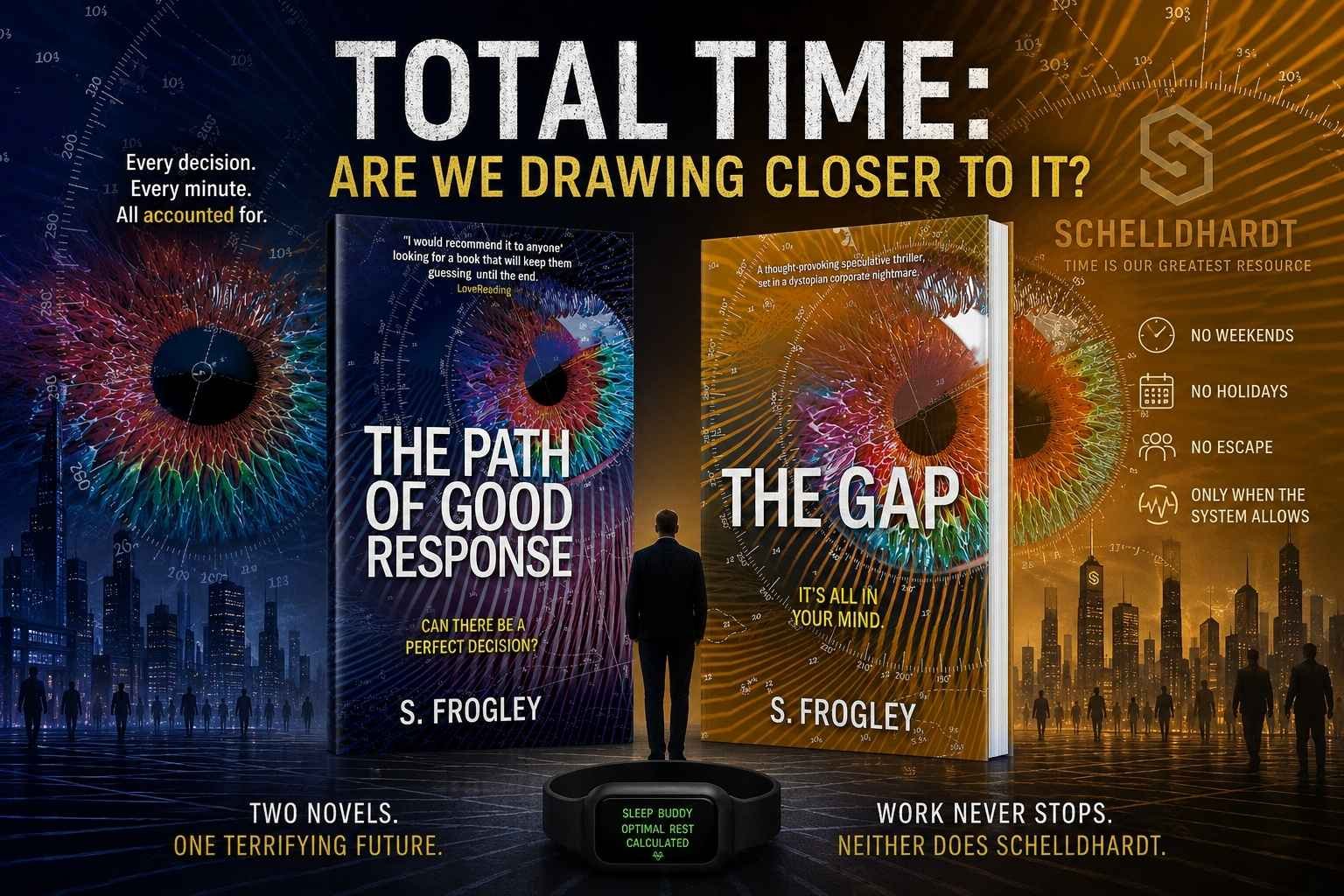
The Schelldhardt Series. Dystopian speculative thrillers.
How to tell which book you are picking up
Book descriptions can be annoyingly genre-fluid, so look at what they emphasise. If the blurb leads with a new social order, a divided population, a controlled future or a struggle against a ruling regime, dystopian fiction is probably the dominant flavour. Expect atmosphere, politics and an examination of life under pressure.
If it opens with an impossible event, a dangerous discovery, a person who cannot trust their senses or a countdown to exposure, you are likely in speculative-thriller territory. Expect revelations, mounting jeopardy and a plot that does not politely wait for you to make tea.
A few useful reader-mood checks help, too. Choose dystopian fiction when you want to inhabit a fully realised warning about society and have your assumptions thoroughly poked. Choose a speculative thriller when you want that same big-idea charge with more velocity, paranoia and “one more chapter” recklessness. Choose a hybrid when you want both - ideally with a villainous corporation that has turned ethical surrender into a subscription service.
The real difference is what stays with you
Dystopian fiction often leaves a residue. You finish it and start noticing the systems around you: the language of efficiency, the casual surrender of data, the way power presents itself as common sense. Its power is cumulative.
A speculative thriller may hit first as an experience. Your heart rate goes up, your theories collapse and you become emotionally attached to spotting the next lie before the protagonist does. Yet the strongest examples leave residue too, because the final twist was never only a twist. It was an argument about what people will hand over when certainty is on offer.
So do not worry too much about getting the label exactly right. Follow the feeling you are after. If you want to stare into a possible future and see our present staring back, pick up dystopian fiction. If you want that future to lock the doors, cut the lights and tell you reality has been misfiled, reach for a speculative thriller. Either way, perhaps do not trust the corporation promising a perfect life. It has probably read your terms and conditions more carefully than you have.
