
How to Avoid Predictable Thrillers; Books That Feel Fresh

Unpredictable thrillers.
You know the feeling. You are 60 pages into a thriller, the charming new colleague is obviously not charming, the missing spouse is obviously not missing in the usual sense, and the big twist has already waved at you from chapter three. Learning how to avoid predictable thrillers is less about becoming impossible to surprise and more about choosing books that are playing a more interesting game.
A great thriller does not need to hide every clue in a locked drawer. In fact, the best ones often show you the danger early, then make you question what the danger actually means. If you like the reality-warping unease of The Matrix, Inception or The Truman Show, you are not necessarily looking for a bigger body count. You are looking for a story that makes the world feel fractionally wrong, then refuses to hand you the instruction manual.
How to avoid predictable thrillers before page one
The cover copy is useful, but it can also be a repeat offender. A blurb built entirely from "a secret", "a lie", "nothing is what it seems" and "but can she trust anyone?" is not automatically bad. Those phrases are genre shorthand. The question is whether there is a specific engine underneath them.
Look for a premise that creates pressure beyond a single concealed fact. Perhaps a corporation has turned ethical decision-making into a product. Perhaps an ordinary town operates according to a rule nobody remembers agreeing to. Perhaps the protagonist receives proof that their happiest memory was designed by someone else. These ideas give a thriller somewhere to go once the first reveal lands.
Be wary when the pitch relies on one anonymous threat and nothing else. "Someone is watching" can be deliciously creepy, but if you cannot tell what is distinctive about the setting, the character or the central dilemma, you may be booking a familiar ride. There is nothing wrong with comfort reading, obviously. Sometimes you want crisps, a blanket and a twist you can see from the next postcode. But call it what it is.
Search for a question, not just a shock
Predictable thrillers tend to treat the twist as the whole meal. Fresh ones begin with a question that stays interesting even if you correctly guess one part of the plot.
Try asking: what would I still want to know if the obvious suspect did it? In a thoughtful speculative thriller, the answer might be whether a perfect decision can still be human, or whether convenience becomes control when one company owns every choice. That is the good stuff. The reveal should deepen the question, not replace it.
A promising book often has an ethical knot at its centre. The protagonist may be tempted by safety, certainty, status or reunion with someone they have lost. Their choices should matter because there is a real cost on both sides. If the only possible response is "well, simply do not go into the creepy basement", the tension may not survive the opening act.
Read the first pages like a detective
You do not need to conduct a forensic investigation in the bookshop. Read a sample, if you can, and pay attention to what the author makes strange.
Good thrillers establish a pattern before they break it. A strangely formal customer-service exchange, an app that knows too much, a neighbour who uses exactly the same phrase as a television presenter: these details can create a quiet, accumulating dread. They suggest that the book understands atmosphere, not just plot mechanics.
On the other hand, consider a pause if the first chapter is packed with dramatic declarations but has no texture. A protagonist saying they have "always had secrets" is not the same as a protagonist behaving in a specific, revealing way. Stakes need grounding. Even a globe-spanning conspiracy hits harder when we know why one person cannot ignore it.
This is also where point of view matters. An unreliable narrator can be brilliant, but "unreliable" should not mean the author has withheld basic information solely to spring a late gotcha. The most satisfying narrators distort the story for an emotional reason. They are protecting themselves, rationalising a terrible choice or genuinely unable to understand what is happening. That is psychologically messy in the best way. Randomly evasive is merely admin.
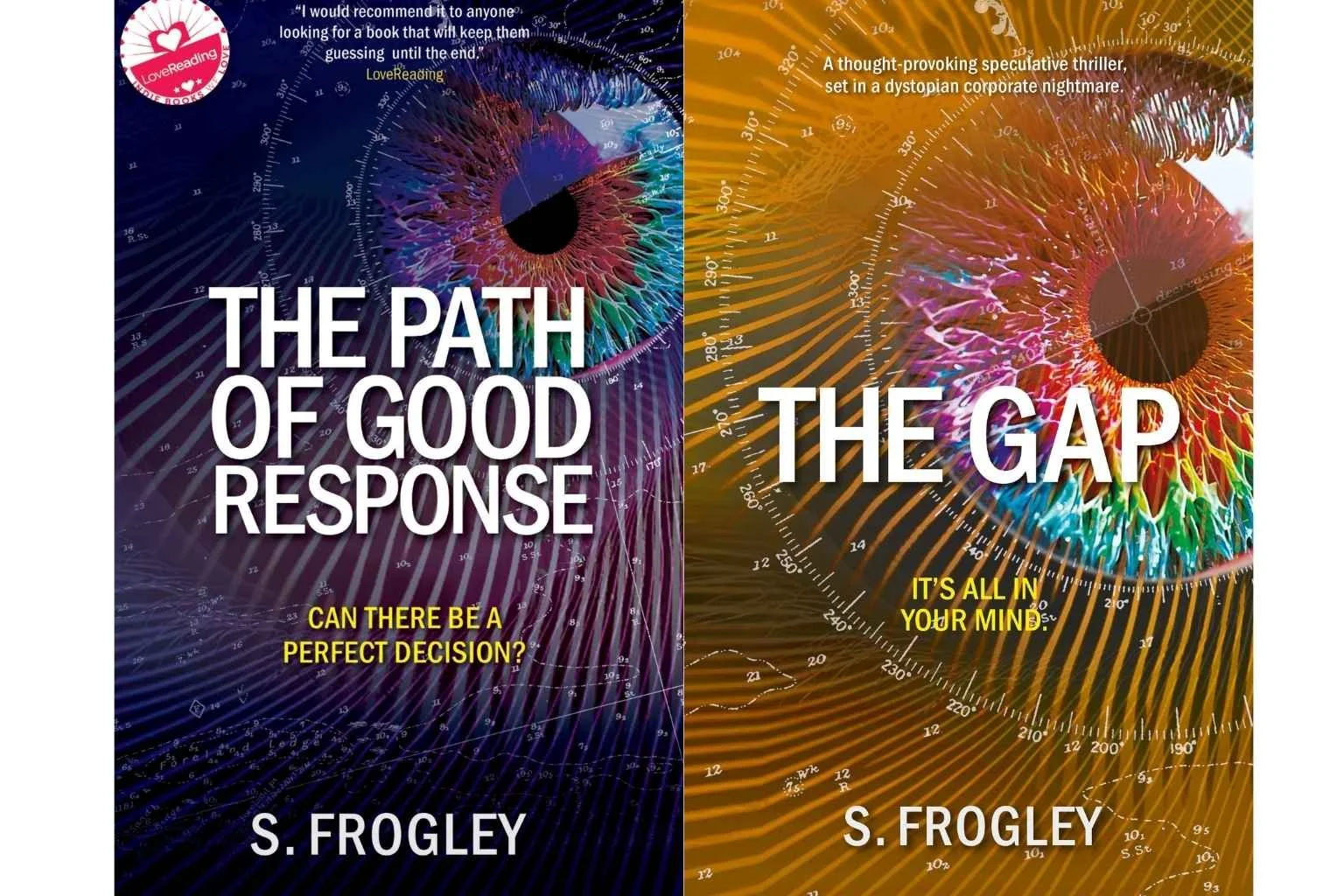
The Schelldhardt Series. Unpredictable dystopian thrillers.
Choose tension over twist-counting
A thriller does not become clever because it has six reveals, three secret identities and a final chapter that begins with "Actually...". Plot twist inflation is real. Eventually, every character has been someone else's sibling, employer or experimental clone, and the reader is just trying to find the exit.
The books that linger usually build tension from conflicting truths. The protagonist can be right that they are being manipulated and wrong about who is doing it. The corporation can offer something genuinely useful while still being monstrous in its appetite for growth. A friend can betray someone for a reason that makes horrible sense. When everyone is not simply lying but pursuing incompatible versions of the good, a story becomes far harder to predict.
That is why speculative thrillers can feel so electric. The best of them use one altered rule to expose the rules we already live by. A system that promises perfect choices sounds absurd until you remember how many platforms already nudge what we buy, watch, date and believe. Suddenly the nightmare has a recognisable postcode.
Let reviews tell you the shape, not the ending
Reader reviews are gold, but use them with a light touch. You are not trying to learn whether the twist is shocking. That phrase has lost all meaning after approximately 400 thriller blurbs. Instead, scan for comments about pacing, atmosphere and whether the ending feels earned.
Useful praise sounds like: "I kept changing my mind about what was real", "the ideas stayed with me", or "the ending recontextualised the story without cheating". More cautious phrases include "slow to get going", "great premise, predictable middle", and the diplomatic classic: "I guessed the reveal early, but enjoyed the journey". Again, this may be absolutely fine. It depends whether you read thrillers for the destination or the delicious paranoia of getting there.
Avoid reviews that explain the supposedly spoiler-free twist in enough detail to qualify as a witness statement. Protect your own experience. One vague comment that says a book has a divisive ending is usually more useful than a five-paragraph breakdown of why the author should have chosen a different villain.
Follow authors with a point of view
A familiar setup can still produce an unpredictable thriller when the writer has a clear obsession. Some authors return to surveillance, grief, memory, technology, power or the quiet terror of bureaucracy because they have something particular to say about it. That perspective gives the plot a pulse.
It is worth seeking out independent fiction alongside the biggest algorithm-approved releases. Smaller publishers can take a more specific swing: stranger premises, sharper social commentary, less pressure to recreate last year's mega-hit with a new job title and a slightly foggier cover. The trade-off is that you may not get a thousand ratings telling you exactly how to feel. You do get the pleasure of finding something before your group chat starts yelling about it.
If blurred reality is your particular catnip, look for stories where the unreality changes the character rather than merely decorating the set. A simulated world, secret programme or omniscient organisation is only as compelling as the person forced to live with it. In Heptagon Books' The Gap, the appeal lies in that uncomfortable territory where certainty, choice and reality start behaving badly. Exactly as they should.
Give the book room to surprise you
There is one final complication: sometimes we make thrillers predictable by reading them like a competitive sport. We spot the clue, announce our theory at 11 per cent, and mentally deduct points whenever the author has the audacity to use misdirection. Congratulations, Sherlock. But have you had any fun?
Try holding theories lightly. Notice patterns, enjoy the suspicion, then let the book make its case. A satisfying ending does not have to defeat you personally. It needs to feel inevitable in retrospect, emotionally honest in the moment, and just odd enough that you want to message someone, "Right. We need to discuss that final chapter."
The next time a thriller promises a secret, ask for more. Ask what it is really afraid of, what it thinks people will trade for comfort, and whether its world will still be troubling after the twist has done its little ta-da. That is where the unpredictable reads are waiting.
