
Dating app fiction
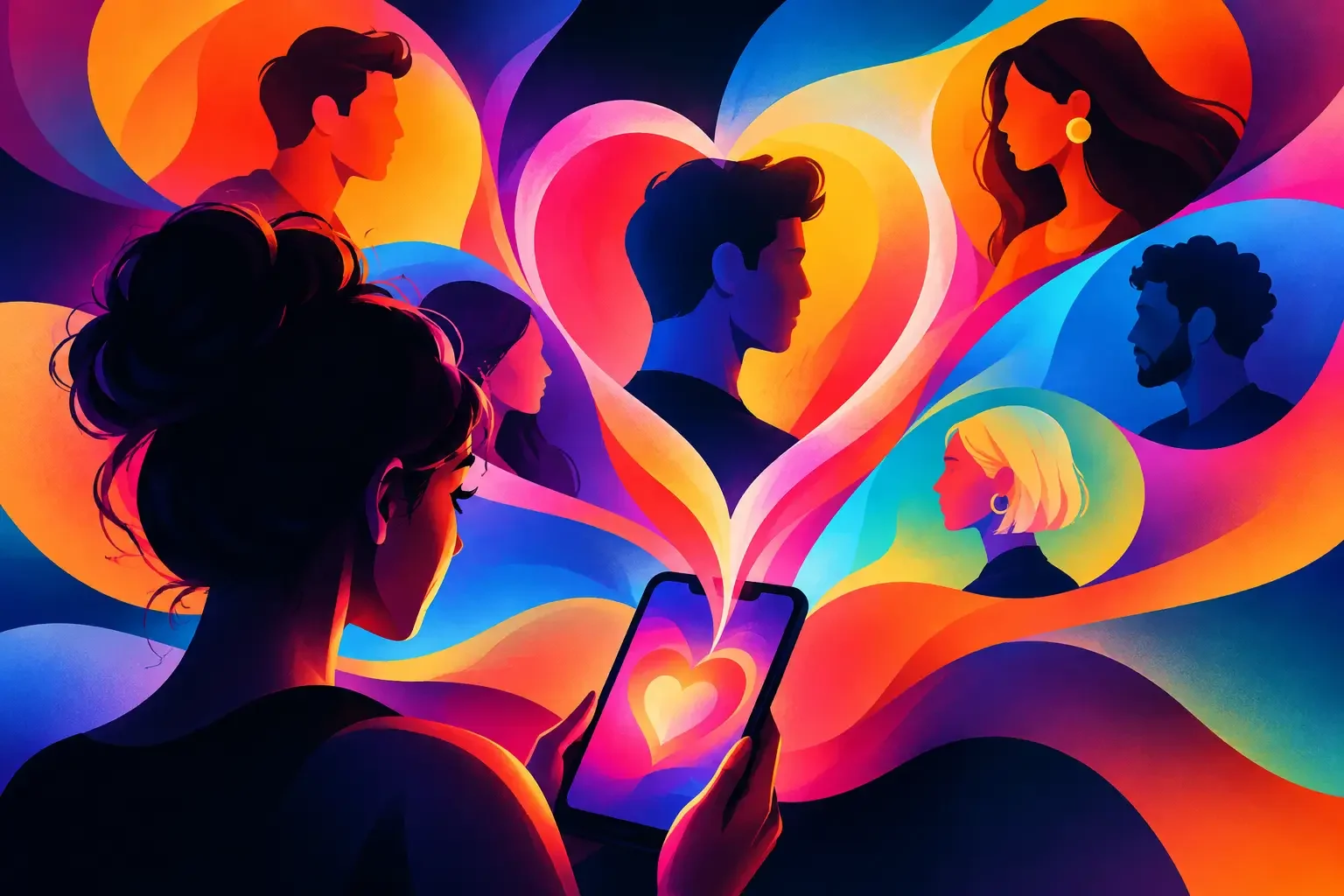
Your phone lights up. It is either a promising match, a man called Dan holding a fish, or someone you briefly dated asking whether you still have their charger. Dating app fiction understands that this tiny glowing rectangle now contains an alarming amount of our romantic history - and it makes excellent material for a novel.
The best stories in this corner of contemporary romance do not simply put characters on an app and call it modern. They understand the particular comedy, hope and low-level psychic damage of looking for connection through prompts, photos and a bio written at 11.47pm. A meet-cute can still happen. It may just begin with an accidental Super Like.
Why dating app fiction feels so personal
Classic romance has always loved an obstacle: a family feud, a workplace rivalry, a missed train, perhaps a duke with poor emotional communication. Dating apps add a very current set of complications. There is the person who is charming in messages and baffling over coffee. The ex who reappears in your stack. The mutual friend who spots your profile. The strange performance of trying to sound relaxed, funny and emotionally available in 150 characters.
That is why the genre lands when it is done well. The technology is not the plot. It is the pressure cooker. Apps make choice look endless while making people feel oddly disposable, and that tension gives a romance novel plenty to play with. A character can have hundreds of possible matches and still feel profoundly alone. Another might delete the app in a grand gesture, only to discover that their problem was never the app itself.
For readers, there is also the delicious safety of recognition. You can laugh at someone sending "hey stranger" after six months because it happened to the heroine, not because it is currently happening in your notifications. Fiction gives the chaos a shape. Real dating rarely supplies a third-act declaration in the rain. A good novel, thankfully, knows when to bring one in.
The Attraction Abacus. Poking fun at the dating app scene. Two rival dating apps head to head, with some fake dating fun thrown in! Click on the image to play video. Best with sound.
Dating app fiction is more than a swipe-right rom-com
The label covers more ground than its pastel covers and witty chat screenshots might suggest. Some books are bright, banter-heavy rom-coms where a disastrous first date becomes a surprisingly excellent second chance. Others are tender stories about divorce, grief, queer identity, friendship or starting again when everyone else seems paired off and posting holiday photos.
There are also darker, sharper versions. An app can expose class assumptions, beauty standards, racism, ableism and the quiet exhaustion of being assessed in seconds. It can create a mystery, a thriller-worthy sense of unease, or a story about who gets to be visible and who gets filtered out. The premise is contemporary, but the emotional questions are ancient: Who sees me? Who chooses me? What am I willing to pretend to be to avoid being alone?
That range matters when you are picking your next read. If you want escapism, look for books promising sparkling dialogue, terrible dates and a guaranteed emotional landing. If you want something more reflective, seek out stories that treat the app as part of a wider life rather than a magical vending machine for boyfriends. Neither approach is superior. It depends whether your reading mood is "give me chemistry and a happy ending immediately" or "please examine the architecture of modern loneliness, but make it readable on the Tube".
The tropes get a digital upgrade
Dating apps have not replaced romance tropes. They have given them fresh outfits. Fake dating becomes a pretend profile or a strategic plus-one arranged after an unfortunate swipe-related mishap. Enemies to lovers can begin with a brutal profile review, a terrible opening line or the discovery that your irritating new colleague is the person you matched with last night.
Second-chance romance gets especially juicy online. What happens when the person who broke your heart appears, years later, with a better haircut and an apparently sincere apology? Forced proximity has its own modern variation too: two people keep matching, unmatching and turning up at the same local pub, as if the algorithm has become personally invested.
The trick is that the app should complicate the trope, not do all the work. We are here for the people behind the profiles. Nobody finishes a romance novel swooning over excellent UX design.
What makes the best dating app stories work
First, they get the rhythm right. App dating is a peculiar mix of speed and waiting. A match can happen in a second; a reply can take three days; one date can make a character rethink their entire future. Strong fiction uses that stop-start tempo to build anticipation without making the reader feel they are trapped in someone else's group chat.
Second, the characters need lives beyond the search. A heroine does not become more relatable because she owns 14 dating apps and makes disastrous choices on all of them. Give her ambitions, friends, family baggage, questionable playlists, a job she cares about or a job she needs to escape. Give the love interest enough inner life that they are not merely a well-lit profile with a dog.
Third, the book needs emotional honesty. A brilliant joke about ghosting will get a nod of recognition. A character admitting that rejection from a stranger still stings? That is where the story earns its heart. Dating app fiction is at its strongest when it allows people to be hopeful without making them naïve.
This is particularly welcome for readers who prefer low-to-no spice romance. Plenty of contemporary dating stories offer wit, yearning and real chemistry without treating explicit scenes as the only proof that a relationship matters. Tension can live in a late-night voice note, a first hand-hold, or the moment someone remembers the detail you assumed they had forgotten. Heat level is a preference, not a moral test - your TBR, your rules.
The algorithm cannot write the ending
There is a tempting idea that dating apps have made romance less romantic. They can certainly make it more transactional, more tiring and more likely to involve a man whose entire personality is "likes brunch". But fiction is interested in the gap between what a system promises and what people actually need.
An algorithm can suggest compatibility based on location, age, preferences and whatever else we have reluctantly ticked in a hurry. It cannot account for the joke that becomes yours, the conversation that makes an ordinary Tuesday feel less lonely, or the person who challenges your carefully curated idea of what your type should be.
That is the quiet pleasure beneath all the swiping in these novels. They are not really about finding the perfect profile. They are about being known in ways a profile cannot capture.
For a romance that leans into this question with brains as well as butterflies, Evelyn G. Foster's The Attraction Abacus is a clever fit: a story alert to the urge to calculate love, and to the messily human reasons that calculation never quite wins.
A genre for readers who have seen too much
Dating app fiction works because it does not ask us to pretend modern dating is elegant. It knows about screenshotting a questionable message to the group chat. It knows the bravery required to meet a stranger for one drink. It knows that saying "I am looking for something serious" can feel more vulnerable than saying almost anything else.
And it still makes room for delight. Not every date is a disaster. Not every unanswered message is a verdict. Sometimes the person on the other side of the screen is real, funny, kind and unexpectedly right for you. Until then, there are books that understand the assignment - and perhaps a profile prompt that is better left unsent.
