
A Reader’s Guide to Heat Levels in Fiction

Romance book heat levels
You have found a rom-com with a cover that is giving main-character energy, a premise involving disastrous dating, and 4.8 stars from people who use crying emojis recreationally. Then comes the question that can make or break the purchase: how spicy is it, actually? This guide to heat levels in fiction is for readers who want fewer surprises, better book matches, and no more discovering a book’s definition of ‘closed door’ is suspiciously open.
Why heat levels are not a universal language
Heat level, spice level, steam rating - call it what you like. It is shorthand for how much sexual content appears on the page and how explicitly it is described. But it is not a regulated system. One reader’s gentle 2 out of 5 may be another reader’s ‘I need to put the kettle on and have a sit-down’ 4.
That does not make ratings useless. It simply means they work best as a starting point rather than a legally binding promise. The most helpful conversations about heat include more than a number: are intimate scenes on the page or implied? Is the chemistry constant? Does the story focus on emotional intimacy, banter, longing, or physical detail? Those are very different reading experiences, even when two books receive the same spice rating.
There is also no moral hierarchy here. Wanting a fade-to-black romance is not prudish. Wanting explicit scenes is not shallow. Some readers are after aching glances across a crowded room; others would like the crowded room cleared, the door locked, and the prose to get extremely specific. Both are valid reading plans.
A guide to heat levels in fiction, from 0 to 5
The scale below is a useful reader-friendly framework, not a scientific instrument. Think of it as a weather forecast for the book’s romantic temperature.
0 - No on-page intimacy
There may be romance, attraction, flirting or a deeply satisfying emotional connection, but there is no sexual content on the page. This category can include sweet romances, some young adult fiction, stories where the relationship is secondary, and books that end with a kiss rather than a bedroom scene.
A zero-heat book is not necessarily low on chemistry. A well-timed hand touch can cause more damage to a reader’s nervous system than an entire chapter of explicit content. The difference is where the story chooses to place the focus.
1 - Kissing, yearning and gentle implication
At level 1, expect kissing and romantic tension, with intimacy either absent or lightly implied. If characters sleep together, the scene generally cuts away before details begin. This is often called closed-door or fade-to-black romance, although publishers and readers do not always use those terms consistently.
This level suits readers who want the emotional payoff of a love story without spending much page time in the bedroom. It is also a favourite zone for rom-com fans who came for the chaos, the dating mishaps and the eventual ‘oh no, I am in love with you’ moment.
2 - Some on-page spice, lightly described
Level 2 usually means the book includes intimate scenes that happen on the page, but the language is comparatively restrained. The scenes may be brief, less frequent, or focused more on character emotion than physical detail.
This can be the perfect middle ground for readers who want a romance to acknowledge that adults in love may have sex, while keeping the story’s main attention on plot, humour or relationship development. It is a useful category, but one where reviews matter especially. ‘Lightly spicy’ can mean very different things depending on the author’s style.
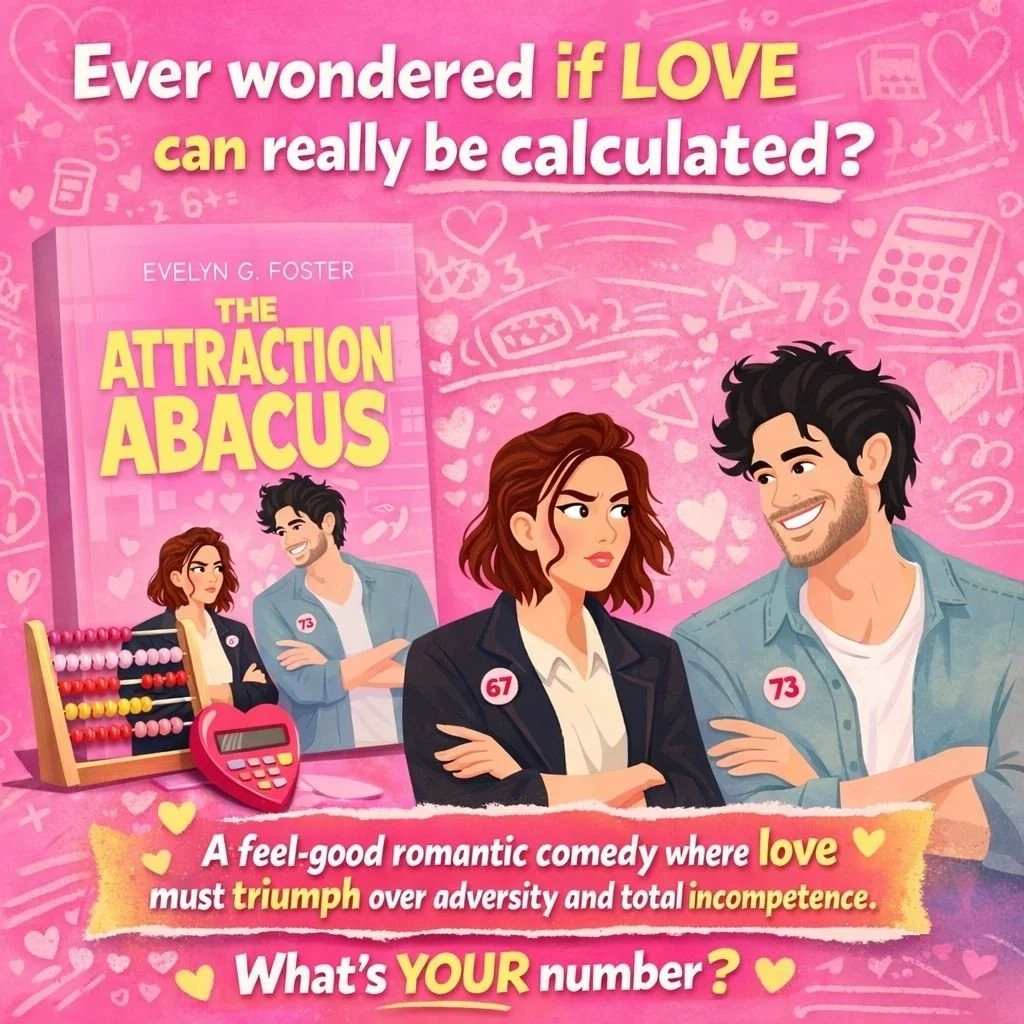
Ad: The Attraction Abacus. A level 2 spice rom-com!
3 - Clearly open-door romance
At level 3, intimate scenes are explicit, on the page and part of the book’s relationship arc. Expect descriptive language, recurring physical intimacy, and a story that treats sex as one meaningful way the characters communicate, complicate things or grow closer.
This does not automatically mean the book is wall-to-wall spice. A 3 can still be a warm, funny romance with a strong plot outside the central relationship. Equally, it may be emotionally intense. The number tells you about explicitness, not whether the book will make you laugh, swoon or text your group chat at 1 am.
4 - High heat, frequent and detailed
A level 4 romance has regular explicit scenes and more detailed on-page intimacy. Sexual chemistry is likely to be a major feature of the reading experience, not an occasional detour between plot points.
This is where trope and tone become crucial. A high-heat small-town romance may feel cosy and affectionate; a high-heat dark romance may feel far more intense. Same broad rating, wildly different vibes. Read the blurb, sample the author’s voice if you can, and check reader reviews for the emotional atmosphere as well as the spice count.
5 - Very explicit, sex-forward fiction
Level 5 is for books in which explicit sexual content is highly detailed, frequent or central to the premise. The romantic relationship may still have a full emotional arc, but the book is unashamedly sex-forward.
For readers who enjoy this category, a 5 can be a feature rather than a warning label. For readers who do not, it is useful information that saves everyone time. Nobody wins when you are 70 pages in, clutching a paperback on the train, wondering how things escalated this quickly.
Heat is not the same as chemistry
Here is the plot twist: a low-spice book can be wildly romantic, and a high-spice book can have very little emotional tension. Heat measures explicit content. Chemistry is the feeling that these two people are magnetically, catastrophically drawn to each other. Romance readers are often looking for both, but they are separate ingredients.
If you love slow burns, you may want delayed gratification, loaded dialogue and a relationship that develops over time. That story might land at level 1 or level 4. If you prefer an instant connection, you may find it in a closed-door rom-com or a very explicit contemporary romance. The key is to look beyond the number.
Words such as ‘banter’, ‘slow burn’, ‘emotionally intimate’, ‘grumpy/sunshine’, ‘fake dating’ and ‘yearning’ can tell you just as much about whether a book is your thing. A useful review does not merely say ‘three chilli peppers’. It tells you why.
How to find your personal comfort zone
Start with books you already know. Think about your last few romance reads and ask what you loved or skipped. Did you want more page time for the couple’s emotional connection? Were you delighted by open-door scenes but bored by endless will-they-won’t-they? Did a fade-to-black moment feel elegant, or like the author had cut the Wi-Fi at the worst possible second?
Then pay attention to the kind of content, not just the quantity. Some readers are comfortable with explicit scenes but dislike jealousy, power imbalance or darker themes. Others are happy with a dramatic premise but want low-to-no spice. Heat ratings cannot carry all that information alone.
When you are choosing a new book, look for a combination of the blurb, early reader reactions and content notes where available. Reviews that mention pace, tone and emotional payoff are usually more useful than a lone number. A reader saying ‘open door, but tender and not overly frequent’ gives you a far clearer picture than ‘4/5 spice’ dropped into the comments with no context.
The low-spice reader deserves better than a disclaimer
Modern romance culture has become brilliantly specific about what readers want, from enemies-to-lovers to one bed to billionaire who urgently needs therapy. Yet low- and no-spice stories are sometimes treated as though they need an apology attached. They do not.
A lighter-heat romance can still be funny, grown-up, emotionally observant and properly swoony. The Attraction Abacus, for example, is built for readers who enjoy contemporary dating chaos and romantic tension without needing every intimate moment narrated in forensic detail. Sometimes the hottest thing in a rom-com is a character finally being honest. Wild concept, admittedly.
Your ideal heat level may also shift with your mood. Holiday reading might call for high drama and higher spice; a stressful week may require a comforting, closed-door love story and a biscuit. Reading tastes are not a personality test. They are allowed to change.
The best rating is the one that helps you choose with confidence, then lets the story surprise you in all the right places. Find the heat that suits your mood, leave room for the tropes that make your heart do cartwheels, and never let anyone tell you your preferred level of fictional kissing is incorrect.
