
What Spice Level Is This Book, Really?

Spice levels in books
You’ve seen the reel. You’ve read the breathless caption. Somebody in the comments has typed “how spicy though??” with the urgency of a person making a genuinely life-altering decision. Fair enough. If you’ve ever asked what spice level is this book, you’re not being fussy. You’re trying to avoid the very specific reader disappointment of expecting tender kisses and finding chapter-long steam - or the reverse.
Spice has become one of the quickest ways readers sort their TBRs, but it’s also one of the messiest. One person’s “quite spicy” is another person’s “that was basically a prolonged stare across a kitchen island”. The problem is not that readers care too much. The problem is that the language around heat levels is all over the place.
What spice level is this book actually measuring?
Usually, when readers ask what spice level is this book, they mean one thing: how much sexual content is on the page, and how explicit is it? But in practice, people often bundle in chemistry, tension, emotional intensity and romance payoff as if they’re all the same thing. They are not.
A book can be low spice and still feel wildly romantic. It can have superb tension, aching chemistry and proper kick-your-feet energy without ever going full open door. Equally, a book can be very explicit and still not feel especially swoony if the emotional build is thin. That’s why spice level only tells part of the story.
Think of it as one dial, not the whole dashboard. Heat matters, especially if you know your preferences, but so do tone, pace and whether the romance leans sweet, funny, messy or all-consuming. If you only go by spice, you can miss books that are exactly your thing.
The unofficial romance heat scale
Bookish internet has more rating systems than a group chat choosing brunch, but most descriptions land somewhere on a loose spectrum.
At the no-spice end, affection stays chaste or mostly off-page. You might get longing, hand touches, a kiss, maybe emotional devastation of the delicious variety, but no explicit sex scenes. Closed-door romance usually sits here too. The relationship is central, the feelings are very much present, and the bedroom door politely shuts before things get detailed.
Low spice tends to mean a little more on-page intimacy, but not loads of it and not in graphic detail. You know what happened, the scene may linger briefly, but the writing is more interested in connection than anatomy. This is often where rom-com readers feel most at home, especially if they want chemistry without the book turning into a running commentary on abs and bed frames.
Medium spice usually means multiple on-page scenes with a higher level of detail. Sex is part of the relationship arc, not a one-off bonus track. The language is more explicit, and the scenes take up more space in the story.
High spice is where the book is openly, unmistakably explicit and knows it. There may be frequent scenes, stronger sexual language, kink elements depending on the title, or simply a lot more page time devoted to physical intimacy. None of this is inherently better or worse. It just suits different readers on different days.
The catch is that these labels are wildly subjective. A reader who mostly reads very sweet romance may label one open-door scene as “spicy”. A reader deep in dark romance territory may call the same book “basically clean”. Both are reporting honestly from their own reading history.
Why one reader’s three chillies is another reader’s raised eyebrow
Context changes everything. Genre does, too. In romantic comedy, even a modestly explicit scene can feel hotter because the rest of the book is light, bantery and emotionally warm. In a darker or more erotic romance, that same level of description may barely register.
Reader expectation also plays a massive role. If the cover, blurb and online buzz scream flirty rom-com, readers often expect low to medium spice. If the marketing hints at forbidden attraction and serious bedroom tension, they’ll brace for more heat. When the content and the expectation mismatch, that’s when people start rage-posting chilli emojis.
Clues that tell you the spice level before page 50
Publishers and booksellers are getting better at speaking plain English about heat, but the real detective work still happens in the ecosystem around the book.
Reviews help most when they’re specific. “So spicy” tells you almost nothing. “Two open-door scenes, more chemistry than graphic detail” tells you a lot. The best reader reviews separate heat from romance tone. They’ll tell you whether the book is slow-burn but eventually explicit, sweet throughout, or emotionally intense without much on-page sex.
The blurb can also give the game away. If it focuses on banter, awkward dates, emotional baggage and whether two people can get themselves together long enough to fall in love, you may be looking at a lower-spice rom-com or contemporary romance. If the copy lingers on temptation, forbidden desire and being unable to resist each other every time they’re in a room alone, that often points higher.
Cover design is less reliable than it used to be, because illustrated rom-com covers have collectively decided to contain multitudes. Still, there are signals. Cute, bright covers no longer guarantee low spice, and moody photographic covers no longer guarantee the opposite, but the overall packaging often nudges expectation in one direction.
Then there’s author reputation. Readers who follow specific authors usually know the vibe. Some writers consistently deliver closed-door romance. Others are known for open-door scenes with varying levels of detail. If you’ve read an author before, that history is often a better guide than a random online rating.
Spice is not the same as chemistry
This is where things get interesting, because plenty of readers say they want spice when what they actually want is chemistry. They want yearning. They want tension sharp enough to slice through the page. They want dialogue that crackles and a payoff that feels earned.
A low-spice book can absolutely deliver that. In fact, sometimes less on-page detail means the build has to work harder, and when it does, the result is elite. Eye contact becomes an event. A hand on a waist gets treated like a national incident. Everybody wins.
On the other hand, a very explicit romance can still feel flat if the connection isn’t there. If the emotional stakes are missing, no amount of nakedness can rescue it. Spice without chemistry is just activity.
That’s why the better question is often not only what spice level is this book, but what kind of romantic experience is it trying to give me? Is it cosy and funny? Is it angsty and all-consuming? Is it built around sexual tension, emotional healing, chaos, wish fulfilment or all four at once?
If you prefer low to no spice, you are not asking for less
Romance discourse can sometimes behave as if more explicit automatically means more grown-up, more daring or more emotionally honest. It doesn’t. Preferring low spice is not prudish, old-fashioned or somehow less serious as a reading taste. It simply means you know what kind of storytelling works for you.
For some readers, lower-spice books leave more room for wit, character work and emotional progression. For others, they feel more re-readable because the romance sits in the tension, not only the consummation. And for many people, the sweet spot is not “none ever” but “some, provided it fits the book and doesn’t hijack the tone”. Entirely reasonable.
This is one reason contemporary publishers paying attention to reader language matter. When a publisher understands the difference between low spice, no spice and high chemistry, readers are much less likely to feel ambushed by a book that promised one thing and delivered another.
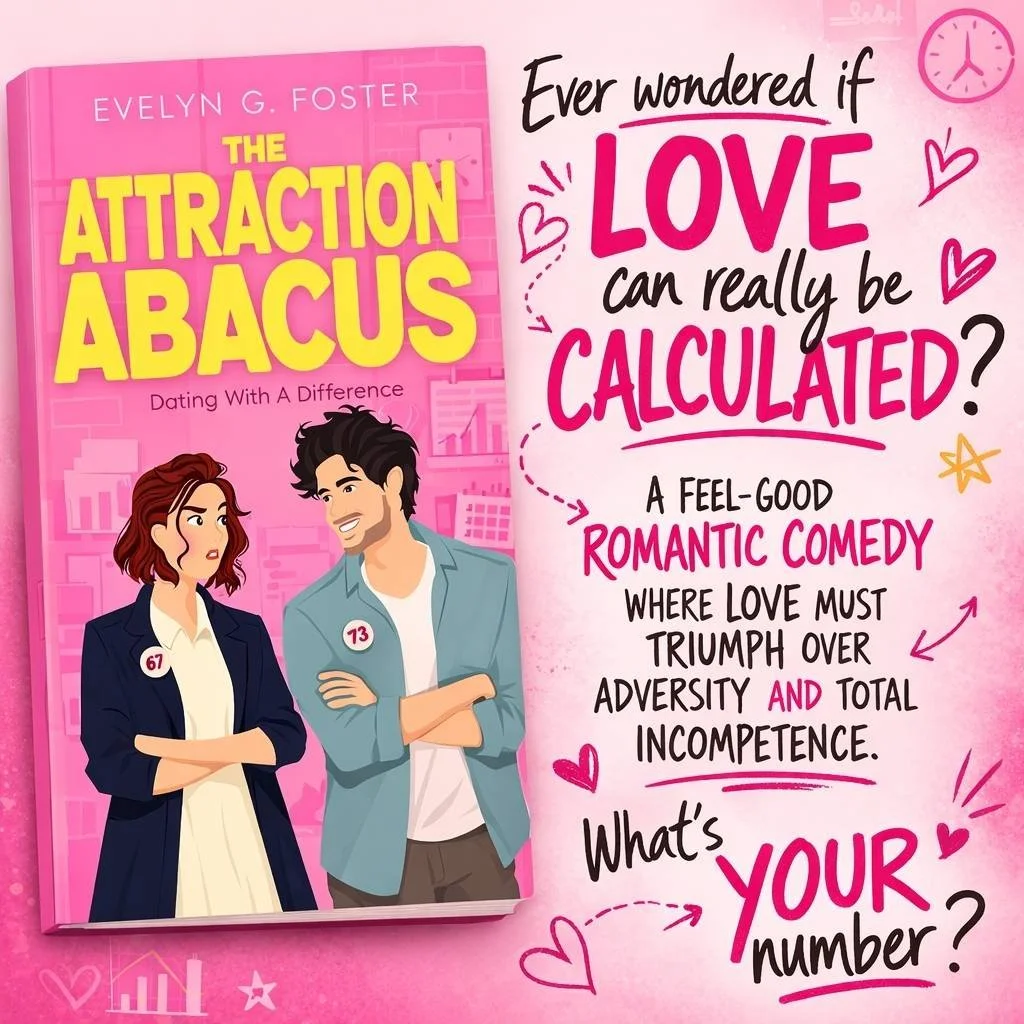
Ad: The Attraction Abacus. Closed door banter-based romantic comedy.
How to answer what spice level is this book without losing the plot
The most useful way to talk about spice is with a bit more precision and a bit less drama. Instead of ranking every romance by vibes alone, it helps to ask a few simple things. Is the intimacy on page or off page? How explicit is the language? How often do intimate scenes appear? And does the book feel driven more by banter, longing, emotional conflict or physical connection?
That gives readers a much clearer picture than a random number of peppers ever could. A rom-com with one mildly explicit scene near the end reads very differently from a romance with several detailed scenes throughout, even if both get labelled “medium” by somebody on TikTok after half a glass of wine.
For readers hunting a specific feel, this kind of clarity is gold. If you love stories with modern dating chaos, proper emotional payoff and a lower heat level, you’re probably not just shopping for spice. You’re shopping for balance. That’s where a well-pitched contemporary romance can really shine, including the sort of reader-aware fiction Heptagon Books has made part of its lane.
And if you’re still hovering over the buy button asking what spice level is this book, trust that instinct. It’s not a trivial question. It’s part of knowing your taste, protecting your reading mood and finding stories that actually suit the version of romance you want right now. The best books are not the hottest or the sweetest by default. They’re the ones that know exactly what they are - and tell you honestly.
