
Romance Books With Emotional Payoff

Romance Books With Emotional Payoff
Some romance books give you a kiss, a confession and a neat ending. Lovely. Others leave you staring at the ceiling at midnight because the characters had to earn every inch of that happy ending. If you’re hunting for romance books with emotional payoff, you’re probably not just after chemistry. You want yearning, vulnerability, proper character growth and that final moment where everything clicks and your chest actually hurts a bit.
That’s the difference between a romance you enjoy and a romance you immediately message your friend about with six unhinged voice notes.
What romance books with emotional payoff actually deliver
Emotional payoff is not just sadness, trauma or high drama in a better outfit. It’s the feeling that the relationship matters because the story has made you understand what it costs these characters to be together. The best versions build tension on two tracks at once: the external plot keeps things moving, while the internal stakes keep you invested.
A great emotionally satisfying romance usually makes one or both characters confront something bigger than whether they fancy each other. Maybe it’s fear of rejection, grief, self-protection, family pressure or the deeply modern horror of trying to be emotionally available after years of pretending you’re fine. The relationship becomes meaningful because it forces change.
That’s why a big declaration only works when the groundwork is there. Without that, it can feel a bit like a grand gesture with no receipts.
Why some romances feel flat even when the plot looks right
You know the type. The premise is catnip. The tropes are strong. The banter is there. On paper, this should be your next obsession. Then you finish it and feel... fine. Not devastated. Not delighted. Just fine.
Usually, the missing piece is depth in the emotional arc. A romance can have fake dating, enemies to lovers or forced proximity and still not land if the characters never reveal anything real. Attraction alone is not payoff. Neither is endless miscommunication dressed up as tension.
The strongest romances understand that longing needs contrast. If every scene is flirtation, nothing escalates. If every obstacle is random, nothing resonates. Readers want the sense that these two people specifically are difficult for each other to resist, difficult for each other to forget and, crucially, good for each other in ways they don’t expect.
It also helps when the emotional turning points arrive at the right moment. Too early, and the second half loses energy. Too late, and the ending feels rushed. This is why emotional payoff is partly about pacing, not just feelings.
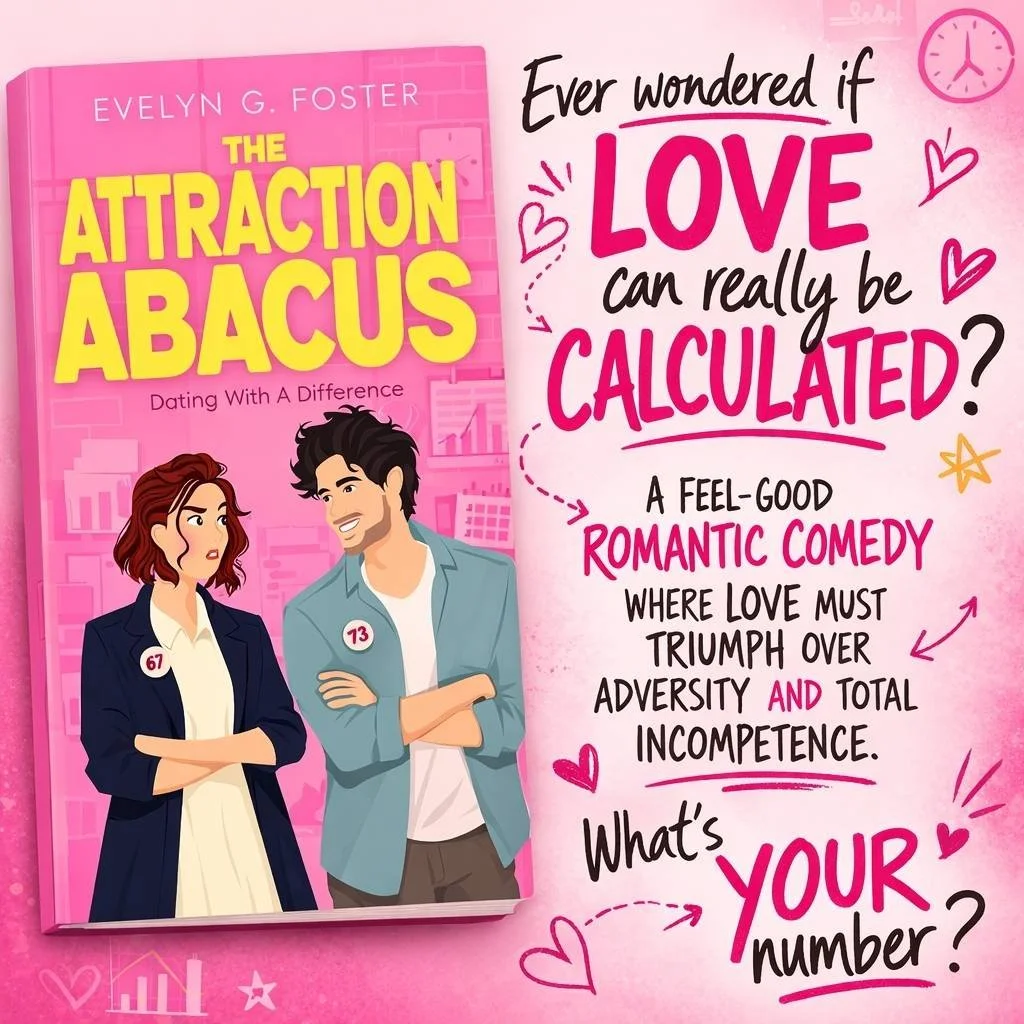
Ad: The Attraction Abacus. A rom-com with a guaranteed emotional payoff
The signs a romance will emotionally wreck you in the best way
There are a few clues that a book is building towards the good stuff. One is restraint. A story that doesn’t rush to cash in every moment of intimacy often ends up feeling more intense because it understands anticipation. Another is specificity. When characters notice tiny things about each other, remember awkward details or quietly adjust their behaviour out of care, that tends to hit much harder than a generic grand gesture.
You also want emotional asymmetry, at least for a while. One character falls first. The other falls harder. One knows exactly what they feel, while the other is still trying to outrun it. That imbalance creates ache, and ache is often where the magic lives.
Then there’s the all-important sense that the romance changes the characters, not just their relationship status. If they end the book as shinier versions of who they were on page one, the payoff can feel cosmetic. If they’ve actually confronted something in themselves, the ending lands with more weight.
Trope lovers, this is where nuance matters
BookTok loves a trope label, and fair enough. Tropes are useful shorthand. But if you want romance books with emotional payoff, the trope itself is rarely the deciding factor. Execution is everything.
Take fake dating. At its weakest, it’s all convenient setup and no emotional consequence. At its best, it becomes a story about performance versus honesty - about what slips out when two people stop pretending in all the wrong ways and start pretending in all the right ones.
Friends to lovers can be glorious, but only if the friendship already feels layered and lived-in. Otherwise it’s just two people politely circling each other for 300 pages. Enemies to lovers works when the conflict reveals values, wounds and compatibility under pressure. It does not work when they’re simply rude and suspiciously fit.
Second-chance romance is often the emotional-payoff heavyweight because history does some of the labour for you. There’s built-in regret, memory and unfinished business. But it only really sings when the reason they broke apart feels believable and the reunion feels earned. Nostalgia can’t do all the work.
Low spice, high feeling is not a compromise
Let’s say this plainly for the readers in the back: low-spice or no-spice romance can absolutely deliver devastating emotional payoff. In some cases, it delivers more, because the story has to work harder on subtext, dialogue, tension and intimacy outside the bedroom.
That doesn’t mean spice and emotional depth are mutually exclusive. They’re not. It just means heat level is not the same thing as emotional intensity, even though recommendation culture sometimes treats them like a package deal. A highly explicit romance can still feel emotionally thin. A closed-door rom-com can ruin your whole evening in the best possible way.
For readers who want connection, tenderness and a proper earned ending without pages of graphic detail, this matters. You’re not asking for less. You’re asking for a different kind of impact.
Contemporary romance has a special advantage
There’s something particularly effective about emotional payoff in contemporary romance because the problems feel so recognisable. Modern dating is already a genre. We have mixed signals, ghosting, overthinking, apps, timing issues, carefully managed vulnerability and the occasional fully avoidable emotional car crash.
When a book captures that world well, the happy ending feels especially satisfying because it pushes back against the chaos readers actually know. It says yes, people can still choose honesty. Yes, emotional availability is possible. Yes, someone can text back and mean it.
That’s one reason contemporary rom-coms with real emotional depth are doing so well. Readers want fun, obviously, but they also want stories that understand how weirdly exhausting modern connection can be. Banter gets you in the door. Emotional truth makes the book stick.
How to spot your kind of payoff before you read
Not every reader means the same thing when they ask for emotional payoff. Some want pining so intense it borders on a medical event. Some want catharsis, where the characters finally say the thing they’ve been avoiding for 250 pages. Others want softness - a sense of safety, mutual care and being deeply seen.
That’s why generic recommendations are so often useless. “Emotional” can mean heartbreaking, healing, angsty, tender or all four at once. It helps to ask what actually gets you. Is it mutual yearning? A slow-burn confession? Characters helping each other through messy real-life problems? A rom-com that makes you laugh and then quietly sneaks in a feeling you weren’t prepared for?
Once you know that, you’ll have a much easier time finding books that suit you, rather than whatever the internet is shouting about this week.
Where romance books with emotional payoff fit now
Reader appetite has shifted. People still love tropes, still love chemistry, still love a gorgeous cover and a one-sentence premise that makes them sit up. But there’s also a clear hunger for books that feel more emotionally intelligent. Not heavier for the sake of it. Just sharper about relationships, timing and vulnerability.
That’s part of why personality-led publishing works so well in romance right now. Readers don’t want faceless recommendation sludge. They want books that feel curated by people who actually understand the difference between “cute” and “this altered my brain chemistry”. They want stories that know the assignment.
It’s also why newer contemporary titles can be so exciting. They’re often more tuned in to the language and emotional patterns readers recognise from real life, online culture and modern dating. If you like your romance current, funny and capable of a surprising emotional wallop, that space is worth watching. Heptagon Books, for example, leans neatly into that sweet spot with fiction that feels modern, talkable and aware of what romance readers are actually asking for.
The real secret to a satisfying romance
The books that stay with you rarely do so because the plot was the wildest or the trope was the trendiest. They stay because, for a few hours, they made you believe these two people had genuinely changed each other’s lives.
That’s the whole game. Not perfection. Not endless angst. Not a final chapter stuffed with speeches. Just emotional movement that feels honest, followed by a resolution that feels deserved.
So if you’re choosing your next read, don’t only ask whether it’s funny, spicy or tropey enough. Ask whether it sounds like it understands longing, timing and the strange courage of letting yourself be known. That’s usually where the real payoff is waiting.
