

7 Decision Making Novels That Make Certainty Feel Risky
A proper decision novel does not simply give its protagonist a fork in the road. It makes both roads feel plausible, costly and revealing. One route might protect the person they love but betray a principle. The other might be morally cleaner but emotionally catastrophic. Suddenly, there is no obvious “good choice”, only a choice that shows us who somebody is when the pressure is properly on.
That is why this corner of fiction works across genres. In romance, the decision can be whether to risk vulnerability when old heartbreak has taught you to keep an exit plan. In speculative fiction, it might be whether a safer society is worth surrendering privacy, memory or free will. In a thriller, it is often whether to tell the truth when the truth is the thing most likely to get you killed. No pressure, then.
The very best examples also refuse to treat logic and emotion as enemies. People do not make decisions like spreadsheets with hair. We make them through grief, attraction, fear, ambition, loyalty and whatever story we have been telling ourselves about who we are. A novel can put that mess under a microscope without making it feel like homework.
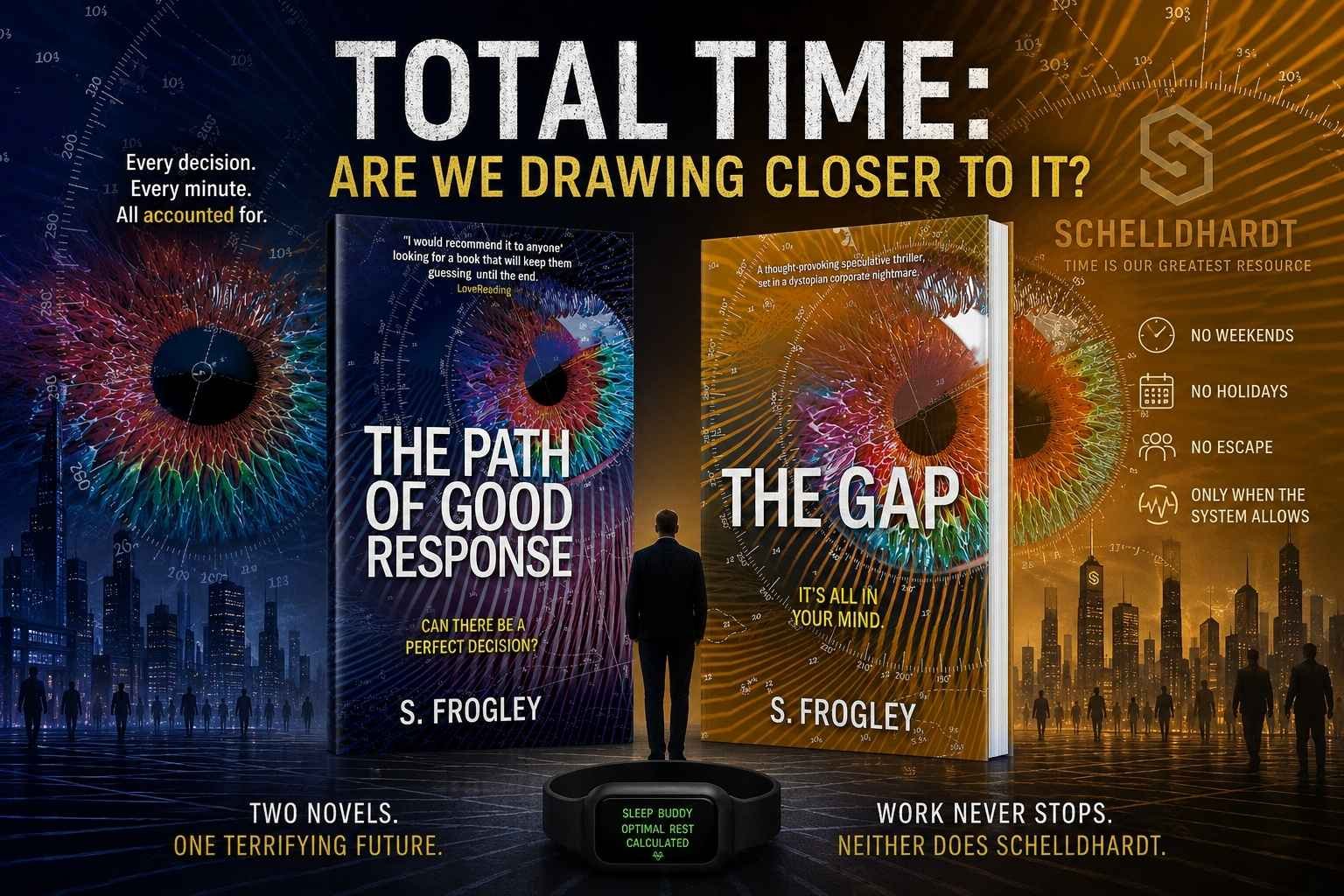
Total Time: Are We Drawing Closer to It?
One of the enduring strengths of dystopian fiction is that it rarely invents entirely new ideas. Instead, it takes existing trends, follows them to their logical conclusion, and asks readers whether the future it depicts is really as impossible as it first appears. George Orwell did not invent surveillance, Aldous Huxley did not invent consumerism, and Margaret Atwood did not invent religious extremism. Each simply imagined what might happen if those forces continued unchecked.
The same question can be asked of Total Time, the fictional employment system operated by Schelldhardt in The Path of Good Response and The Gap. Schelldhardt is the world's largest corporation, one whose relentless pursuit of growth overrides every other consideration. Within its organisation there is no concept of a working day, no weekends, no public holidays and no recognised religious festivals. Christmas Day is simply the twenty-fifth of December. Easter becomes another date in the calendar. Time itself no longer belongs to individuals but to the company.