
How to Find Low Spice Romcoms That Fit

How to Find Low Spice Romcoms That Fit
You know the feeling. You wanted flirtation, banter and a mildly disastrous meet-cute, and instead you’ve somehow wandered into chapter seven wondering whether you missed a memo about everyone being extremely busy in bed. If you’ve been trying to work out how to find low spice romcoms without playing recommendation roulette, the good news is that it gets easier once you know what signs to look for.
The tricky bit is that "low spice" means slightly different things depending on who’s talking. For one reader, it means kisses only. For another, it means open-door scenes are fine as long as they’re brief and not the whole personality of the book. Romcom is slippery too. Some books are romance with a few jokes. Others are genuinely funny, emotionally bright, and built around the sort of dating chaos that makes you text your group chat immediately. So the real job is not just finding low spice. It’s finding your low spice.
How to find low spice romcoms without wasting your weekend
Start by getting weirdly specific with yourself. Not in a spreadsheet way, unless that is your love language, but in a reader-instinct way. Ask what you actually want on the page. Are you after closed-door romance where intimacy fades to black? Are you fine with one or two lightly described scenes if the overall vibe stays sweet? Do you want contemporary dating energy, or something softer and more wholesome?
This matters because recommendation culture tends to flatten everything. A video might call a book "clean" when it really means "not especially explicit", which is not the same thing at all. Another reader might tag something as "no spice" because it felt emotionally gentle, even though there is still on-page intimacy. None of this is malicious. It’s just book internet being book internet.
The best way to cut through that is to build your own filter language. Terms like closed-door, fade-to-black, sweet romance, kisses only, low heat, and minimal spice are often more useful than broad labels. If you search or browse using a cluster of those phrases rather than just one, you tend to get closer to the books you actually want.
Read the reviews, but read them like a detective
Star ratings tell you whether people enjoyed a book. They do not reliably tell you what is in it. If you want to know how to find low spice romcoms, reviews are where the real clues live.
The trick is to ignore the dramatic one-liners and look for pattern recognition. If several reviewers mention "closed-door", "sweet", "nothing too explicit" or "more chemistry than steam", that’s useful. If they say "surprisingly spicy" or "steamier than I expected", believe them. A single comment can be a fluke. Five comments saying the same thing is data.
It also helps to notice who is doing the reviewing. A reader who usually loves very spicy romance may describe a book as tame when it still feels fairly warm to someone else. Meanwhile, a reader who prefers very gentle romance might flag even brief on-page intimacy. Neither person is wrong. They’re just using different internal scales.
That’s why the best review comments are the descriptive ones, not the judgy ones. "There are two open-door scenes late in the book" is gold. "Perfect amount of spice" tells you almost nothing unless that reviewer is somehow your exact literary twin.
Pay attention to publisher copy, but don’t trust it blindly
Blurb language can be surprisingly revealing if you know what to spot. A romcom described as witty, charming, heartwarming, feel-good or full of banter often sits on the lower-spice end, though not always. If the copy leans heavily into obsession, forbidden chemistry, scorching tension or phrases that sound like they should come with a glass of cold water, that is usually a clue that spice is part of the sell.
The important phrase there is usually. Publishing copy is designed to make a book sound irresistible, not to provide a heat-level audit. A sweet romcom can still be marketed with a bit of sizzle because, frankly, sex sells and marketing teams know this. So treat the blurb as one clue, not the final verdict.
If you can sample the first chapter, even better. The tone usually tells on itself quite quickly. Low spice romcoms often foreground voice, awkwardness, humour and emotional chemistry from the jump. If the opening is already serving maximum body-part inventory and charged eye contact that could set off a fire alarm, you may not be heading towards the gentlest of reads.
Follow readers who use the same heat scale as you
This is where your TBR gets less chaotic. Instead of following every account with aesthetically pleasing stacks and immaculate lighting, look for reviewers who describe spice in a way that matches your preferences. If they repeatedly call books low spice and you agree after reading them, congratulations - you’ve found one of your people.
BookTok and Bookstagram are brilliant for discovery, but they do reward drama. The algorithm loves a bold reaction. That means books often get talked about at the extreme ends - either scandalously spicy or aggressively wholesome. In reality, loads of romcoms live in the middle, and those can be harder to spot unless you follow readers who care about nuance.
It helps to save posts from creators whose recommendations have worked for you before. Over time, you’ll notice patterns in the authors, imprints and tropes they mention. That is much more useful than chasing every viral title just because the comments section is losing its mind.
Tropes can help, but they are not a guarantee
Some readers assume certain tropes automatically mean low spice. Not quite. Fake dating, friends to lovers, workplace romance, second chances, enemies to lovers - all of these can be sweet, spicy, or somewhere in between. Trope tells you the setup. It does not tell you the temperature.
That said, tone-heavy romcoms with a strong comedic premise often skew lower on explicit content because they’re more interested in emotional build-up and sparkling dialogue. Books sold on humour, dating mishaps, family interference or social embarrassment are often safer bets than books sold purely on tension.
This is one reason contemporary publishers with a strong feel for reader conversations can be useful to watch. When a publisher clearly understands the difference between a romcom with charm and one with full-throttle heat, their catalogue tends to be easier to browse without nasty little spice surprises.
Use sample pages for the vibe check
Honestly, this might be the most underrated method. If you’re unsure, read a sample. Not because the first pages will include every relevant detail, but because tone is everything in romcom.
Low spice romcoms usually earn their keep through character voice, comic timing and the little humiliations of attraction. You can feel pretty quickly whether a book is trying to make you laugh, make you swoon, or make you fan yourself with the nearest receipt. None of these are illegal, obviously. They’re just different moods.
A sample also tells you whether the humour works for you. This is crucial. A low spice romcom that isn’t funny enough or emotionally sharp enough can feel a bit flat, because it’s not relying on steam to carry momentum. If the voice clicks, you’re far more likely to enjoy the ride.
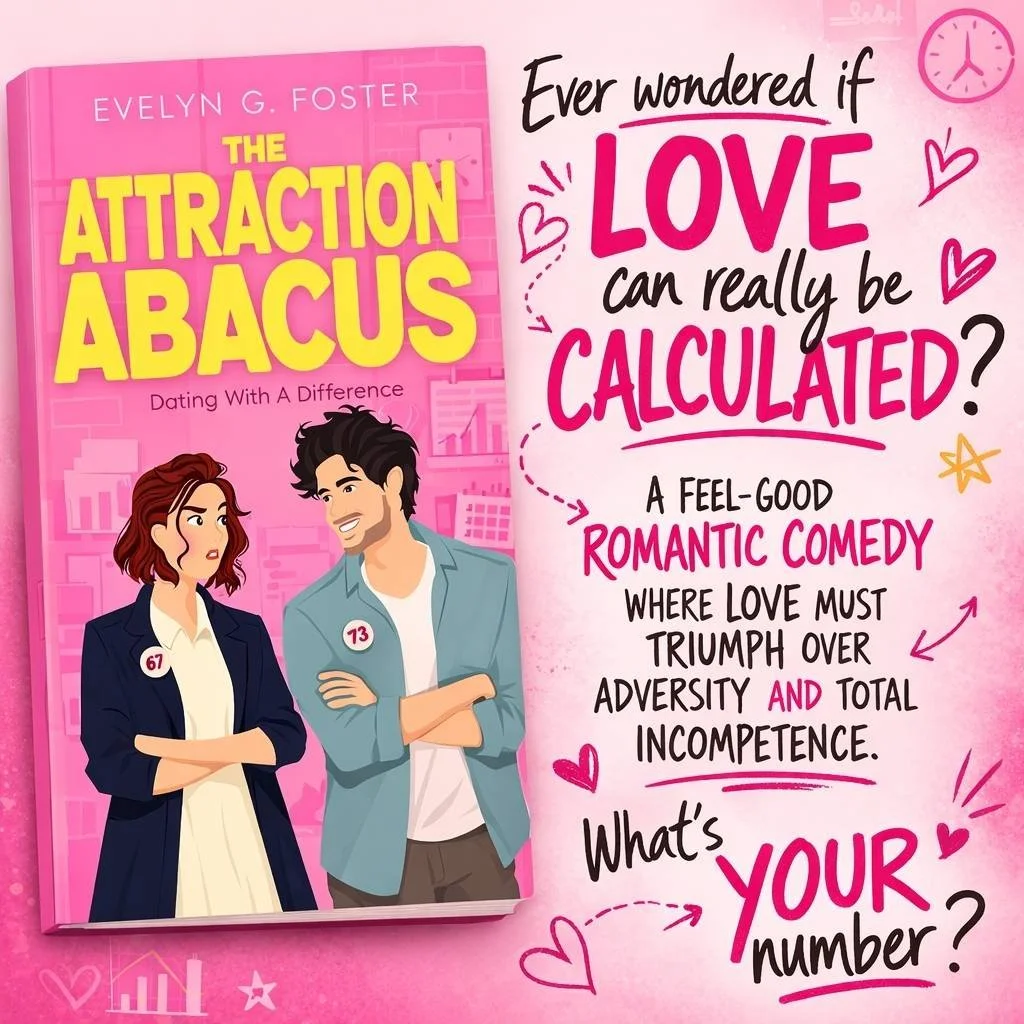
Ad: The Attraction Abacus. A highly recommended low spice rom-com
Search for mood as much as heat
One of the easiest mistakes is focusing so hard on avoiding spice that you forget to search for pleasure. You’re not just ruling things out. You’re trying to find books that actively suit your taste.
So pair heat-level terms with mood words. Search for low spice romcoms that are funny, tender, awkward, cosy, bright, messy, modern, or emotionally satisfying. If you love dating-app chaos, office banter, wedding season disasters or that very specific flavour of "I absolutely cannot fancy this person and yet here we are", include those in your search thinking too.
That’s often how readers end up finding books they actually adore rather than books that merely pass the spice test. A good romcom still needs chemistry. It still needs stakes. It still needs that delicious sense that two people are heading towards each other in the most inconvenient way possible.
Keep a personal heat map
No, this does not need to be serious. Notes app counts. A chaotic screenshot folder counts. The point is to remember what worked.
Make a note of books that felt right and why. Was it fade-to-black? A strong emotional arc? Banter that carried the romance without loads of explicit detail? Also note the books that missed the mark. Maybe they were technically low spice but too saccharine. Maybe they were funny but emotionally thin. Maybe they claimed to be sweet and then took a sharp turn into not-your-thing territory.
After a few reads, your pattern becomes obvious. You’ll start recognising author styles, cover cues, blurb language and reviewer phrasing that align with your taste. That’s when finding the next book gets much less random and much more satisfying.
If you’re after romantic comedy with charm, chemistry and a heat level that doesn’t ambush you, trust your own scale more than the internet’s generic one. The best low spice romcoms are not just less explicit. They’re the books that make you grin, care deeply, and kick your feet a bit without needing to recover afterwards.
