
Can Romance Books Be Funny? Absolutely

Can romance books be funny?
ou know that very specific reading mood where you want butterflies, banter, and at least one line so good you have to message your friend immediately? That is exactly why people keep asking, can romance books be funny? The short answer is yes. Not accidentally funny. Not “this was meant to be serious but the dialogue took me out” funny. Properly, deliciously, rom-com funny.
Romance and humour are a ridiculously good match because they both depend on timing. A look held a beat too long, a text sent to the wrong person, an ex appearing at the worst possible moment, a joke that lands because the characters know each other just well enough to risk it. If romance is all about emotional tension, comedy is often what makes that tension sparkle instead of sag.
Why can romance books be funny so naturally?
Because love is inherently undignified.
People flirt badly. They overthink punctuation. They say “you too” when the waiter tells them to enjoy their meal. They build entire fantasies off one intense eye-contact moment at the office coffee machine. Modern dating is a goldmine for comedy because it is packed with tiny humiliations, mixed signals, chaos, and hope. Romance simply gives all that mess a satisfying emotional arc.
Funny romance works best when the humour grows out of character rather than being sprinkled on top like decorative glitter. A heroine who uses jokes to deflect vulnerability will sound different from a hero who is dry, observant, and slightly too pleased with himself. The laughs need to belong to the people in the story. Otherwise you are not reading a witty romance. You are reading a romance with random one-liners wandering through it.
That is also why the best funny romances still take feelings seriously. If every emotional beat gets undercut by a gag, the story starts to feel flimsy. But when humour sits next to yearning, awkwardness, fear, and proper romantic payoff, it hits harder. The joke makes the ache sharper. The ache makes the joke warmer.
Funny romance is not the same as low-stakes romance
This is where people sometimes get it wrong.
A romance can be laugh-out-loud funny and still have genuine emotional depth. In fact, many of the most beloved romantic comedies work because the characters are dealing with something real beneath the banter - grief, loneliness, bad timing, commitment issues, self-worth, family pressure, the increasingly cursed landscape of app dating. Humour is not there to make the story less meaningful. It is there to make the characters feel more human.
Think of it this way. When a book is all angst, every chapter asks you to stay emotionally braced. That can be brilliant, but it is not always what you want on a Tuesday night when your brain is running on one cup of tea and pure determination. Funny romance offers emotional movement. It can make you laugh, then swoon, then quietly ruin you with one unexpectedly sincere confession.
That tonal range is a strength, not a compromise.
What actually makes a romance book funny?
Not every funny romance uses the same playbook, which is good news if your taste is very specific and mildly judgemental.
Some are funny because the dialogue crackles. This is the banter camp, where chemistry shows up in sharp comebacks, verbal sparring, and people pretending they are not flirting while obviously flirting. If done well, this kind of humour creates romantic tension almost by itself.
Others lean into situational comedy. Forced proximity, fake dating, disastrous weddings, office rivalries, house shares with one bed - yes, the classics endure for a reason. These setups create pressure, and pressure creates comic possibility. Someone is always one bad decision away from humiliation, which is excellent for readers.
Then there is voice-led humour, which is arguably the hardest to fake. This is when the narration itself is witty, self-aware, and so sharply observed that even an ordinary scene becomes funny. A character walking into a party can be a plot point. A character internally narrating that party like it is a slow-motion public relations disaster can be a personality.
Physical comedy can work too, though it is probably the easiest to overdo. One accidental fall into someone’s arms is cute. Five in a row starts to feel like a farce performed in slippery shoes. The sweet spot is usually comedy that reveals character instead of replacing it.
Can romance books be funny without becoming cheesy?
Yes, but this is where tone matters.
Cheesy and funny are not the same thing, though they do occasionally share a postcode. A funny romance feels aware of its own setup. It understands the fantasy but keeps one foot in recognisable human behaviour. A cheesy romance asks you to take a contrived moment at face value. A funny romance lets the characters notice how absurd the moment is, which makes it easier for the reader to go along with it.
That self-awareness is especially important for contemporary romance readers. If you spend any time around BookTok, Bookstagram, or group chats dedicated to fictional men with suspiciously good forearms, you already know readers are tone-sensitive. They can tell when a book is trying too hard to be quirky. They can also tell when a book genuinely understands how ridiculous attraction can make you feel.
So yes, romance books can be funny without tipping into cringe. But they need control. Humour should sharpen the story, not smother it.
The role of spice, or lack of it
Funny romance does not need explicit spice to work. It needs chemistry.
That sounds obvious, but it matters. Some of the funniest romantic books are low-spice or no-spice because the charge comes from anticipation, rhythm, and emotional payoff rather than graphic detail. A loaded exchange across a dinner table can be far more electric than a badly timed explicit scene that kills the comic pace stone dead.
On the other hand, humour can also work beautifully in steamier romance. Sex is vulnerable, bodies are unpredictable, and intimacy often includes moments that are more real because they are a bit awkward. The trick is balance. If the humour makes intimacy feel careless, the romance loses trust. If it makes intimacy feel human, the whole story gets more charming.
For readers who want warmth, chemistry, and genuinely enjoyable character dynamics without needing maximum heat, funny romance often hits the sweet spot. It gives you momentum and payoff without feeling emotionally flat.
Why readers keep coming back to funny romance
Because it is rereadable in a very specific way.
A dark, devastating romance might absolutely own your soul once. A funny romance often becomes the book you reach for when life is being a bit much. It offers escape, yes, but not blank, empty escapism. It gives you recognisable feelings with better timing, snappier dialogue, and a much higher chance of a happy ending.
It is also massively shareable. Readers love quoting funny lines, posting favourite moments, and recommending books that made them both laugh and care. There is something instantly social about comedy. A devastating plot twist gets a stunned reaction. A perfect bit of romantic banter gets sent to the group chat with seven exclamation marks and “THIS is my thing”.
That shareability matters in modern book culture. Books that feel talkable tend to travel further. They become mood recommendations rather than just genre recommendations. Not just “read this if you like romance”, but “read this if you want fake dating, low-stakes chaos, top-tier tension, and at least three moments where you cackle in public”.
Not every romance should be funny, and that is fine
There is no moral superiority in preferring banter over heartbreak.
Some romances are meant to be intense, sweeping, messy, or deeply earnest. For certain stories, a highly comic tone would weaken the emotional stakes. If the premise centres on serious trauma, for example, humour needs a very careful hand. Even in lighter books, what counts as funny is wildly subjective. One reader’s sparkling wit is another’s unbearable smugness.
That is why “funny romance” is less a fixed category and more a tonal promise. It tells you something about the reading experience, but not everything. You still need to know whether the humour is dry, chaotic, awkward, satirical, warm, or full rom-com energy. You still need to know whether the emotional core is soft and cosy or secretly devastating in a cute outfit.
The good news is that contemporary romance has room for all of it. If your ideal book is emotionally intelligent, current, and actually entertaining, there has never been a better time to be picky.
So, can romance books be funny and still feel romantic?
Honestly, they often feel more romantic because they are funny.
Humour creates intimacy. It shows how two people pay attention to each other. It reveals confidence, awkwardness, affection, and chemistry in motion. When two characters can make each other laugh, the relationship starts to feel lived in rather than merely declared. You are not just told they are compatible. You can hear it.
That is part of the charm behind books that blend dating chaos, emotional honesty, and comic timing - the sort of stories that know modern romance is equal parts yearning and nonsense. Heptagon Books’ The Attraction Abacus sits neatly in that conversation, where attraction is real, feelings are messy, and humour is not a side dish but part of the main event.
So if you have ever wondered whether a romance novel can give you proper swoon and make you snort tea through your nose, the answer is yes. It absolutely can. In the right hands, funny romance does not weaken the love story. It makes it feel quicker, brighter, more intimate, and a lot more like the weird little emotional circus of falling for someone in real life.
Pick the books that understand your sense of humour, not just your favourite trope. That is usually where the magic starts.
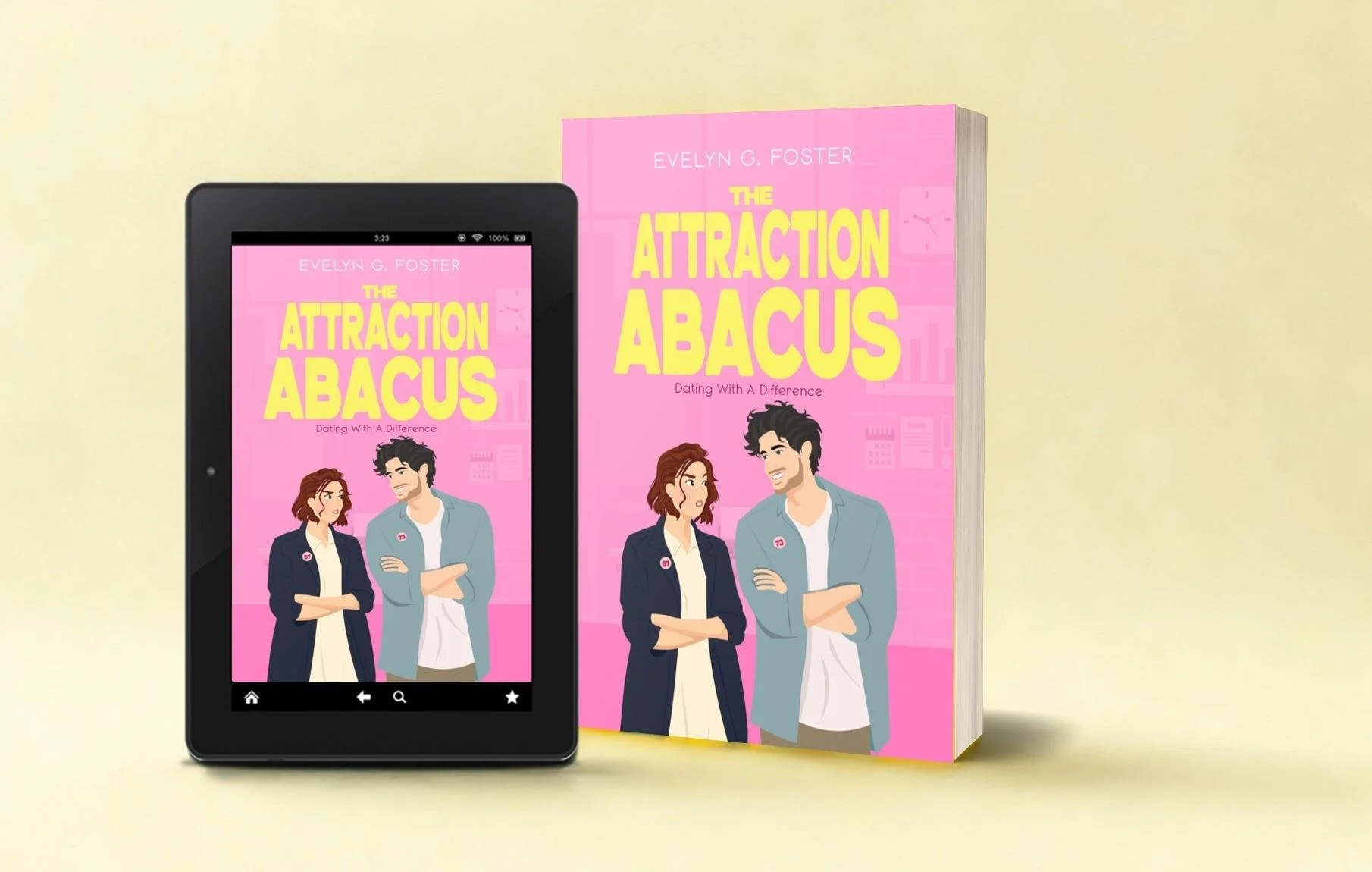
Ad: The Attraction Abacus successfully combines love and laughter.
