
Rom Com Versus Women’s Fiction

Rom com versus women’s fiction.
You know that moment when a book is sold as a rom com, but halfway through you realise the romance is barely driving the plot and you are actually reading a story about a woman rebuilding her entire life? That, right there, is the rom com versus women’s fiction debate in the wild. And yes, it matters - especially if you are trying to avoid a mood mismatch that leaves you staring at the cover thinking, this is not what I signed up for.
Genre labels are not just publishing admin. They are reader promises. If you pick up a rom com, you are usually expecting chemistry, banter, romantic momentum, and an ending that feels emotionally satisfying on the love-story front. If you pick up women’s fiction, the promise is often broader. Love may be there, but so are identity, work, family, friendship, grief, reinvention, and the occasional absolute life wobble.
Rom com versus women’s fiction: the core difference
The cleanest way to separate them is this: in a rom com, the romance is the main event. In women’s fiction, a woman’s personal journey is the main event.
That sounds neat and tidy, but books are rarely that obedient. Plenty of contemporary novels sit in the overlap. A funny, warm story about a woman starting over after a breakup can feel rom-com coded on the surface while actually behaving more like women’s fiction underneath. The key question is not just, is there romance? It is, what is the story ultimately about?
If removing the romance would collapse the entire plot, you are probably in rom com territory. If removing the romance would still leave you with a fully formed narrative about career, family, friendship, motherhood, divorce, confidence, or self-worth, that leans more towards women’s fiction.
What makes a rom com a rom com?
A rom com is built around romantic tension and comic energy. That does not mean every page has to be laugh-out-loud funny, or that the story has to be all fluff and no feelings. The best romantic comedies usually have emotional stakes underneath the sparkle. But they still know exactly what readers came for.
You will often find a clearer romantic arc, recognisable tropes, and a stronger sense of forward movement towards a relationship payoff. Think fake dating, enemies to lovers, workplace chaos, disastrous first impressions, accidental proximity, or two people who are plainly down bad but insist on making it everyone’s problem first.
The tone matters too. Rom coms are usually lighter on their feet, even when they tackle serious material. They tend to prioritise charm, pace, and romantic escalation. You are meant to feel the fizz.
That said, not every rom com is low-stakes or frothy. Some are sharp, vulnerable, and surprisingly bruised. The difference is that the love story still sits at the centre and gets proper narrative weight.
Common rom com signals
A rom com often gives you a dual focus on two people, a strong meet-cute or anti-meet-cute, and a plot that keeps throwing obstacles at the relationship. The emotional question is usually, will they get together and how?
You are also more likely to see readers talking about chemistry, trope execution, tension, and whether the ending delivered. That is the currency of the category.
What counts as women’s fiction now?
Women’s fiction is one of those labels that can feel both useful and slightly slippery. In the broadest sense, it centres women’s lives, choices, pressures, and transformations. Romance might be present, but it is not automatically the engine. Sometimes it is a subplot. Sometimes it is part of a wider emotional ecosystem. Sometimes it is a complete car crash that exists mainly to push the heroine towards a bigger reckoning.
Modern women’s fiction can be funny, romantic, heartbreaking, or all three before chapter ten. It may follow a woman through a divorce, a career reset, caring responsibilities, dating after loss, friendship fallout, or the weird identity blur that happens when the life you thought you were building quietly evaporates.
This is where a lot of book-club favourites live. These books are often less interested in the question of who she ends up with and more interested in who she becomes.
Common women’s fiction signals
The emotional centre is usually internal rather than purely romantic. There may be more space for family history, friendship dynamics, work struggles, and personal reinvention. The ending does not need to revolve around coupledom to feel complete.
That does not make the category anti-romance. Far from it. It simply means the character arc has a wider frame.
Why the two genres get muddled
Because contemporary publishing loves a blurry border, and readers love a relatable setup with a bit of everything.
A lot of books are marketed with rom-com styling because it is punchy, discoverable, and instantly legible online. Bright cover. Flirty title. Cute premise. You can practically hear Bookstagram typing “for fans of chaos and yearning”. But inside, the novel might be doing something more expansive and emotionally layered than a straightforward romantic comedy.
That is not a bad thing. It only becomes a problem when the packaging suggests one reading experience and the book delivers another. If you wanted high banter and got a quiet story about grief, or you wanted a rich character journey and got mostly kissing logistics, disappointment is fairly inevitable.
This is why reader language has become so specific. People do not just want to know whether a book is romantic. They want to know if it is funny, soft, messy, healing, low spice, second-chance, breakup-heavy, friendship-rich, and whether the ending is genuinely romantic or merely emotionally neat.
Which one should you pick?
It depends on the mood, honestly. If you want pure narrative propulsion, flirtation, and a guaranteed focus on the love story, go rom com. If you want a broader emotional canvas with romance as part of the picture rather than the whole picture, women’s fiction may hit harder.
If your current reading mood is “please give me chemistry, wit, and a payoff that rewards my emotional investment”, a rom com is probably the safer bet. If your mood is “I want to feel slightly seen, slightly attacked, and then weirdly comforted”, women’s fiction tends to deliver.
This is also where spice expectations come in. Not always, but often, rom com readers are specifically shopping for romantic content and will care more about heat level and on-page relationship development. Women’s fiction readers may still care about that, but they are often equally interested in voice, emotional truth, and how convincingly the protagonist’s wider life is handled.
Rom com versus women’s fiction in current reader culture
Online reader culture has made the distinction more visible because everyone is now tagging, shelving, and reviewing according to vibe as much as genre. A book can be technically one thing and still be recommended as another if the emotional experience overlaps.
That is why phrases like “romance-adjacent”, “more women’s fiction than rom com”, or “has romantic elements but isn’t a capital-R Romance” keep popping up. Readers are trying to warn each other kindly. They are saying: manage your expectations before you commit your weekend.
There is also a wider shift towards stories that mix levity with real-life pressure. Readers increasingly want books that are entertaining without being empty. They want dating plots with actual emotional stakes, funny prose with a pulse, and heroines whose lives do not stop existing the minute a love interest enters the room.
That overlap space is exactly why so many contemporary books feel hard to label and very easy to recommend.
The overlap is not the enemy
Some of the most satisfying contemporary fiction lives in the middle. It has the readability and romantic pull of a rom com, with the emotional depth and life texture of women’s fiction. For a lot of readers, that is the sweet spot.
A book like that can give you sparkling dialogue, a compelling love story, and a heroine dealing with work, family, self-image, or the fallout of previous choices. It does not ask you to choose between fun and substance. It just expects you to enjoy both.
That is also why strict gatekeeping around labels can feel a bit beside the point. Genre matters because it helps readers find what they want. But the best question is not always, what shelf does it belong on? Sometimes it is, what kind of emotional ride am I about to get?
For publishers with a sharp eye on what modern readers are actually asking for, that question matters more than ever. It is not enough to say a book is for romance fans. Readers want the finer detail. They want to know if it is breezy or bruised, tropey or introspective, kiss-first or identity-first.
And frankly, fair enough.
If you are stuck on rom com versus women’s fiction, treat it less like a battle and more like a filter. Ask what the story centres, what kind of payoff you want, and whether you are in the mood for romantic fireworks or a fuller portrait of a woman’s life. The right book is usually the one that meets your mood honestly rather than the one with the prettiest label.
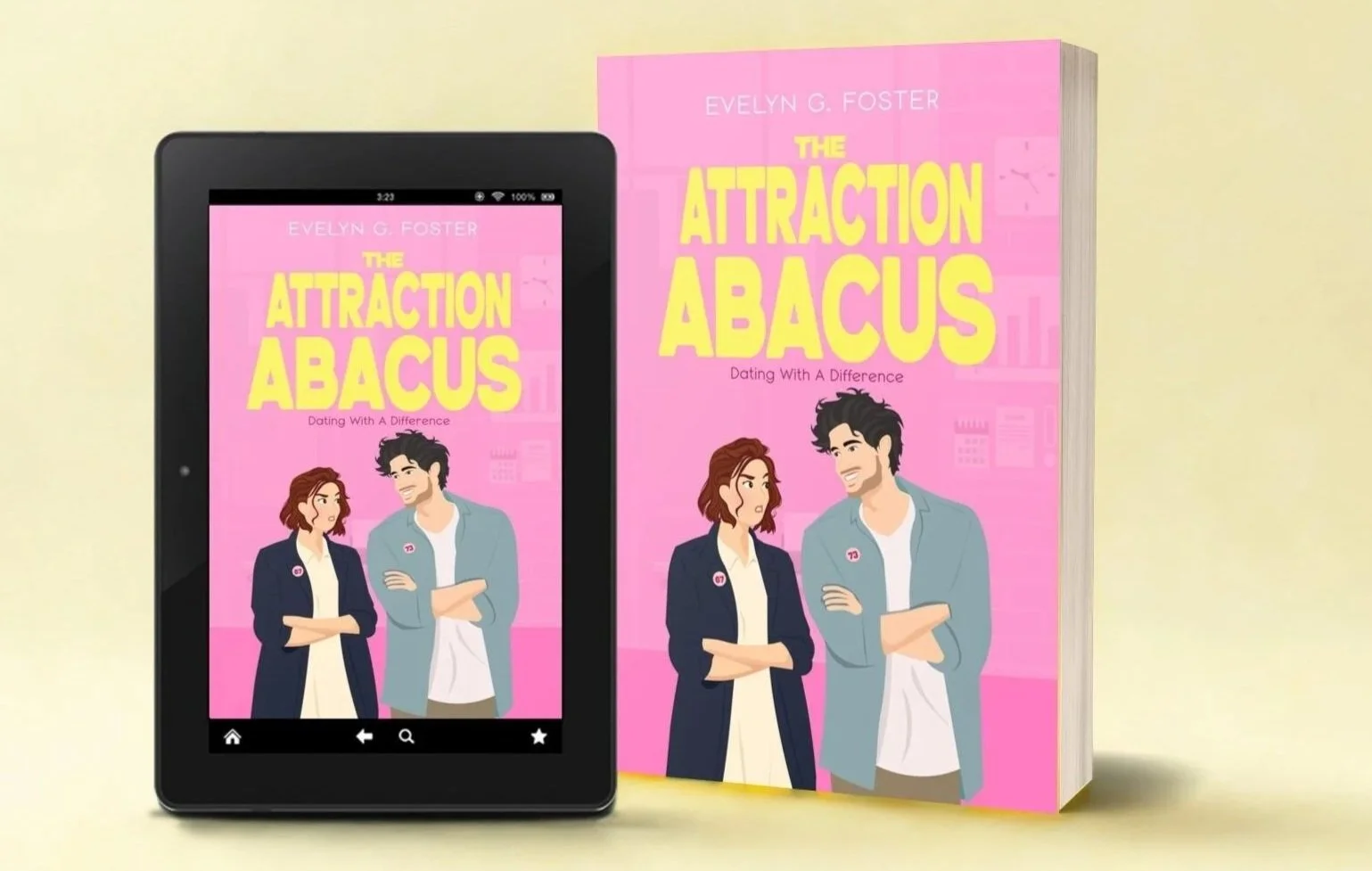
Ad: The Attraction Abacus. A smart new rom com
