
How to Discover Indie Love Stories
Discovering indie love stories
If your reading life currently looks like twenty tabs open, a notes app full of vaguely promising titles, and one very specific craving for a romance that is funny, tender, not wildly overhyped, and perhaps a touch off the beaten path, you are not alone. Figuring out how to discover indie love stories can feel oddly harder than finding mainstream romance, mostly because the good stuff is there, just not always being shouted about by the biggest marketing machine in the room.
That is also the appeal. Indie love stories often feel more personal, more specific, and more willing to take risks with voice, structure, character quirks, and emotional texture. They can be softer, stranger, sharper, funnier, lower-spice, higher-angst, or gloriously tropey in a way that feels made for actual readers rather than a broad algorithm. The trick is knowing where to look, and just as importantly, how to filter what you find.
How to discover indie love stories without wasting your TBR
The first thing to know is that finding indie romance is less about searching for the word indie and more about searching for your taste. If you go in too broad, you will get buried under generic recommendations and books that technically fit the category but absolutely not your mood.
Start with the language readers already use when they talk about romance online. Search by tropes, yes, but also by tone. There is a real difference between enemies to lovers with sharp banter and enemies to lovers with emotional devastation and one rain-soaked apology outside a train station. Both valid. Very different reading nights.
Terms like low spice, closed door, dating chaos, romcom energy, soft romance, slow burn, messy heroine, emotionally intelligent hero, and millennial dating fiction can tell you more than broad genre labels ever will. Indie books are often surfaced through this kind of reader shorthand because that is how real recommendation culture works now. People are not saying, here is a professionally categorised contemporary romantic narrative. They are saying, this made me laugh, then panic, then kick my feet.
That is useful data.
Follow readers, not just big accounts
A lot of people make the same mistake here. They follow massive BookTok or Bookstagram creators, save forty recommendations, and then wonder why half the books do not suit them. Bigger accounts can be great for visibility, but if you want indie gems, mid-sized and niche creators are often where the real gold is hiding.
Look for readers whose taste is oddly specific in the same way yours is. Maybe they love witty contemporary romance with low-to-no spice. Maybe they only post about books with excellent text message chemistry. Maybe they are ruthless about cringe banter and suspicious third-act break-ups. Perfect. Those are your people.
Once you find one account that gets your taste right, do not just look at the latest post. Scan their reading round-ups, story highlights, monthly favourites, and comments. Pay attention to how they describe books they did and did not like. A reviewer saying this was too twee for me might send someone else running, but for you it could be a green flag the size of Yorkshire.
The point is not to collect more recommendations. It is to build a better recommendation filter.
Use tropes as a map, not a personality test
Tropes are brilliant for discovery, but they do have limits. Fake dating, friends to lovers, forced proximity, second chance, grumpy sunshine - all useful, all dangerously incomplete.
An indie love story can hit your favourite trope and still miss the emotional mark by miles. Why? Because trope is only one part of the reading experience. Tone matters. Pacing matters. Voice matters. So does the author's idea of chemistry, which is sometimes immaculate and sometimes apparently two people standing in a room being good-looking at each other.
When you search, pair tropes with mood. Try fake dating romcom, slow burn low spice, second chance funny not tragic, or workplace romance with banter. If you want books that feel current, add terms around modern dating, app culture, awkward adulthood, or relationship realism. That is often where indie fiction shines - not just in giving you the trope, but in making it feel lived-in and recognisably human.
How to discover indie love stories through publisher and author signals
This is the slightly nosy but highly effective route. Small independent publishers and indie authors tend to tell you quite a lot if you know what to notice.
Read the blurb, obviously, but also pay attention to how the book is being talked about. Is the focus on heat level, humour, yearning, chaos, emotional depth, or trope satisfaction? Does the cover suggest bright romcom energy, soft contemporary intimacy, or full emotional collapse in hardback form? Covers are not everything, but they are not random either.
You can also learn a lot from the author's own posts or publisher copy. Some are very clear about the reading experience they are offering. If a book is being positioned around dating disasters, sharp dialogue, and a satisfying romantic payoff, that tells you one thing. If it is all heartbreak, healing, and lyrical longing, that tells you another.
For readers who are tired of guessing, this matters. One of the nicest things about the indie space is that it often feels closer to the reader. Less corporate mystery, more actual clues.
This is also where a focused independent publisher can be useful, because curation saves time. Heptagon Books, for example, leans into contemporary relationship fiction with an eye on how readers actually describe what they want, which is much more helpful than pretending every romance reader is after the same thing.
Reviews help, but only if you read them properly
Five stars from a stranger means very little on its own. Five stars because the book delivered crackling banter, believable emotional vulnerability, and a low-spice romance that still had absurd levels of chemistry? Now we are getting somewhere.
The best review-reading strategy is to ignore the score first and read for patterns. If several readers mention warm humour, grounded dating dynamics, or a genuinely satisfying ending, those are stronger signals than a raw average rating. The same goes for repeated warnings. If lots of readers say the pacing is slow, ask yourself whether that means boring or gorgeously simmering. Those are not the same thing, despite what the impatient corners of the internet may claim.
A good review section can also reveal comparable titles or moods without forcing the book into lazy sameness. You are not looking for exact replicas of your favourite mainstream hits. You are looking for adjacent pleasure.
Go where the conversation is slightly smaller
If the biggest online spaces feel noisy, that is because they are. Indie love stories often travel best through smaller recommendation ecosystems where readers are swapping genuinely personal favourites rather than performing hot takes for attention.
That might mean niche romance Facebook groups, smaller Substack-style reading communities, Discord servers, or comment sections where people are actually talking to each other instead of just posting reaction gifs and moving on. The exact platform matters less than the quality of the conversation.
You want spaces where readers say things like, I loved this because the heroine was a mess in a very specific late-twenties way, or this is technically low spice but the tension had me staring at a wall. That level of detail is where useful discovery lives.
Smaller communities are also better at surfacing books before they become impossible to borrow from the library or mysteriously double in price because everyone online got there first.
Accept that indie means variety, not perfection
Here is the honest bit. Indie books can be exciting precisely because they are not all built to the same market-safe formula. That means more originality, but it can also mean more variation in pacing, editing style, structure, and experimentation.
Sometimes that is exactly what makes a book memorable. Sometimes it means a brilliant premise with a slightly wobbly middle. If you only want polish in the most conventional sense, you may miss books with huge charm, emotional freshness, or a voice that feels startlingly alive.
It depends on what you value most. Some readers want immaculate plotting. Others will forgive a lot for chemistry, heart, and one scene that alters their brain chemistry for a week. Neither approach is wrong. It just helps to know which reader you are before you start hunting.
Build your own micro-niche
The fastest way to get better at discovering indie romance is to stop thinking of yourself as someone who likes romance and start thinking more specifically. You like low-spice contemporary stories with wit and emotional payoff. You like modern dating set-ups with actual adult problems. You like pining but not melodrama. You like heroines with jobs, friends, and at least one terrible decision in chapter three.
Once you know your micro-niche, searching becomes easier, recommendations become sharper, and your DNFs start dropping. You are no longer asking the internet for a love story. You are asking for your kind of love story.
That shift changes everything.
The best indie romances rarely arrive with a brass band. More often, they turn up because one smart reader said, trust me, this one gets it. If you follow those breadcrumbs, stay honest about your taste, and let the smaller, sharper recommendations lead, your next favourite might be much closer than your overstuffed TBR suggests.
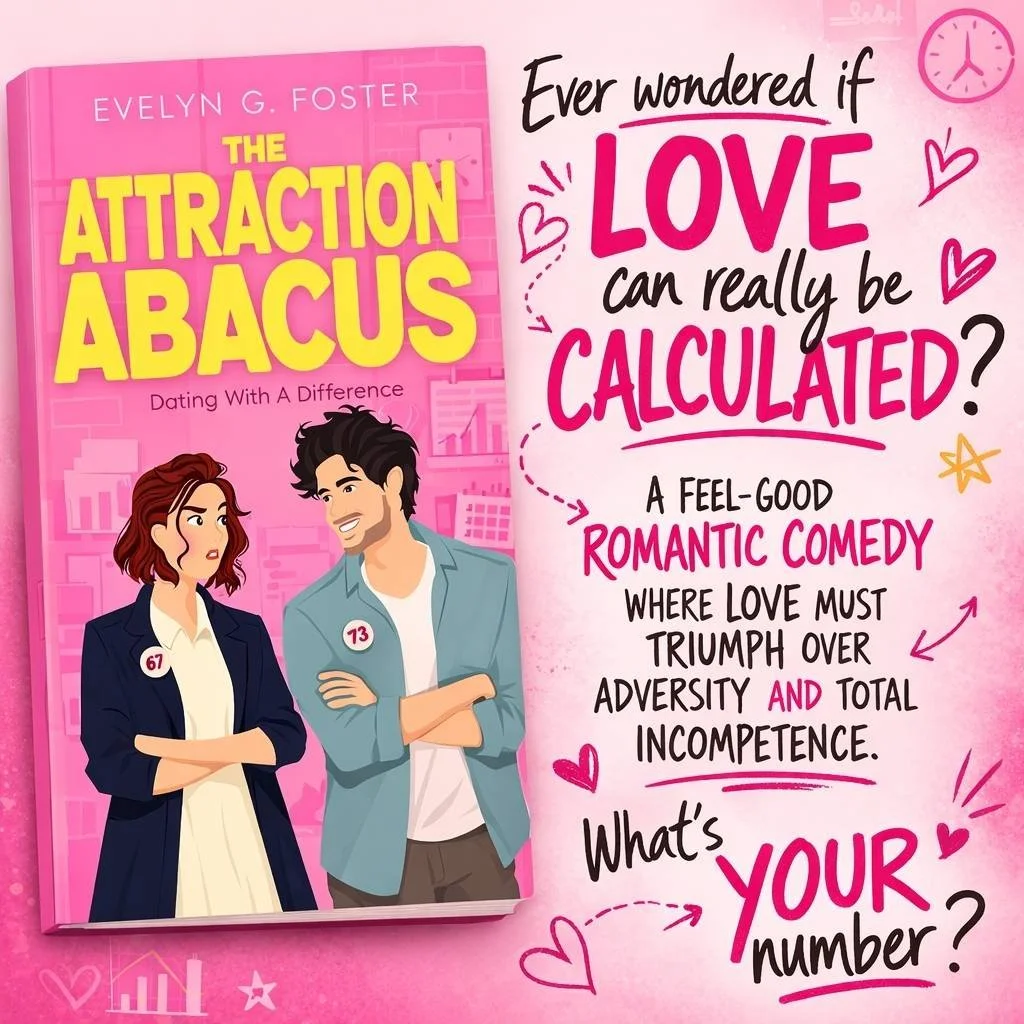
Ad: The Attraction Abacus. A fake-dating, workplace, indie romcom.
