
Are Dating App Novels Relatable? Usually, Yes
Dating App Novels. Relatable?
Are dating app novels relatable? If you have ever stared at a message reading “Hey, how’s your week going?” and somehow felt both flattered and mildly offended, the answer is a fairly emphatic yes. The good ones understand that modern dating is not just candlelit restaurants and fated glances across a crowded room. It is voice notes to the group chat, accidentally swiping past someone you actually fancied, and wondering whether a full stop means they are emotionally unavailable.
That does not mean every dating app romance will feel like it has borrowed your actual Hinge profile. Nor should it. Fiction needs a little more momentum than three days of low-stakes chat followed by someone vanishing after asking what you do for work. But the best novels use the strange, funny, occasionally soul-tickling mechanics of app dating to tell a recognisable story about hope, connection and trying not to overthink an emoji.
Why Dating App Novels Feel So Familiar
Dating apps have given romance fiction a ready-made language of uncertainty. In a traditional love story, characters might wonder whether the other person feels the same. In a dating app novel, they can wonder that too, while also decoding a delayed reply, a changed location radius and a bio that says “just ask”. The emotional core is classic romance. The delivery system is very much 2026.
Readers recognise the tiny rituals because they live them. There is the careful selection of photos, where one mate insists the holiday picture is “too try-hard” and another says it is clearly your strongest option. There is the first-date outfit crisis. There is the post-date analysis, conducted with the forensic intensity of a true-crime documentary, despite the only evidence being that they said they got home safely.
A relatable novel does not need to recreate every feature of an app screen. It needs to understand the feeling behind it: that dating can be wildly efficient and oddly exposing at the same time. You are technically choosing from a pool of strangers, yet one lukewarm conversation can still make you question your entire personality.
The Comedy is Real, but so are The Stakes
Modern dating fiction works best when it does not treat apps as a punchline alone. Yes, people will laugh at the man posing with a sedated tiger or the woman whose profile says she wants “someone who does not take themselves too seriously” immediately before listing 27 requirements. That material is gold, frankly.
But dating apps can also sharpen the emotional stakes. They create choice fatigue, comparison and that particularly modern fear that someone better may be one swipe away. Even when a promising connection appears, it can feel tempting to keep browsing. Not because someone is heartless, but because the app has trained them to think in possibilities rather than people.
This is where a good dating app novel earns its emotional payoff. It lets characters be messy without making them ridiculous. A heroine may keep her guard up after a string of disappointing dates. A hero may confuse being funny in a chat with being capable of genuine vulnerability. Neither needs to be perfect. In fact, if they arrive fully emotionally evolved with excellent communication skills, readers may begin to suspect they have been replaced by pod people.
The group chat deserves a supporting actor award
One reason these stories land is that app dating rarely happens in isolation. It is a social sport, complete with screenshots, emergency calls and friends who say, “I hate him,” after seeing one message with no punctuation.
A sharp romance novel makes room for this. Friends are not simply there to deliver a pep talk before chapter 28. They reflect the way readers actually date now: collectively, loudly and with a rotating panel of unpaid advisers. The group chat can be supportive, chaotic, occasionally terrible at giving advice and still completely essential.
That sense of community also makes the romantic stakes more believable. A disappointing date is not just a plot obstacle. It can touch on loneliness, confidence and the exhausting feeling of having to start from scratch again. When a character returns to their friends afterwards, pretending they are fine while ordering chips, it feels true because it is true for so many people.
Are Dating App Novels Relatable to Everyone?
Not automatically. Relatability is not the same thing as a catalogue of app disasters. Some readers met their partner before swiping became a daily habit. Others have deleted every app with the solemnity of throwing a cursed object into the sea. Some are happily single and would rather read about dragons, haunted houses or a billionaire with suspiciously good hair.
Yet the wider themes can still connect. Dating app novels are usually about the desire to be chosen without having to perform a polished, marketable version of yourself. They are about timing, mixed signals, self-protection and the nerve required to say what you want. You do not need to know your way around a prompt to understand any of that.
It also depends on tone. A full-on romcom might exaggerate the app experience, turning one disastrous date into an elaborate public humiliation involving a rescue dog and a kebab shop. That can be deliciously escapist. A more grounded contemporary romance may sit closer to the emotional reality of dating burnout and rejection. Neither approach is inherently more relatable. It comes down to whether the book understands its own deal.
Readers seeking low-to-no spice romances may also find dating app novels especially satisfying. The premise naturally creates space for banter, slow trust and the spark of discovering who somebody is beyond their best six photos. Chemistry does not require a heat level that sets off the smoke alarm. Sometimes a well-timed message, a terrible first date that improves dramatically, or someone remembering a throwaway detail is more than enough.
What Makes the Best Dating App Romance Work
The strongest books avoid two traps. The first is making the app so villainous that everyone using it seems shallow, foolish or doomed. Apps are tools, not cartoon antagonists. They can create bad behaviour, certainly, but they can also introduce people who would never have crossed paths otherwise.
The second trap is pretending that one good match magically cures every insecurity. A relationship can be joyful, but it is not a personality transplant. Readers want the satisfying swoon, obviously. They also want characters who make choices, learn something about themselves and do not mistake a charming profile for proof of emotional availability.
A book such as The Attraction Abacus speaks to this appetite for romance with a contemporary pulse: the sense that attraction can be analysed, resisted and completely ruined by an inconveniently real feeling. The app may set events in motion, but it is the human complication that keeps pages turning.
There is also a particular pleasure in seeing the familiar made fictional. A reader can recognise the dread of a first date without having to personally sit through it. They can enjoy a bad opener because it is happening to someone else. They can watch two people misread each other, then find their way back, from the safety of a blanket and a cup of tea. That is not escapism versus realism. It is both, which is rather the point.
The Fantasy Is Not That Dating Is Easy
The most relatable dating app novels do not sell the fantasy that a perfect match will appear after three swipes and a witty response to “What’s your ideal Sunday?” Their better fantasy is subtler: that being honest may be worth the risk, that a bad date is not a verdict on your future, and that someone can see the real person beneath the carefully curated profile.
Modern dating can be absurd, tender, tedious, thrilling and deeply funny before breakfast. Fiction that captures all of that is doing more than chasing a trend. It is giving readers a place to laugh at the chaos, feel less alone in it, and perhaps believe that the next message could be worth opening.
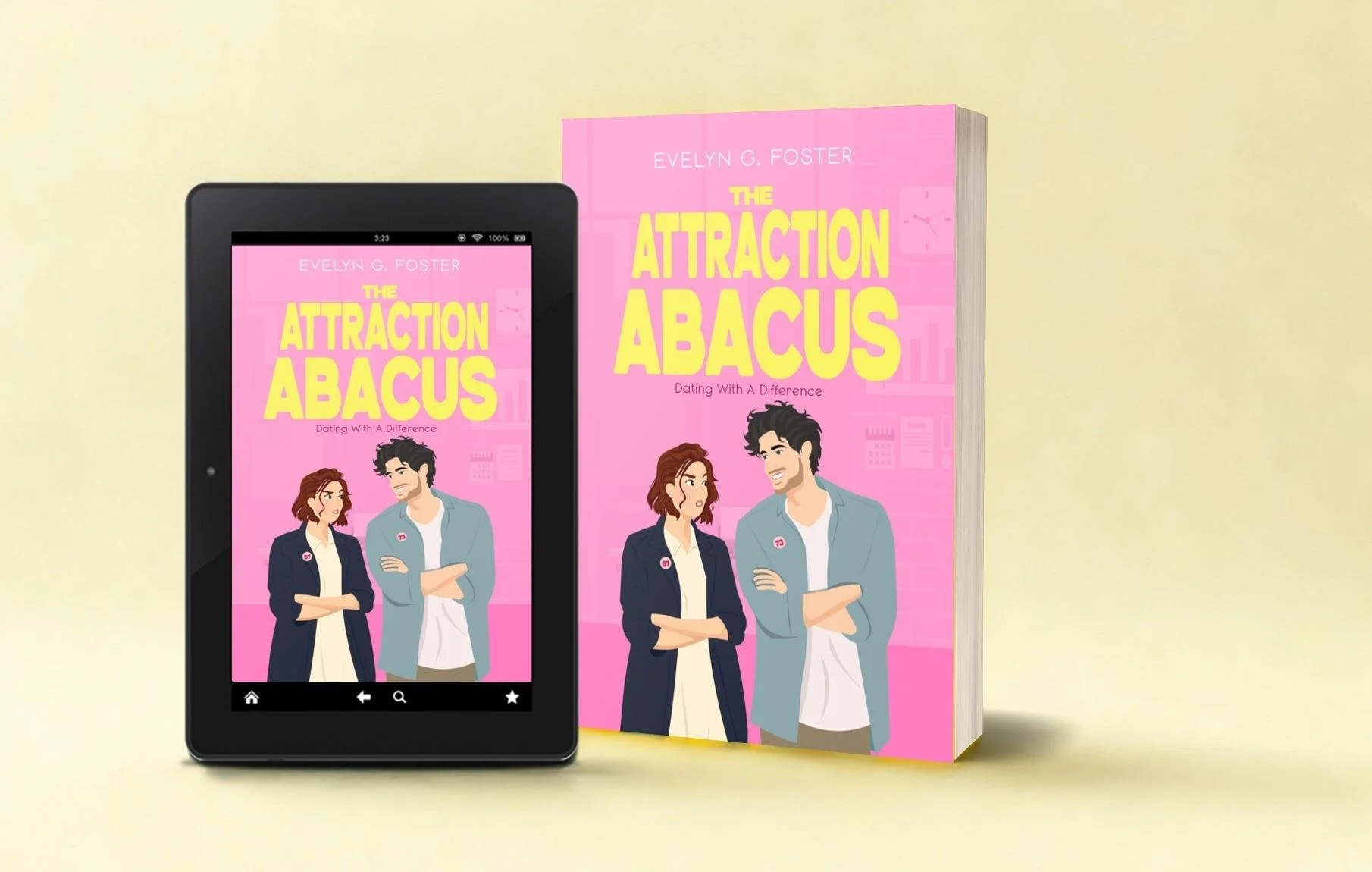
Ad: The Attraction Abacus. A hilarious parody of dating apps.
