
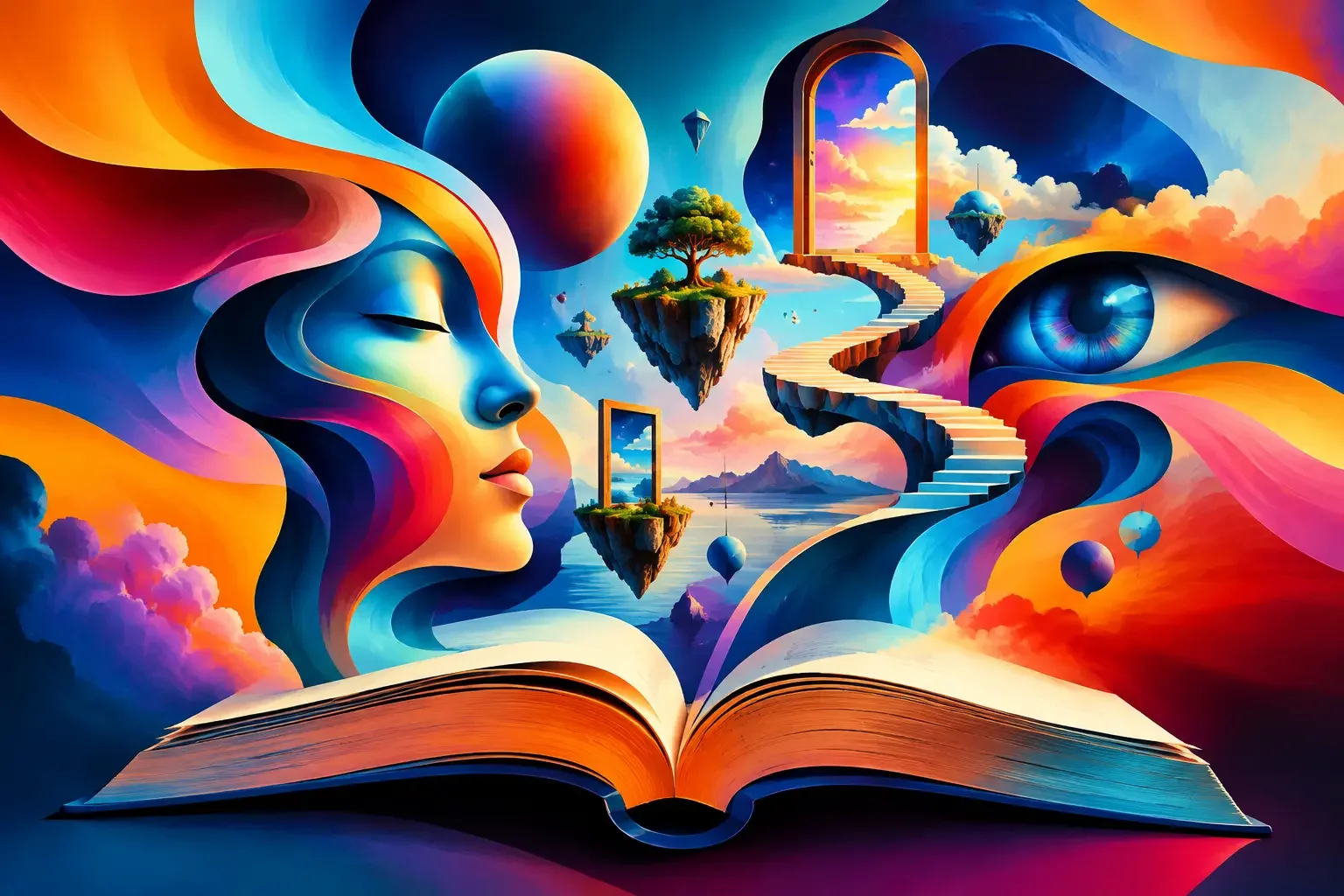
Looking for the best surrealist fiction?
There is a particular kind of reading mood when a tidy detective plot simply will not do. You want the carpet to start talking, the moon to become suspicious, and one perfectly normal decision to send reality wobbling off its axis. The best surrealist fiction does not merely get weird for the aesthetic. It makes the weirdness feel emotionally precise.
Surrealist fiction turns dreams, dread, desire and power into plot machinery. It can be hilarious, horrifying, tender, political, or all four before lunch.
What makes the best surrealist fiction work?
Surrealism is often used as shorthand for anything quirky. That is doing the genre a disservice. A random talking cat is not automatically surrealism. A talking cat that exposes the logic of grief, consumerism or an authoritarian state? Now we are getting somewhere.
At its sharpest, surrealist fiction places the irrational beside the everyday and refuses to explain the mismatch away. Characters may accept impossible events with unnerving calm, while readers are left doing the emotional detective work. The effect is not always a puzzle to solve. Sometimes it is a feeling to sit with, like waking from a dream and realising you are still upset with someone who turned into a door.
There is overlap with magical realism, speculative fiction and literary horror, but the flavour differs. Magical realism often treats the extraordinary as part of a social reality. Surrealist fiction is more likely to scramble reality itself. It asks what happens when the rules are not hidden, but absent.
12 best surrealist fiction books for your next reality glitch
This is not a strict ranking. Choosing a single "best" surrealist novel is a bit like choosing the best cloud: defensible, perhaps, but likely to start an argument. Consider these twelve different entry points into beautifully disorientating fiction.
The Metamorphosis by Franz Kafka
Gregory Samsa wakes up transformed into a giant insect, which is admittedly a difficult start to a Monday. Kafka’s genius is that the real nightmare is not the transformation but the family’s response to it. The novella is bleak, absurd and painfully funny about work, shame and the ways people become inconvenient to those who claim to love them.
The Master and Margarita by Mikhail Bulgakov
The Devil arrives in Moscow with a talking cat, a theatrical entourage and absolutely no interest in behaving discreetly. Bulgakov blends satire of Soviet bureaucracy with a love story, a biblical parallel narrative and gloriously escalating chaos. It is a big, unruly book, but that is the pleasure. Few novels make corruption look quite so ridiculous or the supernatural feel so socially observant.
The Hearing Trumpet by Leonora Carrington
A 92-year-old woman discovers that her family plans to send her to a peculiar care home. From there, Carrington lets rip: occult rituals, werewolves, feminist revolt and the end of the world all become possible. It is wildly inventive and properly funny, with zero patience for anyone who mistakes elderly women for background furniture.
The Third Policeman by Flann O’Brien
If you like your existential dread with bicycles, black humour and equations that make no scientific sense whatsoever, this is your book. An unnamed narrator enters a bizarre police station where time loops, identities slip and atomic theory has taken a very odd turn. O’Brien’s deadpan voice keeps the madness crisp. Think of it as a fever dream written by someone with excellent comic timing.
The Woman in the Dunes by Kōbō Abe
An amateur entomologist goes searching for insects and ends up trapped in a pit with a woman who must shovel sand every night to survive. The premise is simple; the atmosphere is not. Abe turns heat, grit and routine into an existential pressure cooker. It is claustrophobic, sensual and increasingly strange, particularly for readers who enjoy stories where systems quietly become prisons.
The Passion According to G.H. by Clarice Lispector
A wealthy woman enters her maid’s former room, sees a cockroach and experiences a complete collapse of the self. No, really. Lispector takes an apparently small encounter and makes it cosmic, philosophical and viscerally unsettling. This is intense, inward-looking fiction rather than plot-heavy fiction, ideal when you want a book that stares directly into the abyss and then asks whether the abyss has always lived in your kitchen.
If on a winter’s night a traveller by Italo Calvino
You open a novel. Then you are interrupted. You start another novel. Then that is interrupted too. Calvino turns the act of reading into a playful, frustrating and very clever labyrinth, casting you as the protagonist. It is less dreamlike than some choices here, but its shifting realities and mischievous logic make it catnip for readers who enjoy fiction aware of its own machinery.
Hard-Boiled Wonderland and the End of the World by Haruki Murakami
Murakami splits this novel between a noir-ish Tokyo of data processing, sinister organisations and subterranean threats, and a walled town where people lose their shadows. The two strands initially feel unrelated, then begin to exert a quiet gravitational pull on one another. It is melancholic, cool and deeply interested in consciousness, memory and the cost of a perfectly controlled life.
The Memory Police by Yōko Ogawa
On an unnamed island, objects disappear. Then the memories attached to them disappear too. Most residents comply, while a secret police force hunts people who can still remember. Ogawa’s prose is calm enough to make the premise more chilling, not less. Readers drawn to dystopian fiction with blurred reality will find a quietly devastating meditation on state control and what remains when language thins out.
Piranesi by Susanna Clarke
Piranesi lives in a vast House of endless halls, tides and statues. He records its wonders faithfully, speaks to an elusive Other and gradually uncovers evidence that his world may not be what he thinks. This is the gentlest entry on the list, at least at first. Its strange setting is gorgeous rather than grim, but the emotional payoff lands with real force.
Bunny by Mona Awad
A lonely postgraduate writer is invited into the orbit of a clique of hyper-feminine, hyper-competitive creative-writing students known as the Bunnies. Things then become bloody, grotesque and deliciously unclear. Awad skewers campus culture, artistic insecurity and female friendship with the energy of a group chat going terribly wrong. Not one for the squeamish, but very much one for readers who enjoy glamour with their psychological horror.
The Gap by Steve Frogley
For readers who prefer their reality-bending fiction threaded with speculative tension, The Gap explores what happens when certainty, perception and powerful interests start pulling in different directions. It is built for that post-Inception itch: the suspicion that an apparently rational system is concealing something much larger, and much less humane. Expect questions rather than easy answers - the good kind, the ones that follow you after the final page.
The Gap. Surrealist science fiction. Click on the image above to play trailer. Best with sound.
Pick the strange that suits your mood
If you want satire with your chaos, begin with Bulgakov or O’Brien. For intimate, unsettling interiority, Lispector and Ogawa are the move. If your ideal read is a reality puzzle with speculative edges, try Murakami, Clarke or The Gap. And if you are after a book-club selection that will produce very different interpretations and at least one person saying, “But what actually happened?”, Bunny is ready and waiting.
The best surrealist fiction is rarely interested in handing over a neat answer. It gives you a crack in the wallpaper, lets you peer through it, and trusts you to decide whether you want to keep looking.
