
New Indie Romance Books UK Readers Should Try

New Indie Romance Books UK Readers Should Try
If your romance TBR is starting to feel like the same three tropes wearing different cover art, the good news is this: new indie romance books UK readers can pick up right now are often where the fun actually is. Not because every indie title is secretly better than every big-name release - that would be nonsense - but because indie romance is often quicker, weirder, sharper, and much less afraid of having a personality.
That matters if you read with opinions. And let’s be honest, if you know your fake dating from your forced proximity and can sense a chaotic third-act wobble from fifty pages away, you definitely do.
Why new indie romance books UK readers want feel fresher
Mainstream romance has scale on its side. Bigger marketing, wider placement, instant visibility. But scale can also mean sameness. Covers start blending together, blurbs sound suspiciously interchangeable, and every book is apparently the most hilarious, heart-warming, sizzling romance of the year. Convenient.
Indie romance often slips in where traditional publishing gets cautious. It can move faster with dating trends, social habits, and the way people actually talk now. That means stories about app fatigue, mixed signals, commitment panic, friendship groups with too much access to one another’s love lives, and the very specific modern horror of seeing your ex thriving on Instagram.
It also means more tonal range. Some readers want proper rom-com energy with crackling banter and low spice. Others want emotional depth with a side of yearning. Others want full chaos, but with a believable happy ending. Indie publishing is often better at serving these micro-tastes because it is not trying to flatten everything into one broad, market-safe middle.
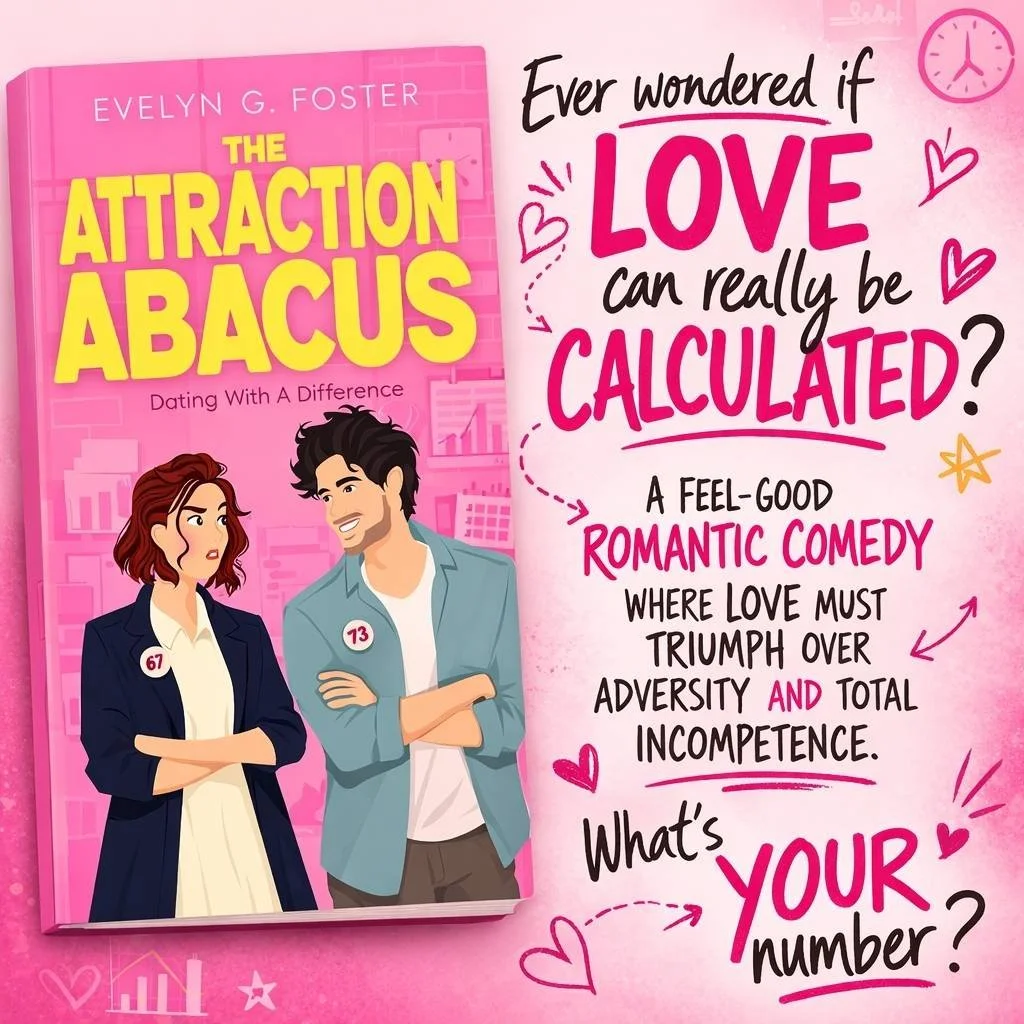
Ad: The Attraction Abacus is a popular UK indie book
What makes an indie romance worth your time?
Not every independently published romance is a hidden gem. Some absolutely need another edit. Some have gorgeous premises and wobbly execution. Some are trying so hard to be trope-aware that they forget to be good. So if you are browsing new indie romance books UK readers are talking about, a little discernment helps.
The first thing to look for is voice. Not just competent writing, but actual voice - the feeling that a real person with taste, wit, and a point of view wrote this. Romance lives or dies on chemistry, and chemistry starts long before the characters kiss. It’s in the rhythm of the dialogue, the specificity of the emotional reactions, and whether the humour feels earned rather than copied from the internet’s greatest hits.
The second thing is clarity about tone. A book can be light, heartfelt, messy, sexy, restrained, or somewhere in between. The problem starts when it pretends to be one thing and delivers another. If a novel sells itself as a rom-com but spends most of its time in emotional devastation, that is not range - that is bad expectation management.
Then there is the question every romance reader now asks almost immediately: what is the heat level? This is where indie romance can be especially useful, because it tends to be more direct about what it is offering. Low spice, closed door, open door, a bit flirty but not explicit - readers want to know, and fair enough. There is no virtue in being surprised by a book in exactly the wrong way.
The trends shaping new indie romance books in the UK
British romance readers are not one neat little hive mind, but there are some clear patterns in what keeps landing. One is contemporary dating fiction that actually feels contemporary. Not vague references to phones and texting, but stories grounded in the reality of swiping, ghosting, overthinking, and wondering whether a three-hour reply gap means disinterest or just bad battery management.
Another trend is the rise of low-to-no-spice romance with strong emotional payoff. That is not code for boring. If anything, it has made writers work harder on tension, humour, character dynamics, and proper payoff. When the physical side is dialled down, every glance, joke, and tiny moment of vulnerability has to do more heavy lifting. For many readers, that is the whole appeal.
Rom-coms with distinctly British energy are also having a moment. Less glossy fantasy, more awkward charm. More work politics, rainy commutes, pub debriefs, overinvolved mates, and family WhatsApp groups that should probably come with health warnings. A romance does not need to be grimly realistic, but a little social recognition goes a long way.
There is also a growing appetite for books that understand online reading culture without sounding like they were assembled by hashtag. Readers are sharp. They can tell when a book is genuinely in conversation with BookTok and Bookstagram tastes, and when it is simply shouting trope names into the void.
How to find good new indie romance books UK readers will actually recommend
The obvious answer is to follow readers whose taste matches yours, but that only gets you so far if everyone is recycling the same stack. Better discovery comes from reading a bit more closely.
Start with how a book is framed. If the pitch is all trope and no texture, proceed carefully. Tropes are useful shorthand, not a personality. “Fake dating” tells you the structure. It does not tell you whether the book is funny, emotionally intelligent, or capable of making two people seem genuinely right for each other.
Pay attention to sample tone in blurbs, early pages, and reader reactions. Are people talking about the banter, the emotional payoff, the awkwardly relatable dating bits, the softness, the tension? Or are they mostly complimenting the cover and saying they devoured it in one sitting, which can mean anything from masterpiece to train-read chaos.
It is also worth noticing whether a publisher or author seems to know their readership. The strongest indie romance publishing does not just put books out - it positions them well. It understands that readers search by mood as much as by trope. Sometimes you want yearning. Sometimes you want escapism. Sometimes you want a heroine whose romantic life is held together with little more than sarcasm and blind optimism.
That’s part of why personality-led indie publishing works. When the editorial framing feels like it comes from actual romance readers rather than generic marketing copy, trust builds faster. You feel less like you are being sold at and more like someone has quietly said, this one is your sort of mess.
A note on hype, because yes, it can get weird
One of the joys of indie romance is that it can feel like finding something before everyone else catches on. One of the risks is that some books get pushed as must-reads before they have really earned it. Social proof is powerful, but it is not infallible.
A heavily hyped indie title can still be brilliant. It can also be fine. Perfectly enjoyable, mildly forgettable, and nowhere near the life-changing reading event the captions suggested. That does not mean the buzz was fake. It usually just means romance taste is very personal, and online enthusiasm tends to flatten those differences.
If you love slow-burn emotional tension, a book built mostly on flirt-heavy spice may leave you cold. If you want clean, cosy romance, a more explicit title may feel like the wrong pick entirely. The trick is not to look for universally loved books. It is to look for books that are specifically right for you.
Where a good publisher makes all the difference
This is the bit readers sometimes underestimate. In indie romance, a strong publisher can be the difference between a book that disappears and a book that finds exactly its people.
Good indie publishing is not just about producing a nice paperback. It is about editorial judgement, market awareness, and knowing how to describe a book in the language readers actually use. That includes understanding the mood around modern romance, the current appetite for low-spice or rom-com fiction, and the fact that readers want stories that feel current without trying too hard to be topical.
At its best, that approach creates books that are both polished and distinct. Titles with commercial appeal, yes, but also with enough charm and self-awareness to stand out in a crowded feed. That is part of what makes newer independent publishers worth watching, particularly ones such as Heptagon Books that clearly understand the overlap between publishing, reader culture, and the pleasure of a very shareable recommendation.
So what should you look for next?
Look for books with a strong sense of romantic identity. Look for stories that know whether they are giving you butterflies, belly laughs, or emotional ruin followed by repair. Look for writing that sounds like a person, not a trend forecast. And if you are tired of bland, mass-produced romance energy, give indie shelves more room in your reading life.
Because the best new romance find is rarely the one shouting the loudest. It is usually the one with the sharp premise, the clean emotional payoff, the right amount of tension, and enough self-confidence not to pretend it is for everyone.
And really, that is the dream bookish scenario - finding a romance that feels less like algorithm bait and more like someone finally recommended something with your actual taste in mind.
