
Books for Reluctant Book Clubs That Get Talked About

Books for book club
The best books for reluctant book clubs do not feel like homework wearing a nice cover. They create a small emergency in the group chat: someone has a theory, someone is furious with a fictional man, and someone who "hasn't finished it yet" is suddenly 80 per cent through because they needed to know what happened.
That is the standard. Not worthy. Not prestigious. Not the novel that has been sitting on everyone’s bedside table since last autumn, gathering dust and quiet shame. A reluctant book club needs momentum, opinions and a story that gives even the least committed reader a reason to turn up with a thought.
What reluctant readers actually need from a book club pick
First, let us be kind to the so-called reluctant reader. They may not be reluctant to stories at all. They may be reluctant to 500 pages of family trauma, twelve characters with suspiciously similar names, or a discussion question that begins, "What do you think the house symbolises?"
They are busy. Their TBR is a hostage situation. Streaming exists. If a book takes too long to announce why it deserves their attention, it loses to a comfort rewatch and a takeaway menu.
The right pick has a clear premise, a confident voice and an emotional or intellectual hook that arrives early. Romance can do this beautifully: put two people with terrible timing in the same orbit, add chemistry and complications, and suddenly everybody has an opinion on whether he deserves a second chance. A speculative thriller can do the same thing by presenting one unsettling rule about reality, then making readers wonder what they would do in that world.
Crucially, a book club choice does not have to be universally adored. A little division is good. If one member thinks the ending was perfect and another calls it criminal behaviour, you have a meeting. The enemy is not disagreement. The enemy is a polite circle of people saying, "Yes, it was quite nice."
The sweet spot for books for reluctant book clubs
Look for fiction with a strong "tell me more" factor. This is not the same as choosing only thrillers, although a well-built thriller is famously useful when attendance is looking shaky. It means the central set-up should be explainable in one lively sentence.
Think: a dating premise with rules that are about to collapse; an ordinary person offered an impossible choice; a relationship with a secret ticking away underneath it; a corporation promising a better life for a price nobody has properly read. If you can pitch the book between ordering drinks and the first chips arriving, you are on the right track.
Length matters, too. There is no universal page-count ceiling, but 250 to 350 pages is often a friendly zone for a club whose members read in snatched lunch breaks, on trains and five minutes before sleep. A longer novel can absolutely work if it is propulsive, but do not confuse big with discussable. Some very slim books produce enormous conversations. Some doorstoppers produce three unread copies and a rescheduled meeting.
Tone is the other quiet deal-breaker. A club full of romance readers may want yearning, banter and a happy or hopeful landing. A group that enjoys films such as The Matrix, Inception or The Truman Show may be much happier asking whether reality is being managed by someone else. Neither is more serious. Both ask excellent questions about desire, choice and the stories we tell ourselves.
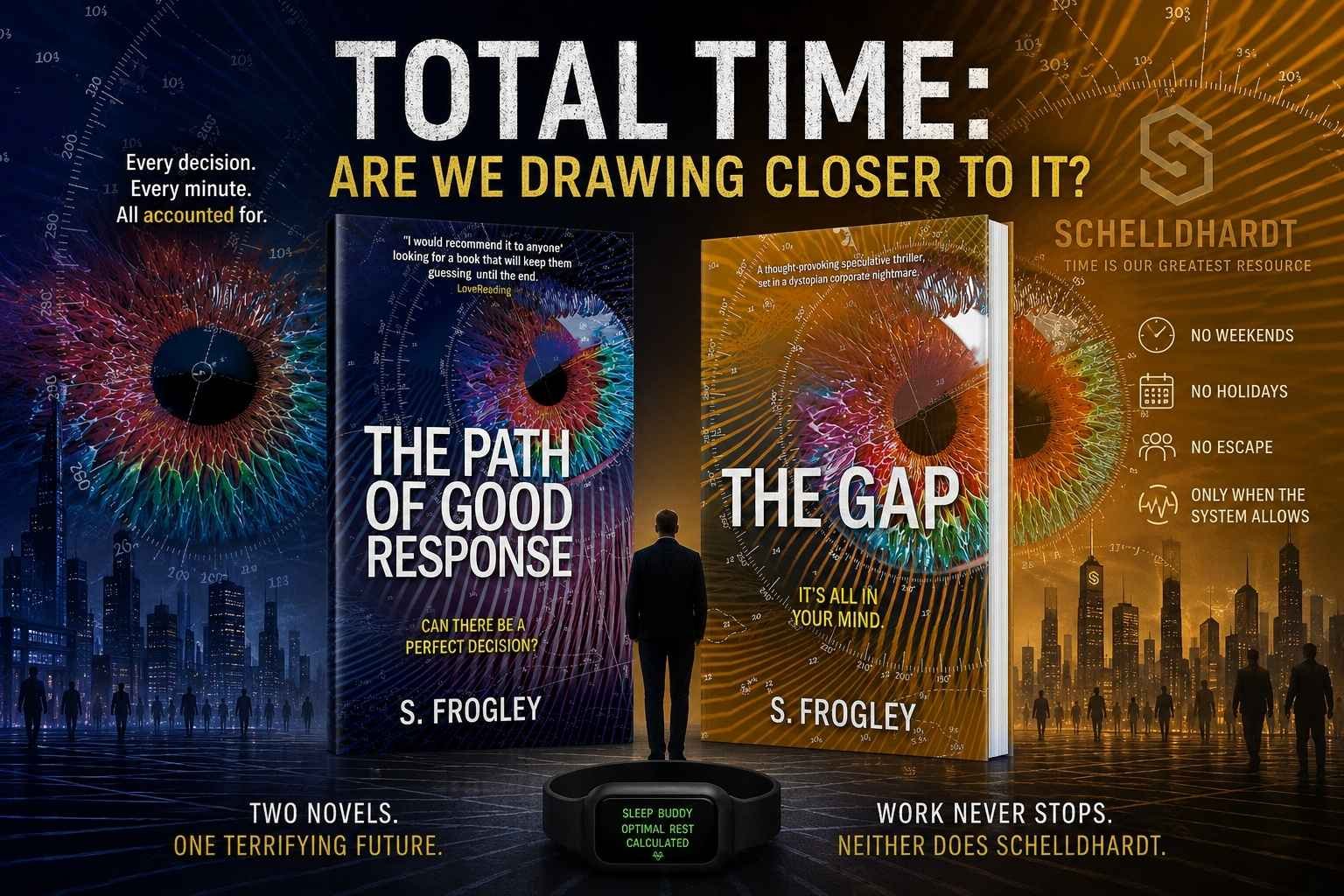
Ad: If your book club loves dystopian thrillers, the Schelldhardt Series asks lots of thought-provoking questions
Choose a book with built-in conversation starters
A brilliant discussion book gives people several doors in. One reader comes for the plot, another clocks the social commentary, another is there to rate the love interest’s decision-making out of ten. Nobody should need an English degree or a colour-coded annotation system to contribute.
The most reliable picks tend to offer at least four things:
a character who makes choices people can defend, condemn or both;
a premise that raises a real-world question without turning into a lecture;
scenes readers will remember clearly enough to argue about over a drink;
an ending that feels earned, even if it leaves a small, deliciously irritating question behind.
For romance and rom-com clubs, relationship dynamics are conversation gold. Friends-to-lovers, fake dating, workplace proximity, second chances and dating-app disasters all come with ready-made fault lines. The key is choosing a story with more going on than a trope checklist. Readers want to debate the emotional stakes, not merely spot the beats like they are playing romance bingo.
For speculative fiction fans, focus on the human pressure point beneath the clever premise. A perfect-decision system sounds fascinating, but what happens when it removes the right to make a messy one? A company that claims to improve society becomes much more interesting when its growth depends on people surrendering something intimate. Big ideas land harder when the characters have something personal to lose.
Avoid the three classic book-club traps
The first trap is picking a book because you feel you ought to read it. Aspirational reading is real, and there is nothing wrong with challenging fiction. But if your club already has a history of vanishing at chapter six, a dense classic or a relentlessly bleak literary novel is not a morale-boosting first move. Save it for the season when the group has built trust and, ideally, snacks.
The second is choosing a book that is only discussion-worthy after completion. Reluctant readers need rewards along the way: funny dialogue, mini revelations, romantic tension, chapters that end at precisely the wrong moment for anyone hoping to sleep. A slow burn can be wonderful, but it still needs a spark.
The third is mistaking high spice for high engagement. Spice level is a preference, not a quality measurement, and book clubs are often mixed in what they want from a love story. A low-to-no-spice romance can be wildly swoony when the emotional tension is doing its job. Equally, an explicit romance can make for a great meeting if everyone is comfortable with it. Set expectations before choosing, rather than discovering halfway through that two members thought they were joining a cosy rom-com and one is now pretending they have never heard of chapter 27.
Match the book to your club’s actual personality
Do not select for an imaginary book club full of people who make handwritten notes in the margins and quote nineteenth-century poets unprompted. Select for the people in your WhatsApp group.
If they send each other dating horror stories, choose a contemporary romance or rom-com with sharp observations and a satisfying emotional payoff. If they collectively lost their minds over a reality-bending TV finale, look for speculative suspense with a clean, unsettling concept. If they always say they want something "different", choose a genre blend: a romance with a mystery engine, or a thriller with a moral dilemma that keeps the chat alive for days.
This is also where an independent publisher’s list can be especially useful. Smaller presses are often alert to what readers are actively discussing rather than only what has been declared Important from a great height. For a club craving contemporary dating chaos without a heat-level surprise, Evelyn G. Foster’s The Attraction Abacus is the sort of premise-led, conversation-friendly choice worth putting on the table.

Ad: The Attraction Abacus. The basis for a great book club discussion. Could a dating agency really summarise everything about a person as a dating score? Is this an unspoken reality anyway when a rich older man matches with an attractive younger woman?
Make the meeting easier than finishing the book
A reluctant club does not need a formal seminar. It needs permission to be entertaining. Start with one question that cannot be answered with "I liked it": Which decision would you have made differently? Who was most delusional? At what point did you realise you were emotionally invested? Would you accept the deal at the centre of this story?
Give people an out if they did not finish. Ask what stopped them, what they expected from the premise, or whether they would continue. That is still useful reader intelligence, frankly. Often the non-finisher has the hottest take because they have not spent three weeks making peace with the author’s choices.
You can also make the next choice at the end of the meeting, while the group is warm. Offer two or three options with wildly different flavours, not seven titles and a spreadsheet. Too much choice is how a book club accidentally elects no book at all.
The goal is not to turn every friend into a voracious reader overnight. It is to make reading feel social, surprising and worth their finite attention. Pick the book that invites a reaction, forgive the occasional unfinished chapter, and let a little fictional chaos do the hosting.
